50+ Things That Are Purple: Beautiful Examples in Nature & Life
Purple is one of the world’s most captivating colors. Often linked with royalty, creativity, wisdom, and luxury, it has fascinated people for thousands of years. Unlike green or blue, purple is relatively uncommon in nature, making purple flowers, fruits, animals, and gemstones even more remarkable.
If you’re searching for things that are purple, this guide covers more than 50 real-world examples, interesting facts, and the science behind this beautiful color.
Quick Answer
Here are some of the most popular things that are purple:
- Lavender
- Lilac
- Eggplant
- Purple cabbage
- Concord grapes
- Blackberries
- Amethyst
- Purple Emperor butterfly
- Purple sea urchin
- Lavender fields
- Purple orchids
- Purple potatoes
- Purple cauliflower
- Purple carrots
- Jacaranda flowers
Keep reading to discover many more examples.
Why Is Purple So Rare?
Purple is one of the least common natural colors. Most purple plants get their color from anthocyanins—natural pigments that also create red and blue shades depending on soil chemistry and acidity.
Historically, purple was even rarer. In ancient Phoenicia, a single gram of royal purple dye required thousands of sea snails, making purple clothing a symbol of wealth and power. Today, purple remains associated with elegance, imagination, and creativity.
Purple Flowers
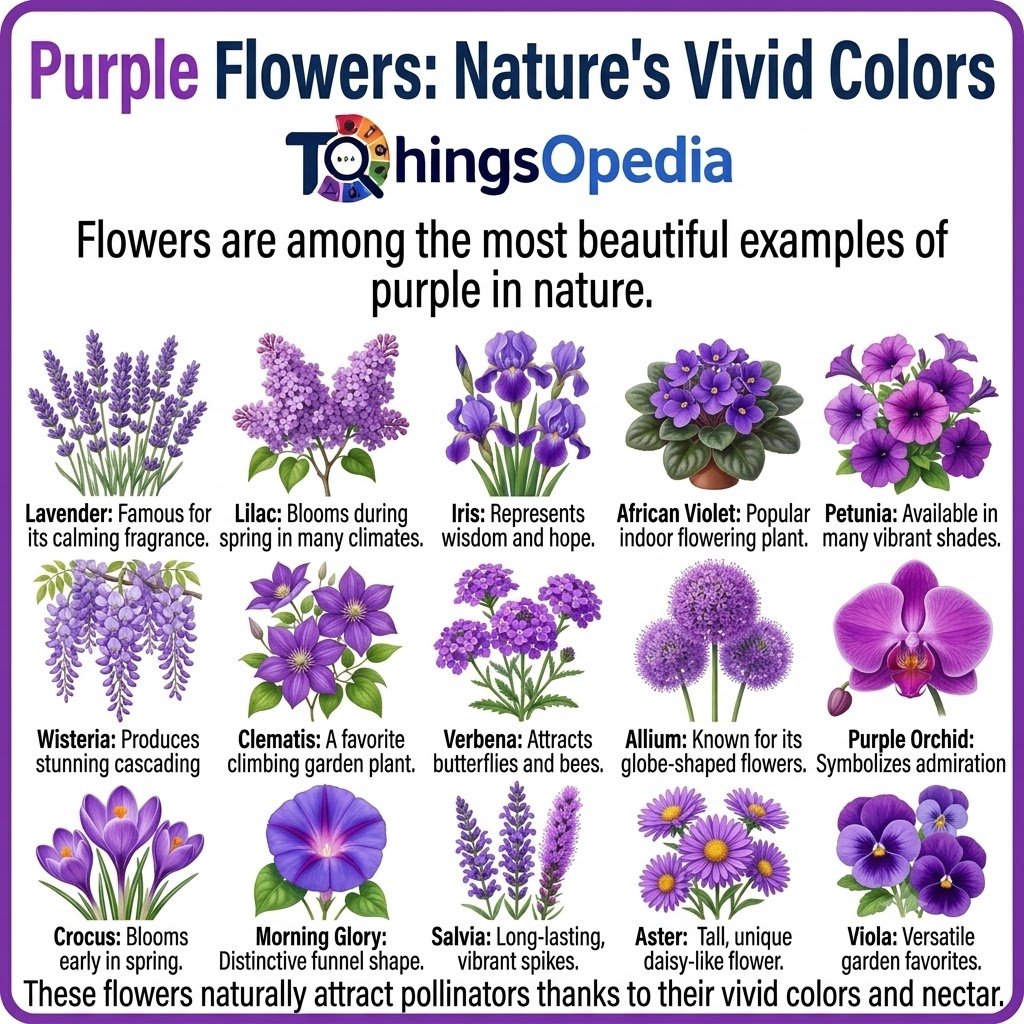
Flowers are among the most beautiful examples of purple in nature.
| Flower | Interesting Fact |
| Lavender | Famous for its calming fragrance. |
| Lilac | Blooms during spring in many climates. |
| Iris | Represents wisdom and hope. |
| African Violet | Popular indoor flowering plant. |
| Petunia | Available in many vibrant shades. |
| Wisteria | Produces stunning cascading blooms. |
| Clematis | A favorite climbing garden plant. |
| Verbena | Attracts butterflies and bees. |
| Allium | Known for its globe-shaped flowers. |
| Purple Orchid | Symbolizes admiration and elegance. |
These flowers naturally attract pollinators thanks to their vivid colors and nectar.
Purple Fruits
Many delicious fruits naturally display purple shades and are packed with nutrients.
Some of the healthiest examples include:
- Concord grapes
- Blackberries
- Plums
- Elderberries
- Purple figs
- Acai berries
- Passion fruit (purple variety)
- Jabuticaba
- Black currants
- Mulberries
Most purple fruits are rich in antioxidants, fiber, and vitamin C.
Purple Vegetables
Among the healthiest things that are purple are colorful vegetables rich in vitamins and plant compounds.
Popular choices include:
- Eggplant
- Purple cabbage
- Purple cauliflower
- Purple carrots
- Purple sweet potatoes
- Purple asparagus
- Purple potatoes
- Purple kale
- Purple onions
- Purple beans
These vegetables contain anthocyanins, which researchers have linked to antioxidant activity and overall health.
Purple Animals
Purple animals are rare but fascinating.
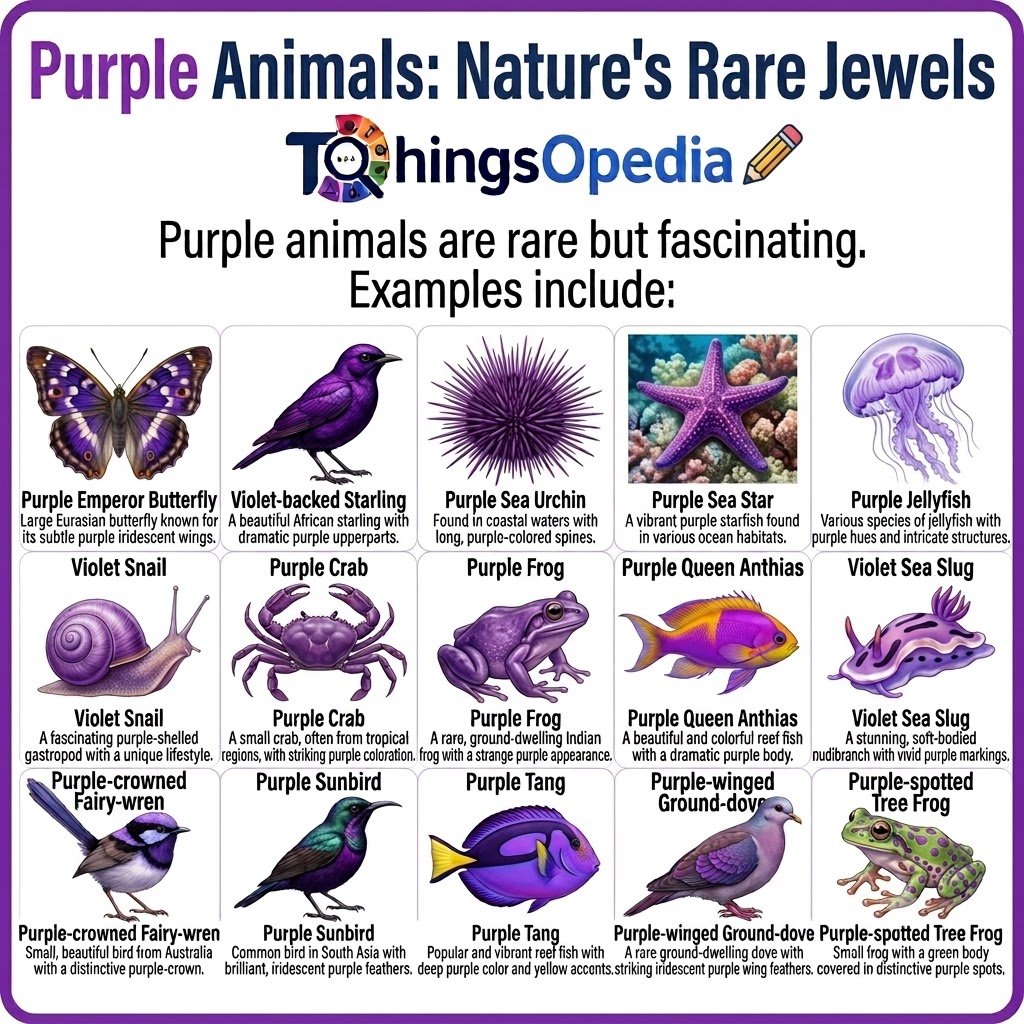
Examples include:
- Purple Emperor butterfly
- Violet-backed starling
- Purple sea urchin
- Purple sea star
- Purple jellyfish
- Violet snail
- Purple crab
- Purple frog
- Purple queen anthias
- Violet sea slug
Many marine species appear purple because of microscopic structures that reflect light rather than because of purple pigments.
Purple Gemstones
Purple gemstones have been treasured for centuries.
| Gemstone | Known For |
| Amethyst | Most popular purple gemstone |
| Charoite | Swirling lavender patterns |
| Sugilite | Rich violet color |
| Purple Fluorite | Crystal collectors’ favorite |
| Purple Sapphire | Rare and valuable |
| Lepidolite | Contains natural lithium |
| Kunzite | Soft pinkish-purple appearance |
Amethyst remains one of the most widely used gemstones in jewelry because it combines beauty with durability.
Purple Foods & Drinks
Purple ingredients appear in cuisines worldwide.
Popular examples include:
- Ube desserts
- Purple rice
- Purple corn
- Taro ice cream
- Blackberry jam
- Grape juice
- Berry smoothies
- Red wine
- Blueberry yogurt
- Purple macarons
Many of these foods are naturally colorful rather than artificially dyed.
Purple Things Around the House
Purple isn’t limited to nature.
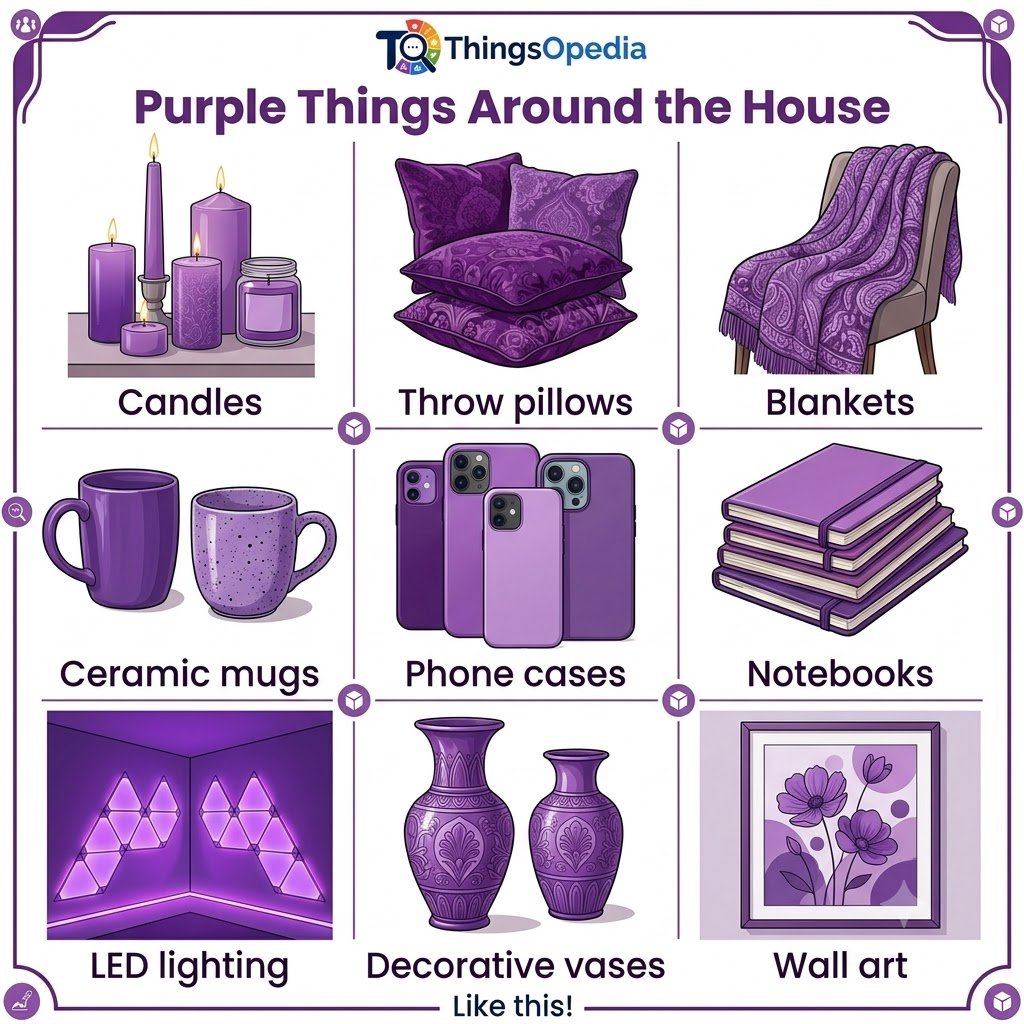
You’ll often find it in:
- Candles
- Throw pillows
- Blankets
- Ceramic mugs
- Curtains
- Phone cases
- Notebooks
- LED lighting
- Decorative vases
- Wall art
Interior designers often use purple to create a luxurious and calming atmosphere.
Purple Things Found in Nature
Nature offers breathtaking purple landscapes.
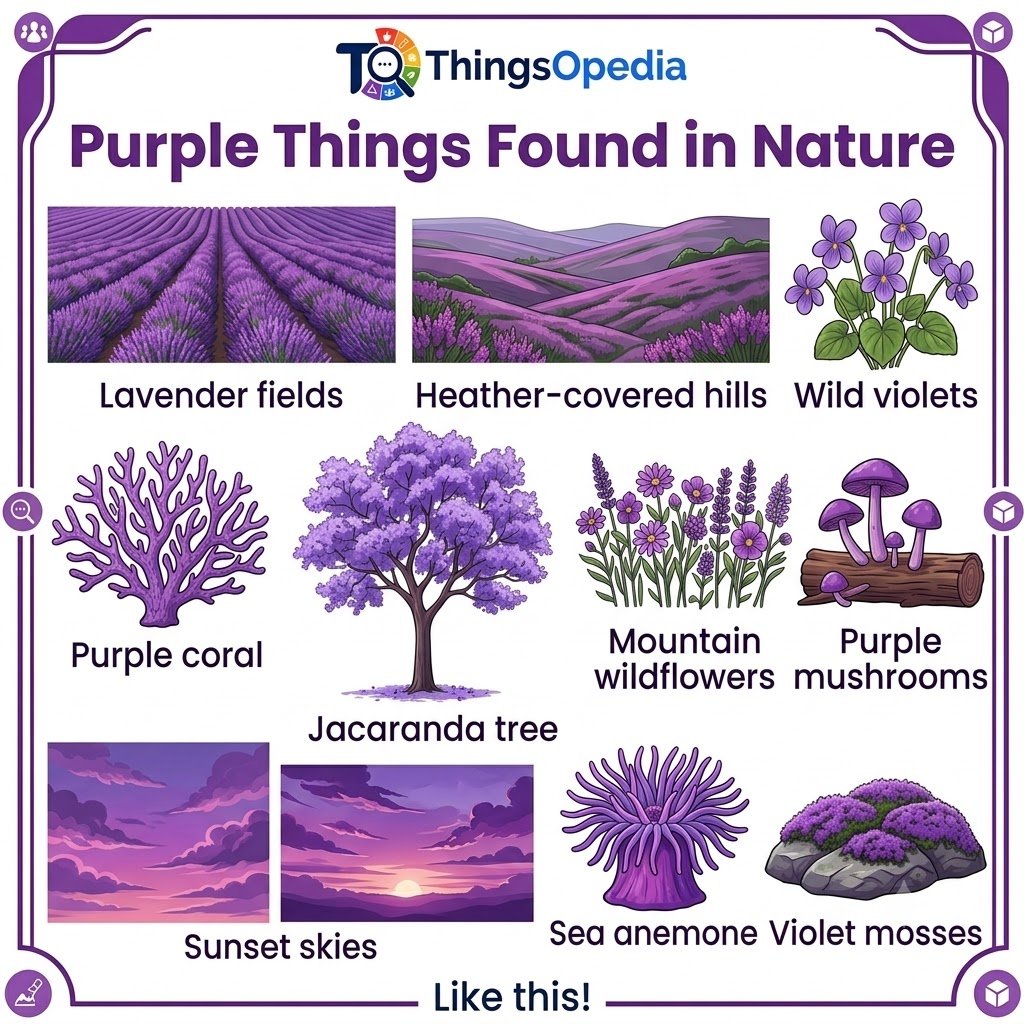
Examples include:
- Lavender fields
- Heather-covered hills
- Jacaranda trees
- Wild violets
- Purple coral
- Sunset skies
- Mountain wildflowers
- Purple mushrooms
- Certain sea anemones
- Violet mosses
These natural displays attract photographers and tourists from around the world.
Love To Read More Things That Are Red: 75 Amazing Examples in Nature, Science, and Everyday Life
Why Are Purple Foods Considered Healthy?
Nutrition experts recommend eating colorful fruits and vegetables because different pigments provide different nutrients.
Purple foods often contain:
- Anthocyanins
- Dietary fiber
- Vitamin C
- Vitamin K
- Potassium
- Manganese
Research suggests these natural compounds may help protect cells from oxidative stress while supporting heart and brain health as part of a balanced diet.
Fun Facts About Purple
- Purple combines the calmness of blue with the energy of red.
- It has traditionally represented royalty and nobility.
- Ancient purple dye was once more valuable than gold.
- Purple is one of the least common eye colors worldwide.
- Many universities use purple in their official branding.
- October’s birthstone is amethyst.
- Purple butterflies are considered symbols of transformation in many cultures.
Final Thoughts
The world is full of incredible things that are purple, from fragrant lavender fields and nutrient-rich vegetables to rare gemstones and fascinating sea creatures. Although purple is one of nature’s rarer colors, it appears in surprising places across plants, wildlife, food, and everyday life.
Whether you’re looking for inspiration, teaching children about colors, decorating your home, or simply satisfying your curiosity, these examples show why purple continues to symbolize beauty, creativity, and elegance.
The next time you notice one of these things that are purple, you’ll appreciate not only its striking appearance but also the remarkable science and history behind this extraordinary color.
Frequently Asked Questions
What are the most common things that are purple?
Some of the most common examples include lavender, eggplant, grapes, blackberries, plums, lilacs, purple cabbage, amethyst, and orchids.
Why are some plants naturally purple?
Plants produce anthocyanins—natural pigments that create red, blue, and purple colors depending on the plant species and growing conditions.
Are purple fruits and vegetables healthy?
Yes. Many purple fruits and vegetables are excellent sources of antioxidants, fiber, vitamins, and minerals that support overall health when included in a balanced diet.
What does the color purple symbolize?
Purple is commonly associated with royalty, luxury, creativity, wisdom, spirituality, ambition, and imagination.
Why is purple rare in nature?
Compared with green or blue, purple pigments occur less frequently in plants and animals. Some animals only appear purple because of microscopic structures that reflect light rather than producing true purple pigments.