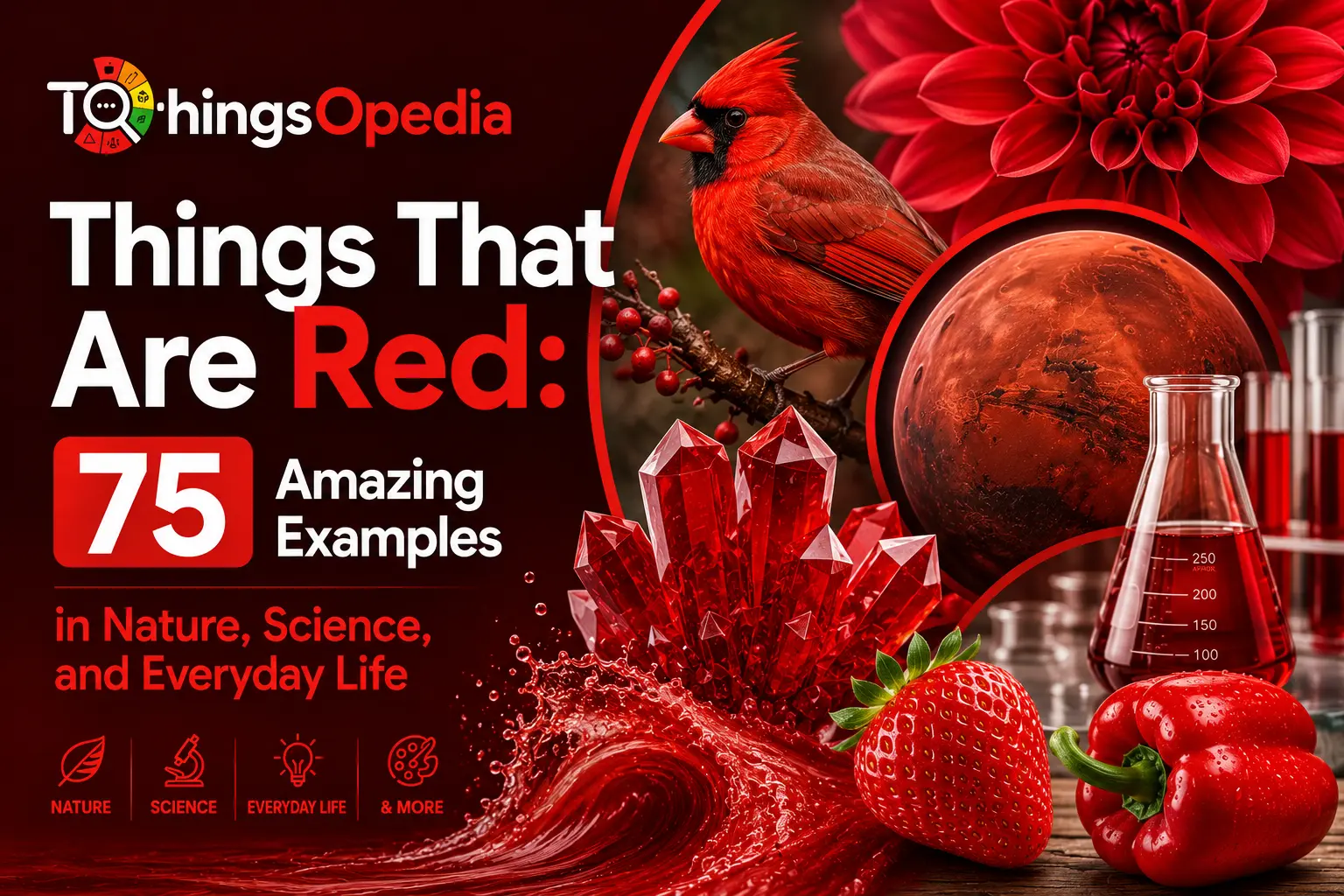
Things That Are Red: 75 Amazing Examples in Nature, Science, and Everyday Life
Red is one of the most eye-catching colors in the world. It symbolizes passion, energy, love, courage, and strength across many cultures. Whether it’s a ripe strawberry, a brilliant sunset, or a vibrant cardinal bird, red naturally attracts attention and leaves a lasting impression.
From a scientific perspective, red has the longest visible wavelength in the color spectrum, making it easier to notice from a distance. This is one reason why traffic signs, emergency vehicles, and warning signals commonly use red to capture immediate attention.
In this comprehensive guide, we’ll explore things that are red, discover why this color is so significant in nature and human life, and highlight fascinating examples from plants, animals, food, science, and everyday objects.
Why Red Is Such a Powerful Color
Red is associated with strong emotions and high visibility. Unlike cooler colors, red stimulates the human brain, increases alertness, and often represents urgency or excitement.
Scientific studies in color psychology suggest that red can influence human behavior by increasing attention levels and creating a sense of energy. Because of these characteristics, it is widely used in marketing, sports branding, safety equipment, and national flags.
In nature, many organisms use red as a warning color, while others display it to attract mates or pollinators.
Beautiful Things That Are Red in Nature
Nature is filled with stunning shades of red that serve important biological purposes.
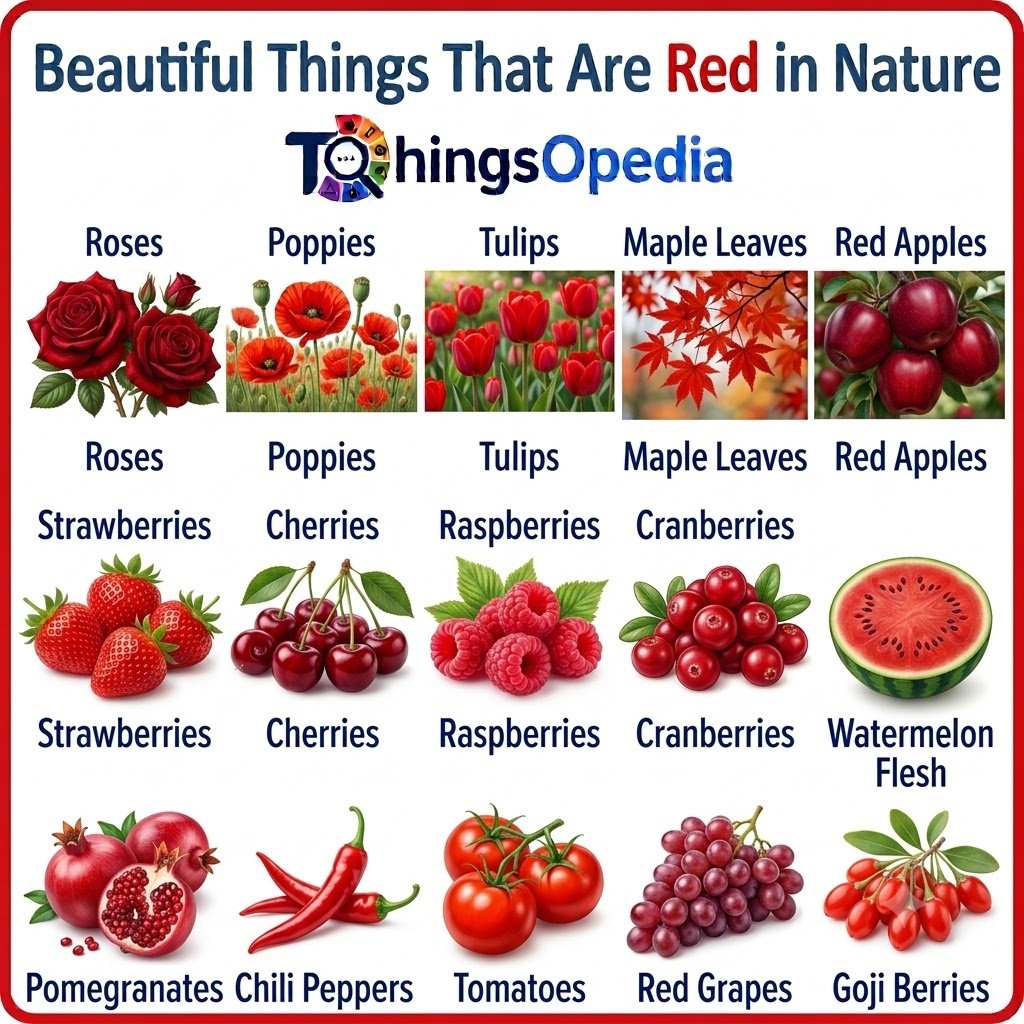
1. Roses
Red roses are among the world’s most recognized flowers and traditionally symbolize love and romance.
2. Poppies
Bright red poppies bloom across fields worldwide and are widely recognized as symbols of remembrance in many countries.
3. Tulips
Many tulip varieties produce vibrant red flowers that bloom during spring.
4. Maple Leaves
During autumn, maple trees transform into brilliant shades of red due to changing chlorophyll levels.
5. Red Apples
Popular varieties such as Red Delicious and Fuji develop their rich color from anthocyanin pigments.
6. Strawberries
These sweet fruits are rich in vitamin C, antioxidants, and dietary fiber.
7. Cherries
Cherries contain anthocyanins that contribute to both their vibrant color and antioxidant properties.
8. Raspberries
Known for their sweet-tart flavor, raspberries are packed with vitamins and beneficial plant compounds.
9. Cranberries
These bright berries are commonly associated with urinary tract health and contain powerful antioxidants.
10. Watermelon Flesh
The rich red interior of watermelon comes from lycopene, the same antioxidant found in tomatoes.
Incredible Red Animals
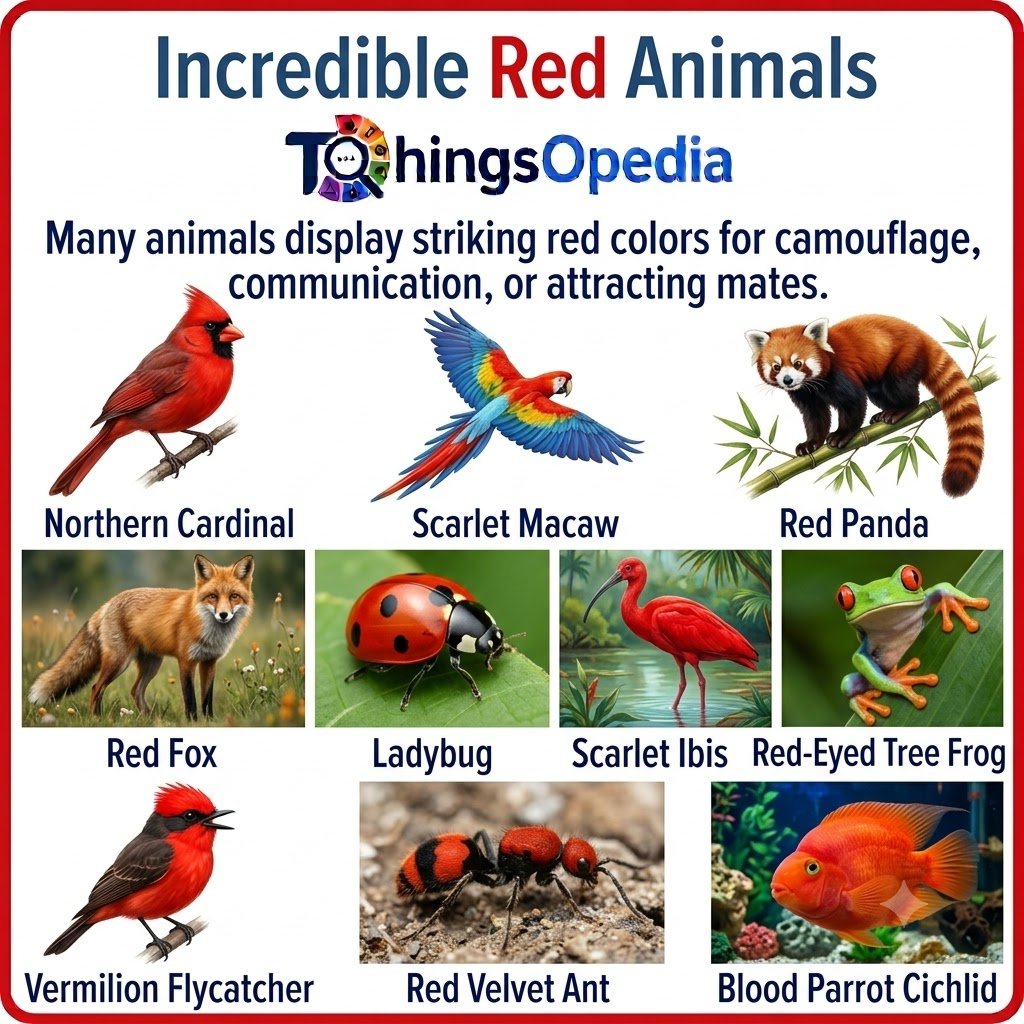
Many animals display striking red colors for camouflage, communication, or attracting mates.
Northern Cardinal
The male Northern Cardinal is famous for its brilliant red feathers and melodious song.
Scarlet Macaw
Native to Central and South America, the Scarlet Macaw features dazzling red, yellow, and blue plumage.
Red Panda
Despite its name, the Red Panda is more closely related to raccoons than giant pandas.
Red Fox
One of the world’s most adaptable mammals, the Red Fox inhabits forests, grasslands, mountains, and urban environments.
Ladybug
Many ladybug species display bright red shells with black spots that warn predators.
Scarlet Ibis
This tropical bird develops its vivid red feathers through pigments obtained from its diet.
Red-Eyed Tree Frog
Although mostly green, its bright red eyes help startle predators.
Vermilion Flycatcher
Male Vermilion Flycatchers are recognized for their brilliant crimson feathers.
Red Velvet Ant
Despite its name, this insect is actually a wingless wasp known for its painful sting.
Blood Parrot Cichlid
A popular aquarium fish admired for its vibrant orange-red coloration.
Everyday Red Objects
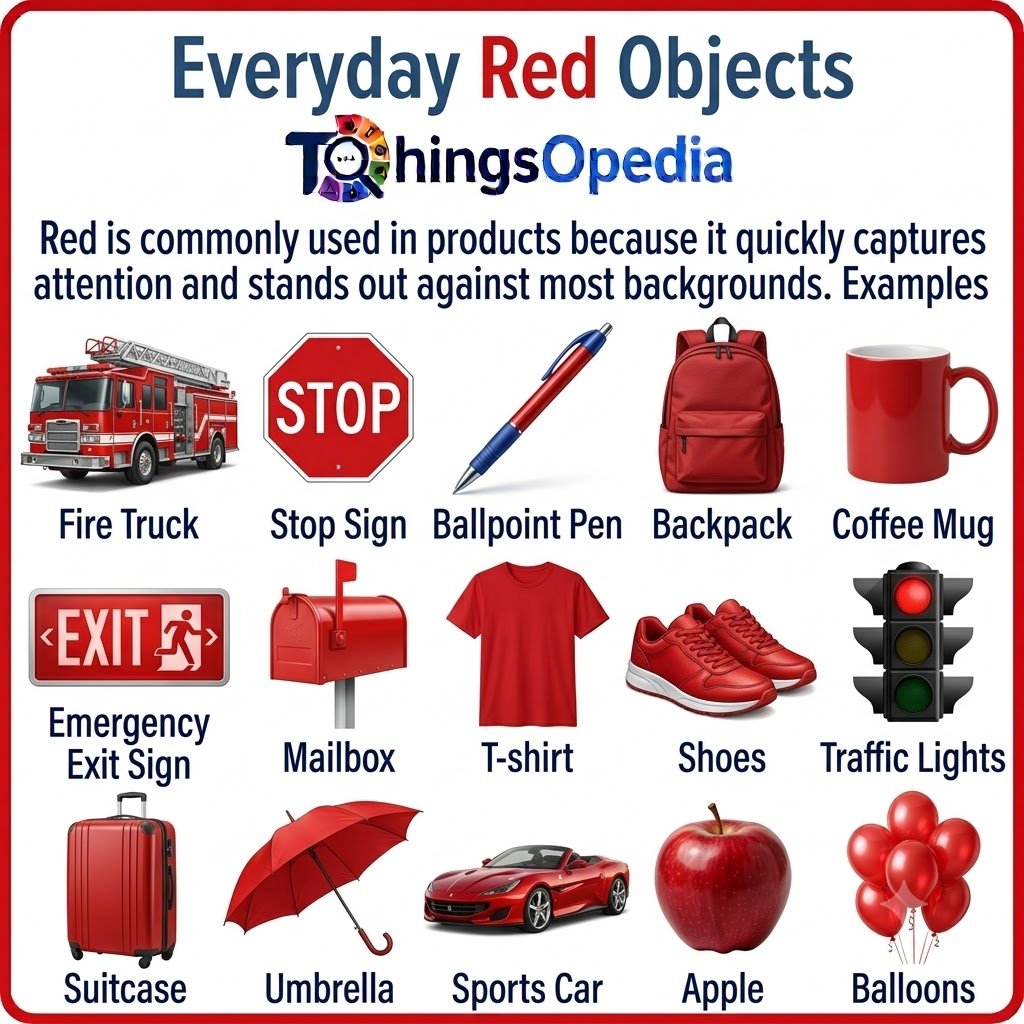
Red is commonly used in products because it quickly captures attention and stands out against most backgrounds.
Examples include:
- Fire trucks
- Stop signs
- Traffic lights
- Emergency exit signs
- Mailboxes in some countries
- Ballpoint pens
- Backpacks
- Coffee mugs
- Blankets
- Pillows
- Shoes
- T-shirts
- Sports cars
- Suitcases
- Umbrellas
- Apples
- Balloons
- Christmas ornaments
- Gift wrapping paper
- School folders
These everyday examples demonstrate how red combines visibility with aesthetic appeal.
Delicious Red Foods
Many nutritious foods naturally display beautiful shades of red.
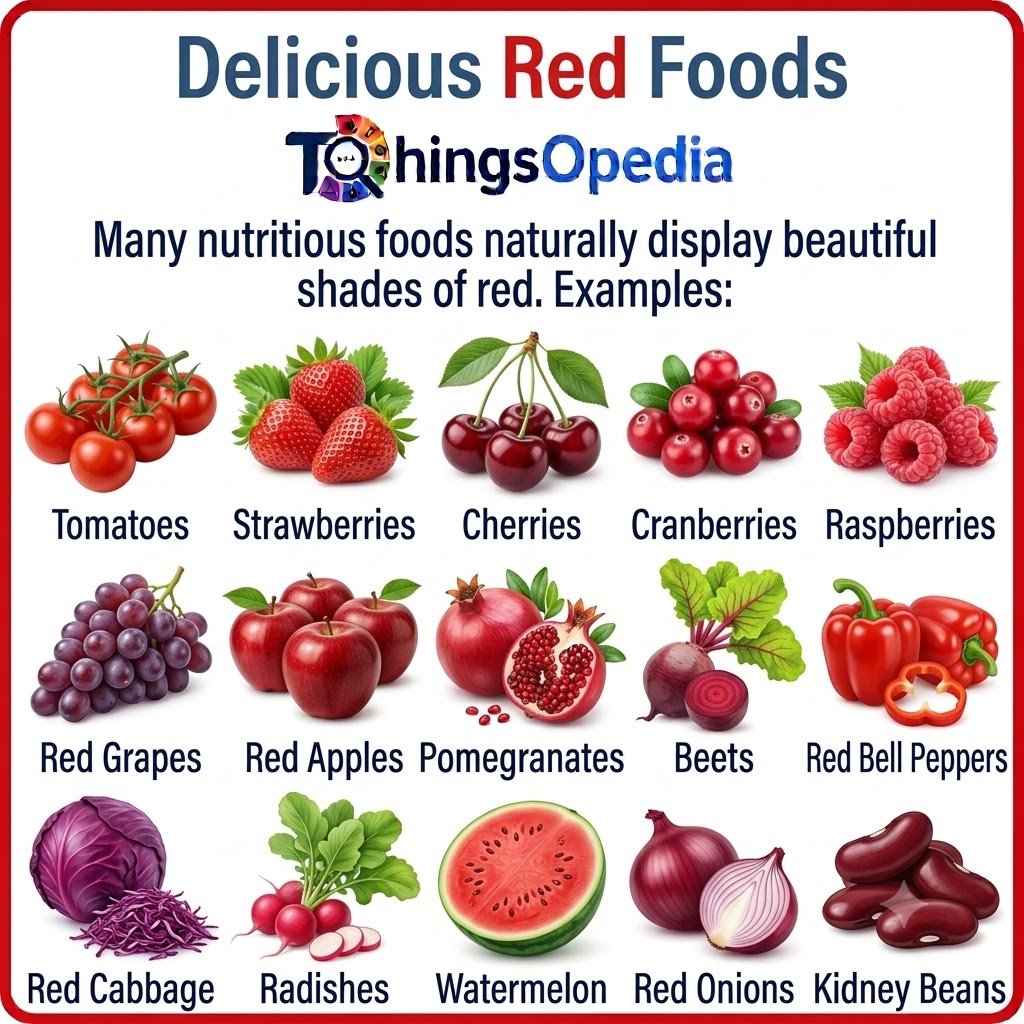
- Tomatoes
- Strawberries
- Cherries
- Cranberries
- Raspberries
- Red grapes
- Red apples
- Pomegranates
- Beets
- Red bell peppers
- Red cabbage
- Radishes
- Watermelon
- Red onions
- Kidney beans
Many of these foods are rich in lycopene, anthocyanins, vitamin C, potassium, and dietary fiber, making them valuable additions to a healthy diet.
Red in Science and Technology
Red plays an important role in scientific research and modern technology.
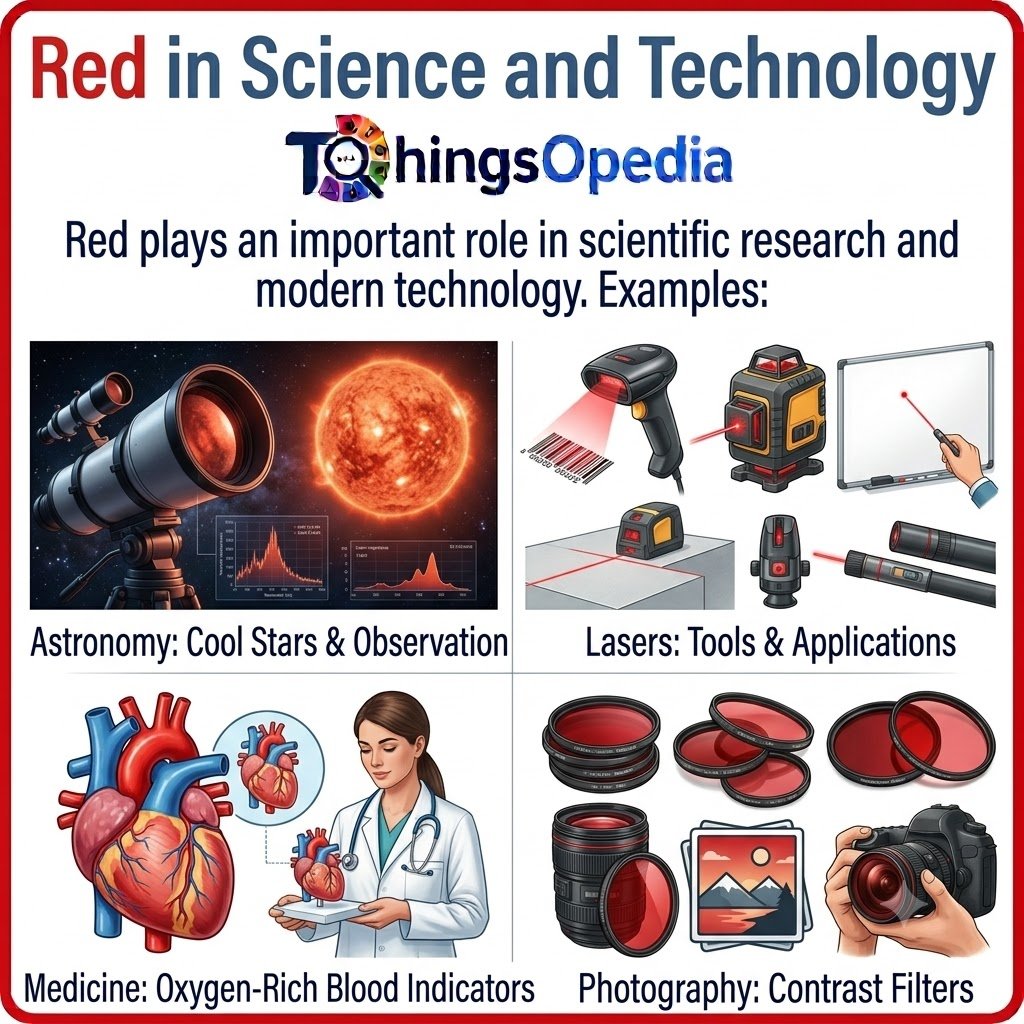
Astronomy
Many cool stars appear reddish because of their lower surface temperatures compared to blue or white stars.
Lasers
Red lasers are widely used in barcode scanners, construction tools, classroom presentations, and laboratory equipment.
Medicine
Healthcare professionals often use red to indicate oxygen-rich blood in medical diagrams and educational materials.
Photography
Red filters improve contrast in black-and-white photography and are frequently used in landscape photography.
Why Businesses Use Red Branding
Red is one of the most recognizable branding colors because it creates excitement and urgency.
Marketing experts associate red with:
- Passion
- Energy
- Confidence
- Excitement
- Action
- Strength
- Determination
Restaurants, entertainment companies, sports brands, and retail businesses often incorporate red into their logos because it encourages attention and quick decision-making.
Fascinating Facts About Red
Here are some interesting facts about this remarkable color.
- Red has the longest wavelength in the visible light spectrum, ranging from approximately 620 to 750 nanometers.
- Human blood appears red because hemoglobin contains iron that binds with oxygen.
- Rubies are among the world’s most valuable red gemstones.
- Red is one of the first colors infants can distinguish after birth.
- Chili peppers contain capsaicin, which creates the sensation of heat rather than an actual increase in temperature.
- Many poisonous animals use bright red warning colors to discourage predators.
- Red sunsets often occur because dust and atmospheric particles scatter shorter wavelengths, leaving more red light visible.
- Coral reefs are home to numerous bright red fish, sea fans, and marine invertebrates.
- Red remains one of the most frequently used colors in national flags worldwide.
Educational Benefits of Learning About Colors
Teaching children to recognize colors strengthens observation, vocabulary, memory, and communication skills.
Learning about naturally occurring red objects also introduces concepts from biology, chemistry, physics, environmental science, and nutrition.
Teachers often use color recognition activities to encourage curiosity while helping students connect classroom lessons to the real world.
Love To Read More Things That Are Blue: 75 Fascinating Examples in Nature, Science, and Everyday Life
Frequently Asked Questions
Why is red so noticeable?
Red has the longest visible wavelength, making it highly noticeable and effective for warning signs and emergency equipment.
Why is blood red?
Blood is red because hemoglobin, the protein that carries oxygen, contains iron molecules.
Which fruit is naturally red?
Common examples include strawberries, cherries, raspberries, cranberries, pomegranates, and many apple varieties.
Which gemstone is naturally red?
Ruby is the best-known naturally red gemstone and is considered one of the four precious gemstones.
Why is Mars called the Red Planet?
Mars appears reddish because its surface is covered with iron oxide, which reflects sunlight with a reddish appearance.
Which bird is famous for its red feathers?
The Northern Cardinal is one of the world’s best-known bright red birds and is widely found throughout North America.
Final Thoughts
The world is filled with extraordinary things that are red, from colorful flowers and nutritious fruits to remarkable wildlife and everyday objects. Beyond its beauty, red serves important purposes in nature by attracting pollinators, warning predators, and supporting survival.
In human society, red continues to symbolize love, courage, excitement, and energy while playing a vital role in transportation, branding, safety, sports, and design. Whether you admire a blooming rose, enjoy a bowl of fresh strawberries, or notice a stop sign on the road, the color red remains one of the most influential and meaningful colors in our lives.
By understanding the science, symbolism, and real-world examples behind this vibrant color, we gain a greater appreciation for the remarkable role red plays in nature and everyday life.
Enjoyed this article? Explore more informative guides, fascinating facts, and everyday knowledge at Thingsopedia — your go-to destination for discovering interesting things from around the world.