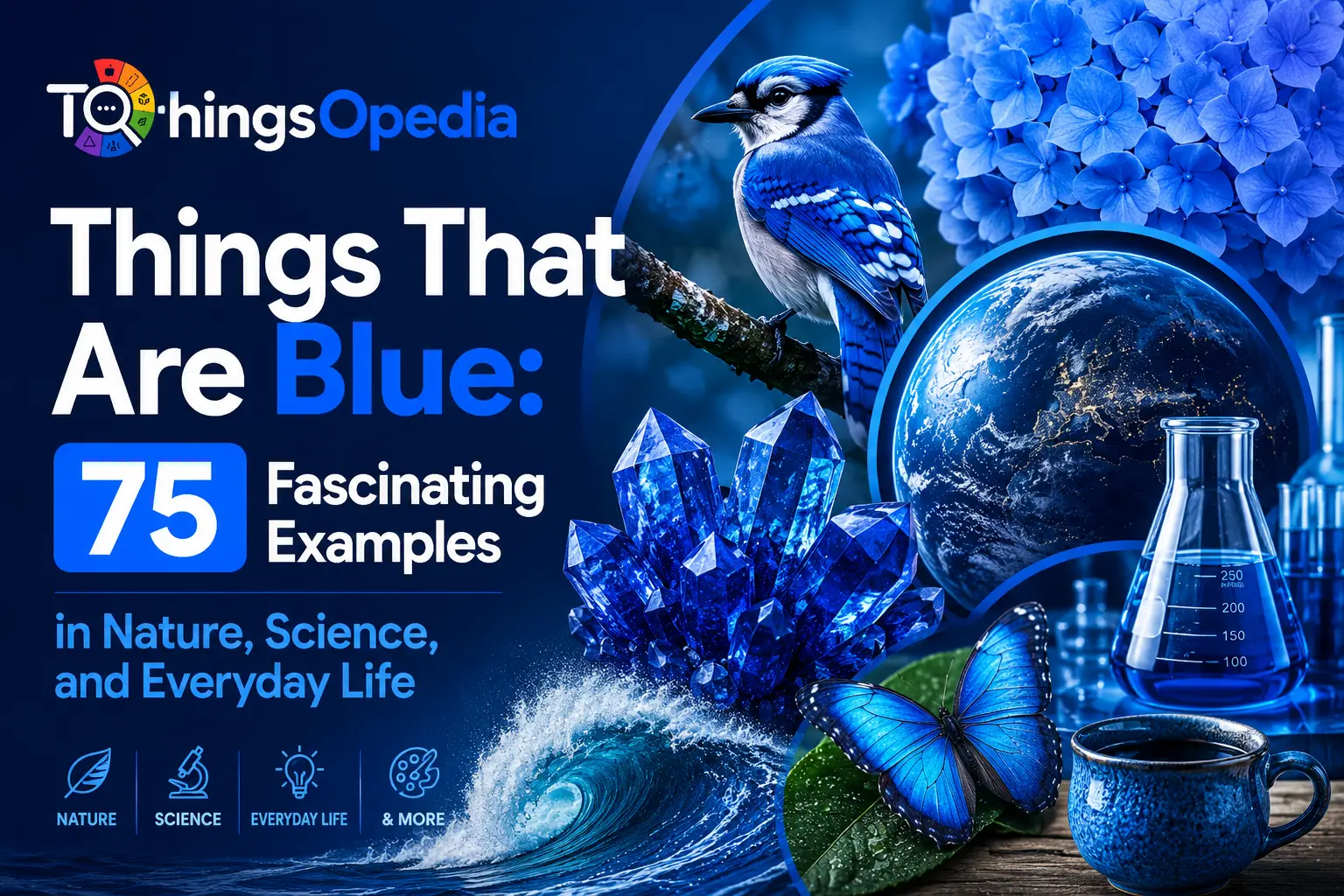
Things That Are Blue: 75 Fascinating Examples in Nature, Science, and Everyday Life
Blue is one of the world’s most loved colors. It symbolizes trust, peace, intelligence, stability, and confidence. From clear skies and deep oceans to rare gemstones and colorful birds, things that are blue surrounds us in fascinating ways. Yet despite its popularity, blue is surprisingly uncommon in nature compared to colors like green, red, and yellow.
According to color perception research, blue consistently ranks as the favorite color across many countries and cultures. Businesses, educators, designers, and scientists all recognize its psychological impact, making it one of the most influential colors in branding and visual communication.
In this comprehensive guide, we’ll explore things that are blue, uncover the science behind this remarkable color, and discover examples from nature, food, wildlife, technology, and everyday life.
Why Blue Is So Special
Unlike many other colors, true blue pigments are extremely rare in the natural world. Scientists explain that many blue animals do not actually contain blue pigment. Instead, microscopic structures on feathers, wings, or scales scatter light in a way that reflects blue wavelengths toward our eyes.
This phenomenon, known as structural coloration, creates brilliant shades of blue without using blue dye.
Plants also struggle to produce natural blue pigments. Fewer than 10% of flowering plant species naturally produce blue flowers, making them among the rarest blooms on Earth.
These scientific facts make blue one of the most fascinating colors found in nature.
Beautiful Things That Are Blue in Nature
Nature offers some of the most spectacular examples of blue.
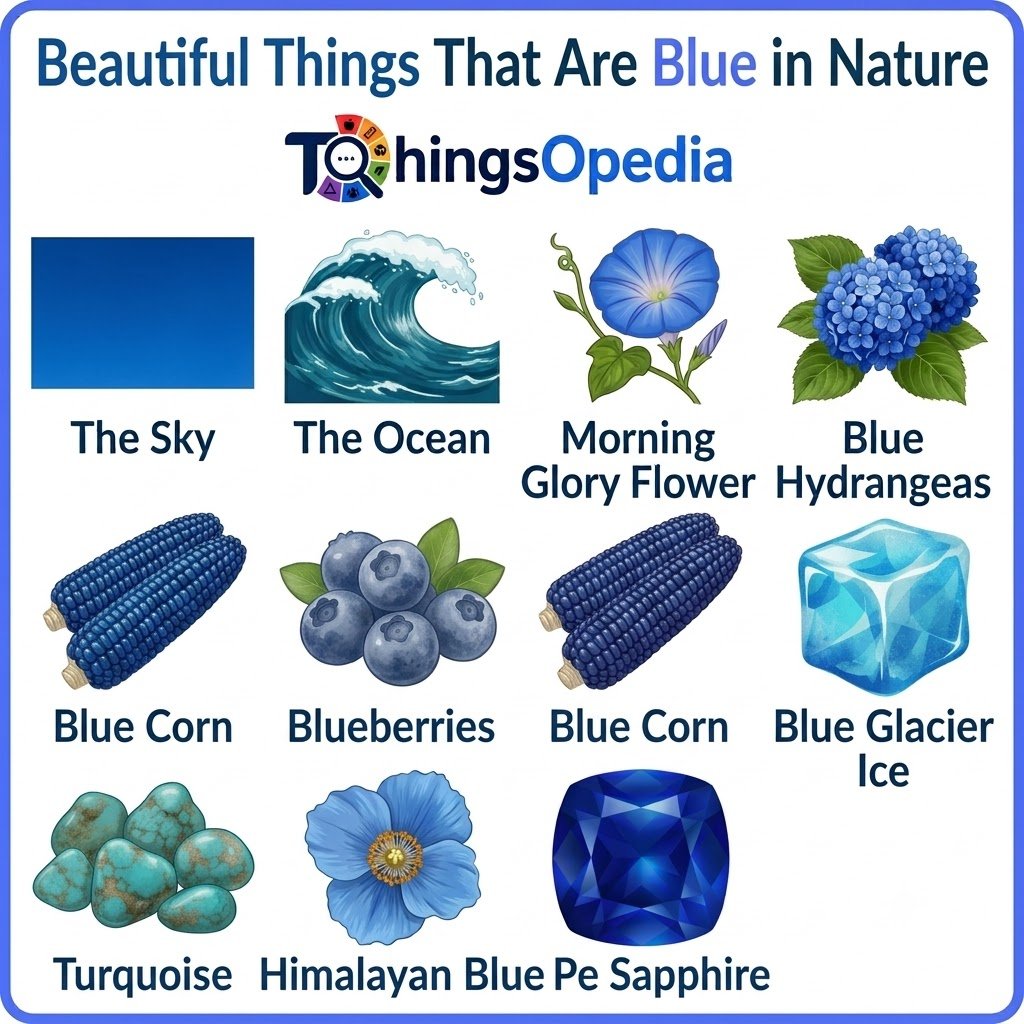
1. The Sky
The daytime sky appears blue because molecules in Earth’s atmosphere scatter shorter blue wavelengths more effectively than longer red wavelengths. This scientific process is called Rayleigh scattering.
2. The Ocean
Although water itself is almost colorless in small amounts, oceans appear blue because water absorbs red light while reflecting and scattering blue wavelengths.
3. Glacier Ice
Compressed glacier ice often appears bright blue because dense ice absorbs longer wavelengths of light more efficiently.
4. Blue Hydrangeas
Hydrangeas produce stunning blue flowers when grown in acidic soil containing available aluminum.
5. Morning Glory Flowers
Several Morning Glory varieties bloom with beautiful blue petals that attract pollinating insects.
6. Himalayan Blue Poppy
Often considered one of the world’s rarest flowers, the Himalayan Blue Poppy is admired for its vibrant color.
7. Blueberries
These nutrient-rich berries contain anthocyanins, antioxidants linked to improved heart and brain health.
8. Blue Corn
Originally cultivated by Native American communities, blue corn contains higher antioxidant levels than many traditional yellow corn varieties.
9. Sapphire
One of the world’s most valuable gemstones, sapphire receives its blue color from trace amounts of iron and titanium.
10. Turquoise
Although technically blue-green, turquoise has been treasured for thousands of years in jewelry and artwork.
Incredible Blue Animals
Some of the world’s most beautiful creatures display brilliant shades of blue.
Blue Morpho Butterfly
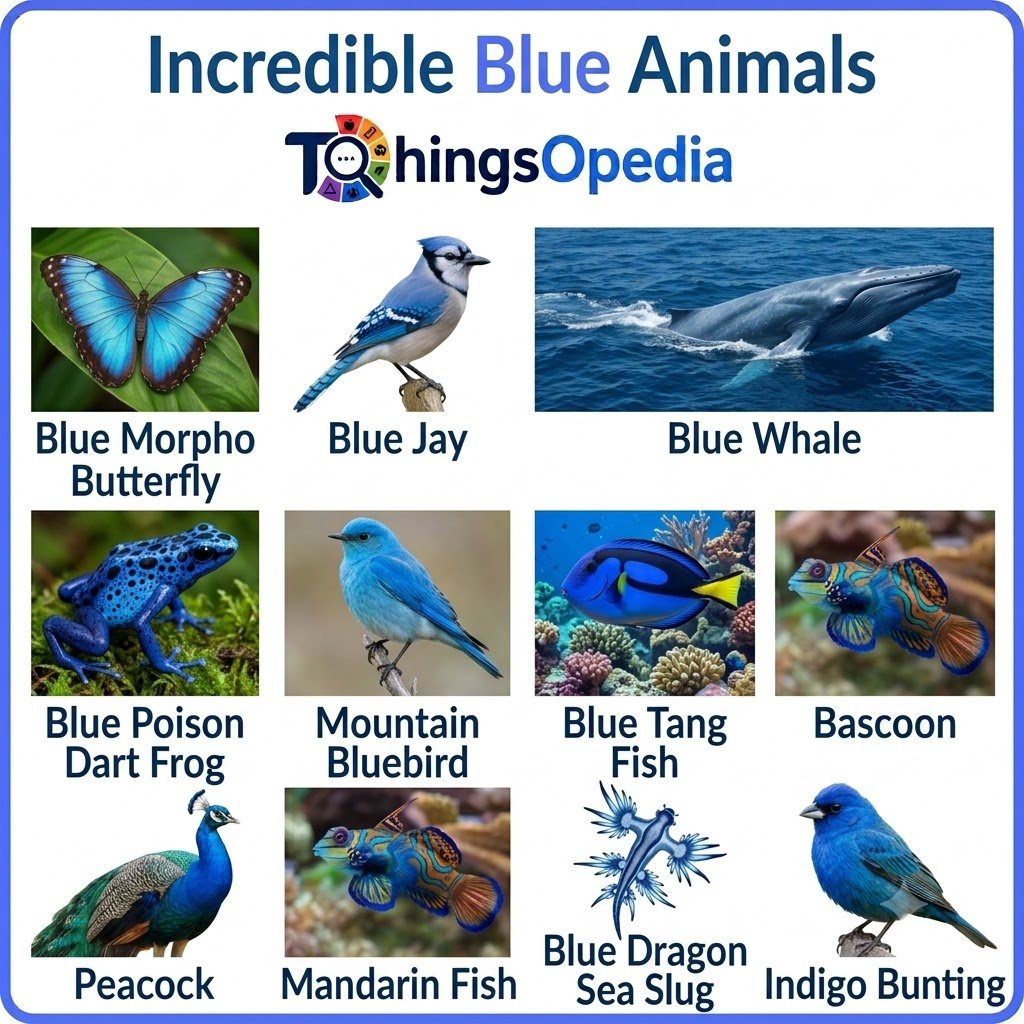
Native to Central and South America, the Blue Morpho butterfly has wings that shimmer due to microscopic scales reflecting light.
Blue Jay
Despite appearing bright blue, Blue Jays have no blue pigment in their feathers. Their color is produced entirely through structural coloration.
Blue Whale
The Blue Whale is the largest animal ever known to exist, reaching lengths of over 30 meters (100 feet) and weighing more than 180 metric tons.
Blue Poison Dart Frog
Found in the rainforests of South America, this striking amphibian warns predators with its vivid coloration.
Mountain Bluebird
Known for its brilliant sky-blue feathers, the Mountain Bluebird is one of North America’s most recognizable birds.
Blue Tang Fish
Popularly recognized from animated films, the Blue Tang lives on coral reefs throughout the Indo-Pacific region.
Peacock
The neck feathers of a peacock display brilliant blue colors created through microscopic feather structures rather than pigments.
Mandarin Fish
Often called one of the world’s most colorful fish, the Mandarin Fish combines blue, green, and orange patterns.
Blue Dragon Sea Slug
This tiny ocean creature floats upside down while feeding on venomous jellyfish.
Indigo Bunting
Male Indigo Buntings appear bright blue during breeding season, even though their feathers contain no blue pigment.
Everyday Blue Objects
Blue is among the most commonly used colors in modern products because people associate it with cleanliness, professionalism, and trust.
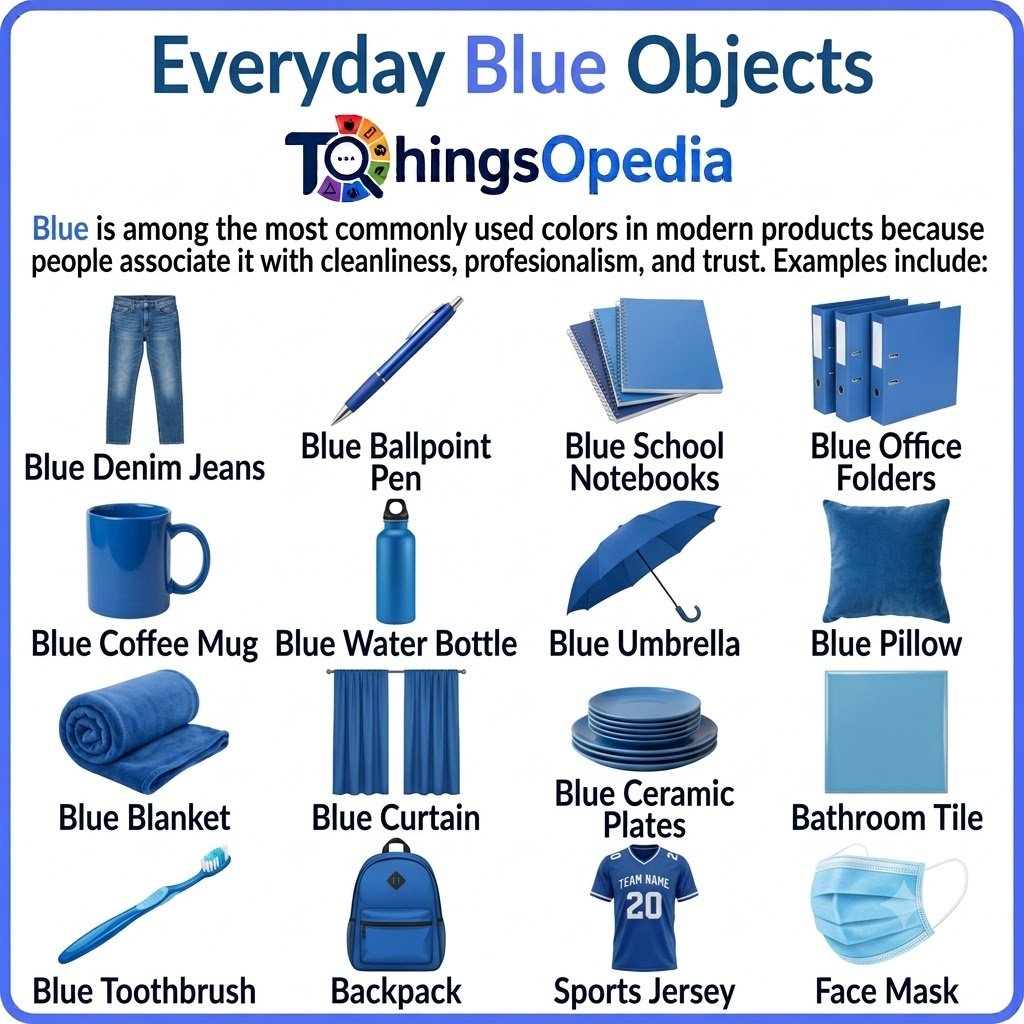
Examples include:
- Denim jeans
- Ballpoint pens
- School notebooks
- Office folders
- Coffee mugs
- Water bottles
- Umbrellas
- Pillows
- Blankets
- Curtains
- Ceramic plates
- Bathroom tiles
- Toothbrushes
- Backpacks
- Sports jerseys
- Face masks
- Storage bins
- Car paint
- Bicycles
- Luggage
These familiar examples show how deeply blue has become part of everyday life.
Blue Foods Around the World
Naturally blue foods are surprisingly uncommon.
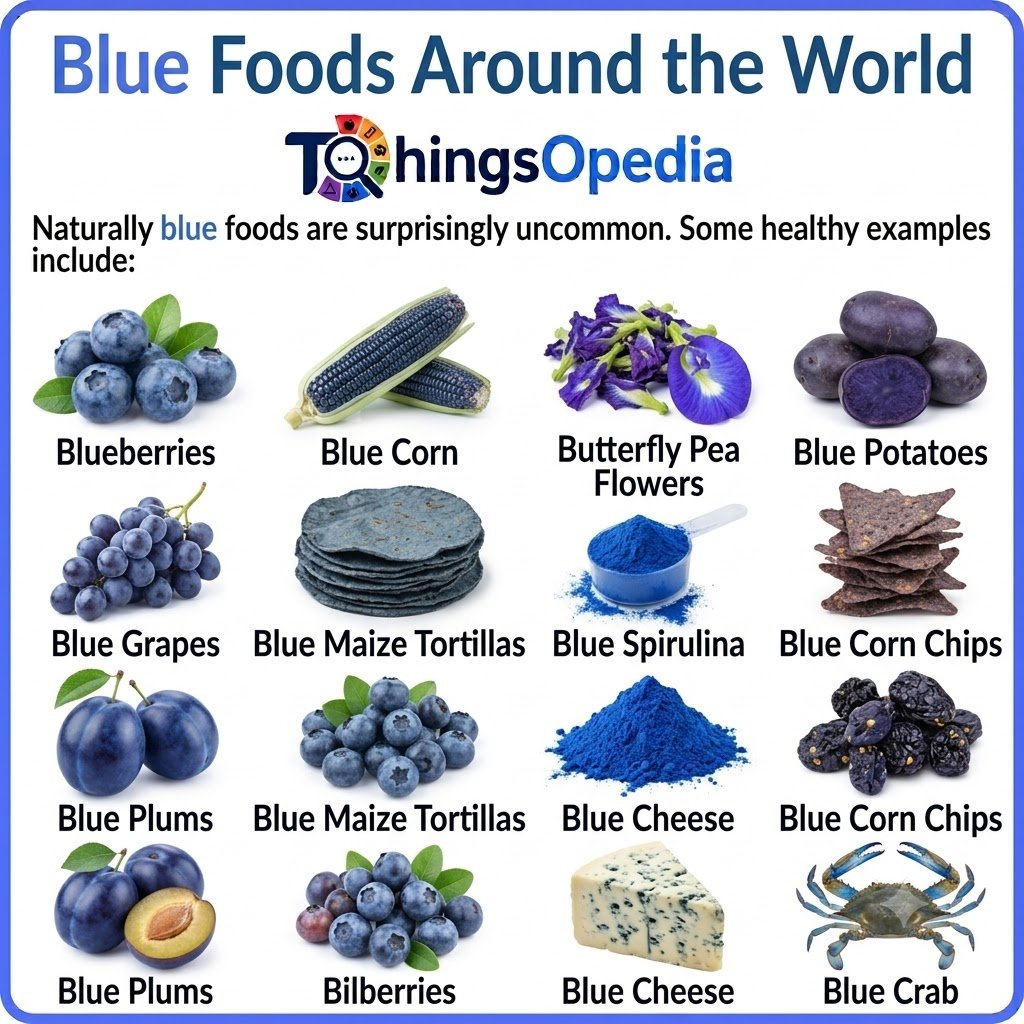
Some healthy examples include:
- Blueberries
- Blue corn
- Butterfly pea flowers
- Blue potatoes
- Blue grapes
- Blue maize tortillas
- Blue spirulina
- Blue corn chips
- Blue plums
- Bilberries
Butterfly pea flower tea is especially fascinating because adding lemon juice changes the drink from blue to purple due to differences in acidity.
Blue in Science and Technology
It’s plays a major role in scientific discoveries and technological innovation.
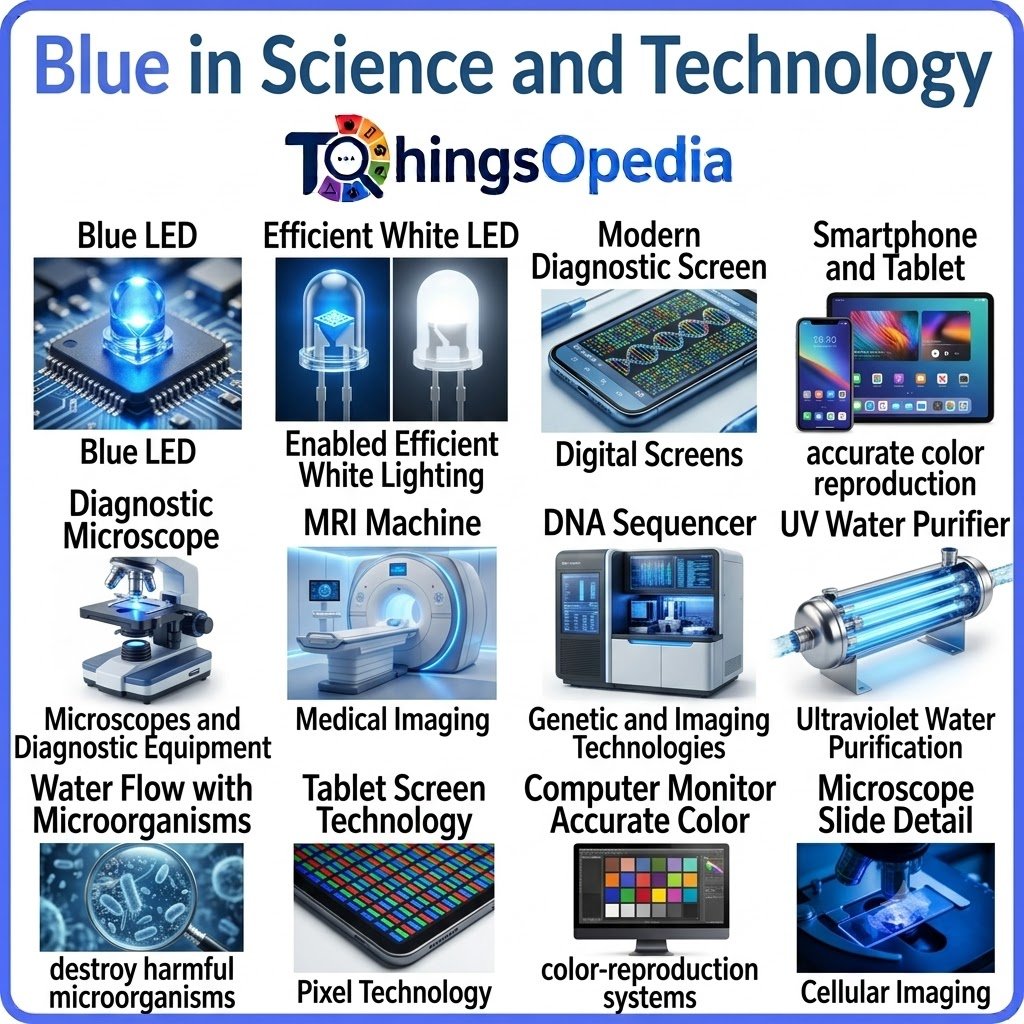
Blue LEDs
One of the most important inventions in modern lighting was the blue light-emitting diode (LED). Its development enabled efficient white LED lighting and earned the inventors the 2014 Nobel Prize in Physics.
Medical Imaging
Blue light is widely used in diagnostic equipment, microscopes, and imaging technologies.
Water Purification
Certain purification systems use blue-spectrum ultraviolet light to destroy harmful microorganisms.
Digital Screens
Modern smartphones, televisions, tablets, and computer monitors rely heavily on blue light technology for accurate color reproduction.
Why Companies Prefer Blue Branding
Many of the world’s largest organizations use blue because it creates feelings of trust and professionalism.
Research in consumer psychology suggests that blue often communicates:
- Reliability
- Stability
- Intelligence
- Security
- Confidence
- Professionalism
- Calmness
This explains why financial institutions, healthcare providers, technology firms, and airlines frequently choose blue as their primary brand color.
Interesting Facts About Blue
Here are some fascinating facts you may not know.
- Blue is consistently ranked as the world’s favorite color.
- Ancient civilizations had very few words specifically describing blue.
- Egyptian Blue is considered the world’s first synthetic pigment and dates back more than 4,500 years.
- Human eyes are particularly sensitive to blue wavelengths.
- Blue stars are among the hottest stars in the universe.
- Blue diamonds are among the rarest gemstones ever discovered.
- Blue lobsters occur in approximately one out of every two million lobsters due to a genetic mutation.
- Some butterflies appear brighter from different viewing angles because of structural coloration.
- Blue flames are generally hotter than yellow flames.
- The Earth’s oceans cover about 71% of the planet’s surface, contributing to Earth’s nickname as the “Blue Planet.”
Educational Importance of Learning Colors
Teaching children about colors improves observation, memory, vocabulary, and critical thinking skills.
Learning to identify blue objects also introduces students to biology, geology, physics, chemistry, and environmental science through real-world examples.
Teachers often use color-based activities to encourage early learning and improve visual recognition skills.
Frequently Asked Questions
Why is blue rare in nature?
True blue pigments are uncommon because producing them requires complex biological processes. Many organisms instead rely on microscopic structures that reflect blue light.
Why is the sky blue?
The atmosphere scatters shorter blue wavelengths of sunlight more effectively than longer wavelengths, causing the sky to appear blue during the day.
Why is the ocean blue?
Water absorbs red wavelengths while scattering blue wavelengths, making large bodies of water appear blue.
Are blueberries naturally blue?
Yes. Their characteristic color comes from anthocyanin pigments combined with a natural waxy coating on the fruit.
Which gemstone is naturally blue?
Sapphire is among the best-known naturally blue gemstones and has been prized for centuries.
Which is the largest blue animal?
The Blue Whale is not only the largest blue animal but also the largest animal ever known to have lived on Earth.
Final Thoughts
The world is filled with remarkable things that are blue, from breathtaking natural landscapes and rare wildlife to nutritious foods and everyday household objects. Although blue is surprisingly uncommon in nature, it has become one of humanity’s favorite colors because it represents calmness, trust, intelligence, and beauty.
Whether you’re admiring a clear sky, watching ocean waves, enjoying fresh blueberries, or appreciating the vibrant wings of a Blue Morpho butterfly, every shade of blue tells a fascinating scientific story. Understanding how blue appears in nature, why it is so rare, and how it influences our daily lives gives us a deeper appreciation for this extraordinary color.
As science continues to uncover new discoveries about light, color, and perception, blue remains one of the most captivating colors on Earth—both visually and scientifically.
Enjoyed this article? Explore more informative guides, fascinating facts, and everyday knowledge at Thingsopedia — your go-to destination for discovering interesting things from around the world.