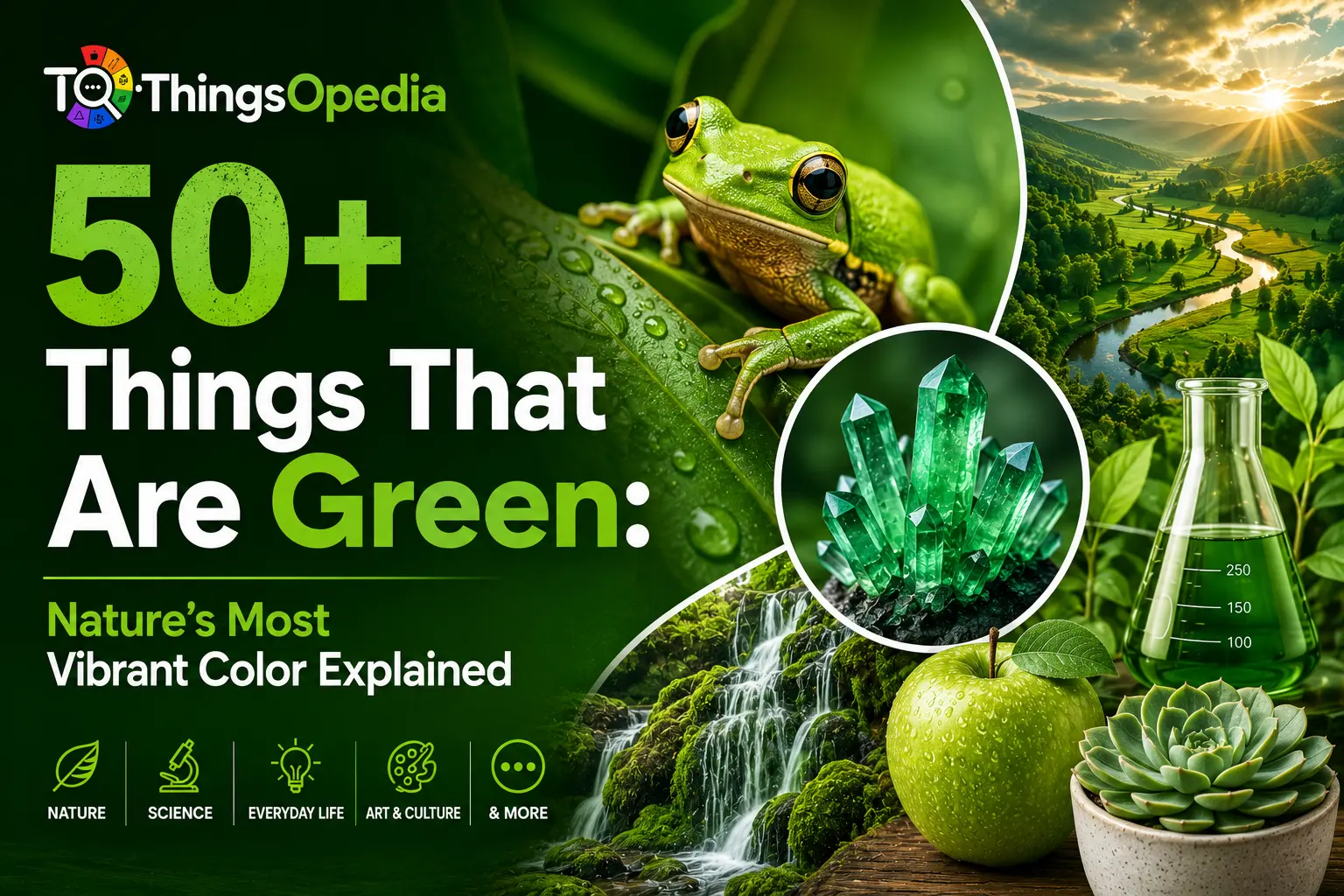
55+ Things That Are Green: Nature’s Most Vibrant Color Explained
Green is one of the most recognizable colors in the world. It represents life, growth, balance, freshness, and sustainability across cultures. Whether you’re walking through a forest, enjoying fresh vegetables, or admiring gemstones, green surrounds us in countless forms.
In fact, the color green plays a critical role in Earth’s ecosystems. According to NASA’s Earth Observatory, vegetation covers roughly 31% of the planet’s land surface, supporting biodiversity, regulating climate, and producing the oxygen humans depend on. This makes green much more than just a beautiful color—it is a symbol of life itself.
In this guide, we’ll explore things that are green, their importance, surprising facts, and why this color has become synonymous with health and environmental responsibility.
Why Green Is So Common in Nature
The abundance of green in nature comes primarily from chlorophyll, the pigment found in plants, algae, and certain bacteria. Chlorophyll absorbs red and blue wavelengths of sunlight while reflecting green light, making leaves appear green to our eyes.
Photosynthesis powered by chlorophyll enables plants to convert sunlight into energy while releasing oxygen into the atmosphere. Scientists estimate that terrestrial plants produce approximately half of the world’s oxygen, with the remaining contribution coming largely from marine phytoplankton.
Without chlorophyll, life on Earth would be dramatically different.
Common Things That Are Green in Nature
Nature offers endless examples of green objects and living organisms.
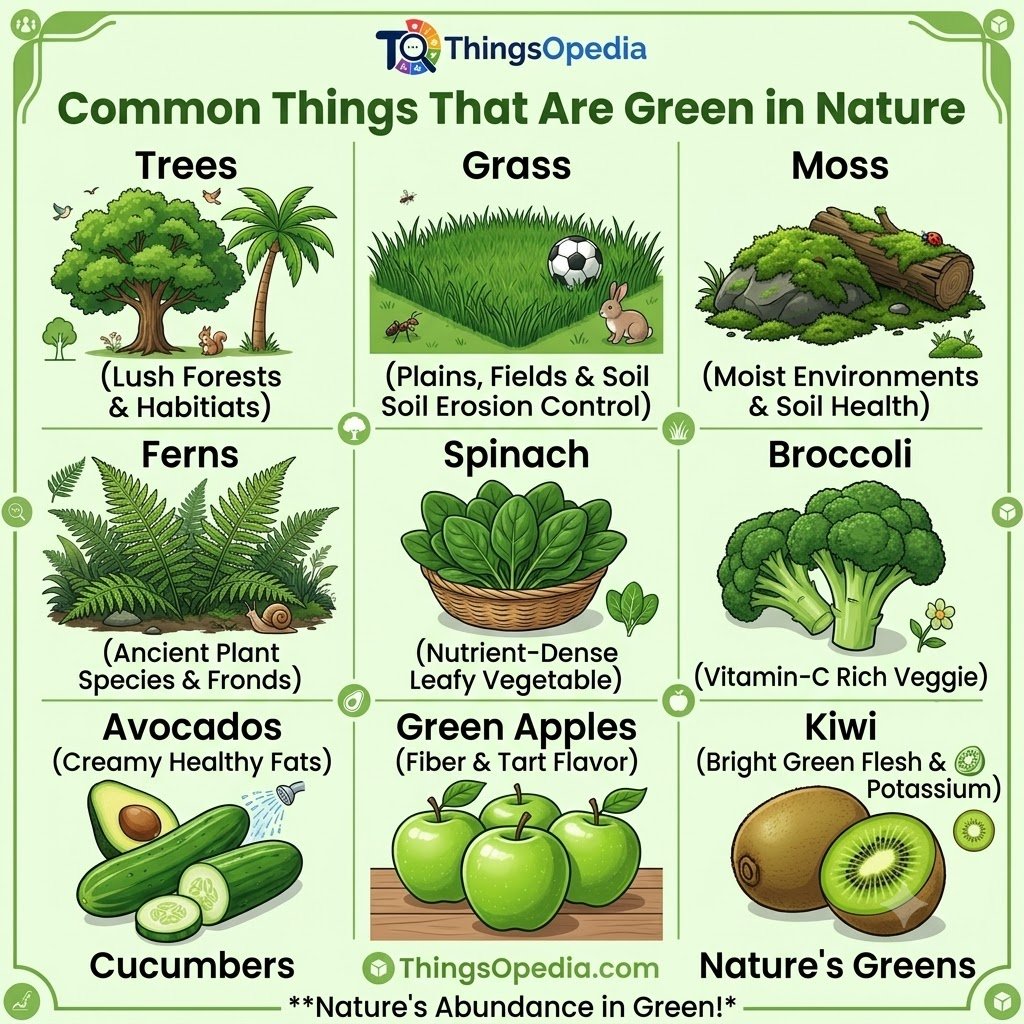
Trees
From towering oak trees to tropical palms, trees are among the most recognizable green features on Earth. Their leaves contain chlorophyll throughout the growing season, making forests appear lush and vibrant.
Forests also absorb billions of tons of carbon dioxide annually, helping slow climate change while supporting wildlife habitats.
Grass
Grass covers parks, sports fields, gardens, and vast natural plains. It prevents soil erosion, stores carbon, and provides food for grazing animals.
The world’s grasslands account for nearly 40% of Earth’s land area, making them one of the largest ecosystems.
Moss
Moss thrives in moist environments, covering rocks, tree trunks, and forest floors. Despite its small size, moss helps retain moisture and improves soil health.
Ferns
Ferns are among Earth’s oldest plant species, existing for over 360 million years. Their intricate green fronds continue to decorate forests and gardens worldwide.
Green Fruits and Vegetables
Many healthy foods naturally display vibrant green colors due to chlorophyll and nutrient-rich pigments.
Spinach
Spinach contains vitamins A, C, K, folate, iron, and antioxidants. It remains one of the world’s most nutrient-dense leafy vegetables.
Broccoli
Broccoli is packed with vitamin C, fiber, and plant compounds linked to numerous health benefits.
Avocados
Avocados are famous for their creamy texture and healthy monounsaturated fats that support heart health.
Green Apples
Green apples offer dietary fiber, vitamin C, and a pleasantly tart flavor, making them popular for healthy snacks.
Kiwi
Although brown on the outside, kiwi reveals bright green flesh rich in vitamin C and potassium.
Cucumbers
Composed of roughly 95% water, cucumbers help support hydration while providing vitamins and minerals.
Green Grapes
These are naturally sweet and contain antioxidants such as flavonoids and resveratrol.
Green Animals Around the World
The animal kingdom showcases remarkable green coloration for camouflage, communication, and survival.
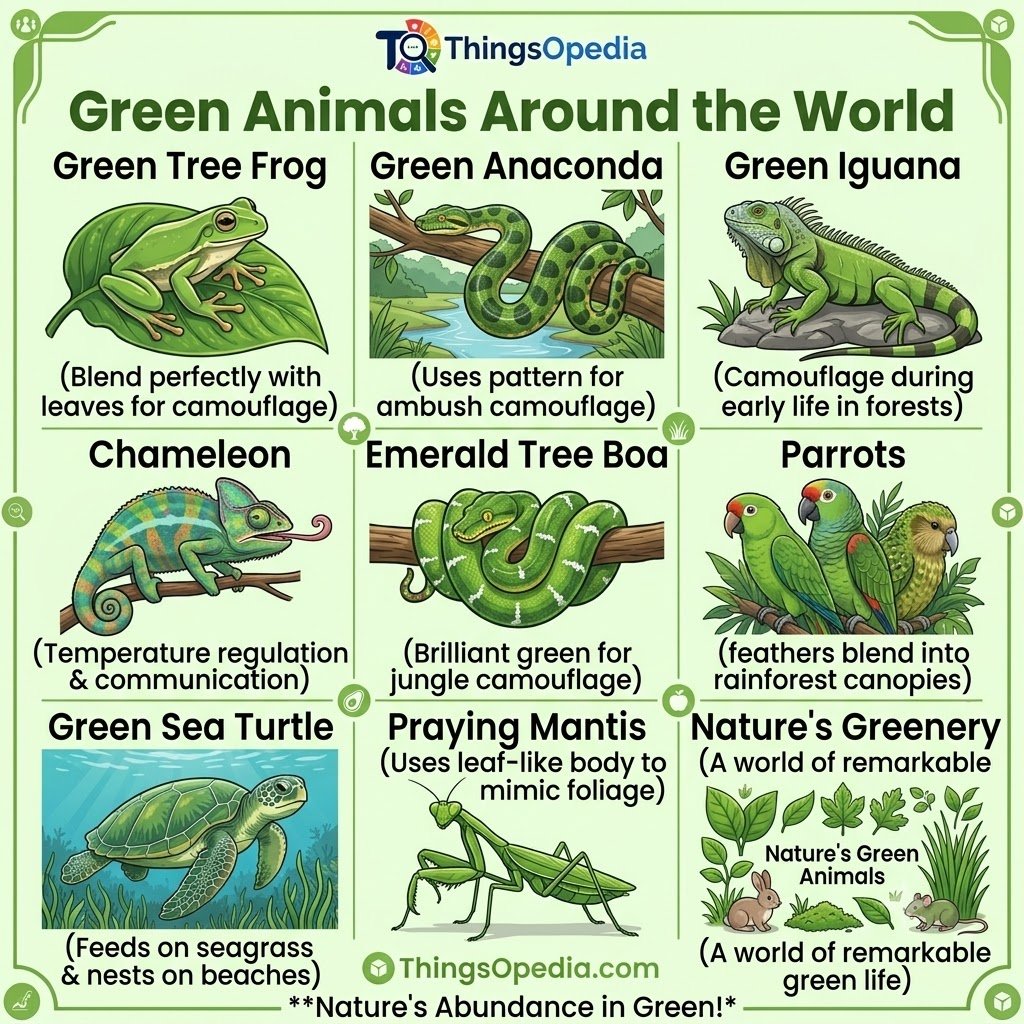
Green Tree Frog
These amphibians blend perfectly with leaves, helping them avoid predators.
Iguanas
Green iguanas inhabit tropical forests across Central and South America, using their coloration for camouflage during early life stages.
Chameleons
Contrary to popular belief, chameleons do not change color solely for camouflage. They also shift colors to regulate body temperature and communicate with other chameleons.
Parrots
Many parrot species display brilliant green feathers that blend into rainforest canopies.
Green Sea Turtle
Green sea turtles can weigh over 300 kilograms and travel thousands of miles between feeding and nesting grounds.
Praying Mantis
These fascinating insects closely resemble leaves, making them highly effective predators.
Love To Read More 50+ Things That Are Purple: Beautiful Examples in Nature & Life
Everyday Green Objects
Green extends far beyond nature.
Some common everyday examples include:
- Traffic lights
- Recycling bins
- Garden hoses
- Green notebooks
- Emerald jewelry
- Tennis balls
- Green clothing
- Chalkboards
- Camping equipment
- Water bottles
- Decorative plants
- Holiday decorations
These familiar items often symbolize safety, sustainability, or freshness.
Beautiful Green Gemstones
Green gemstones have fascinated civilizations for thousands of years.
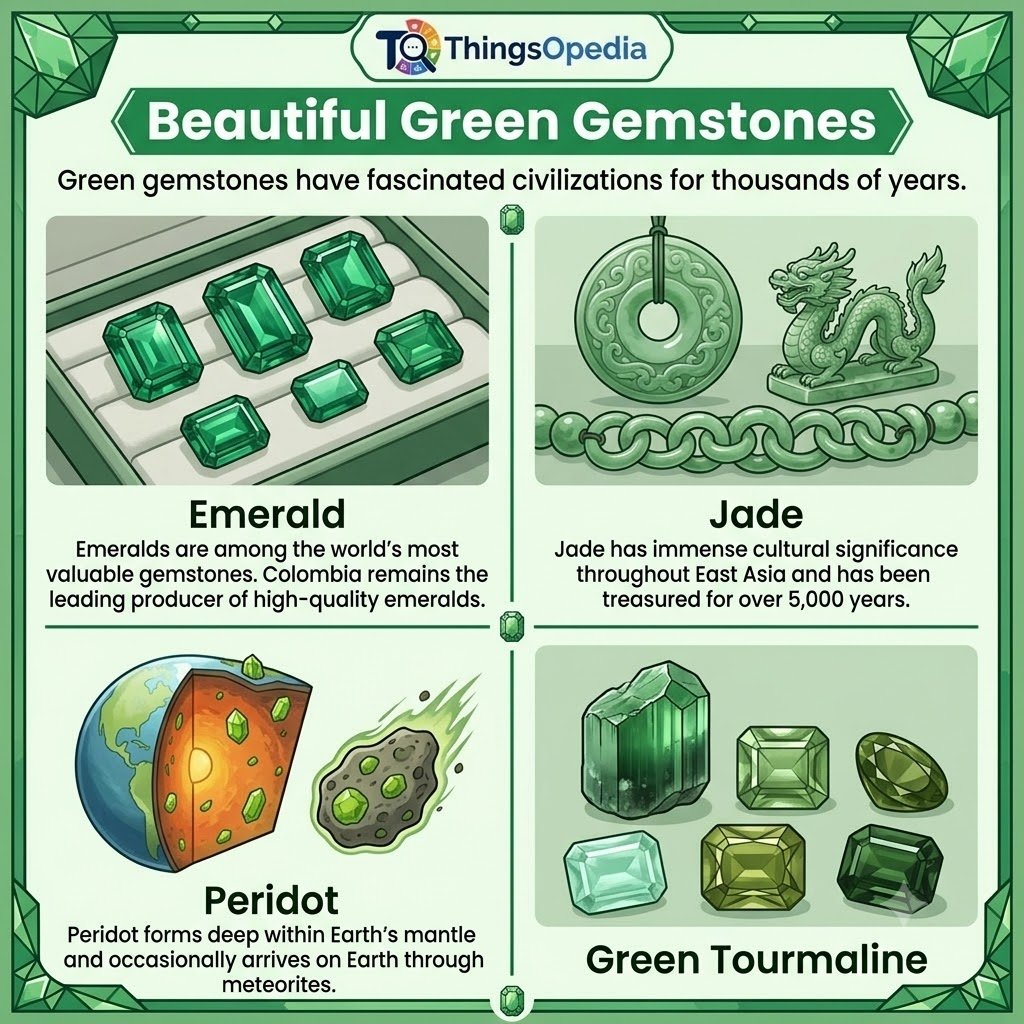
Emerald
Emeralds are among the world’s most valuable gemstones. Colombia remains the leading producer of high-quality emeralds.
Jade
Jade has immense cultural significance throughout East Asia and has been treasured for over 5,000 years.
Peridot
Peridot forms deep within Earth’s mantle and occasionally arrives on Earth through meteorites.
Green Tourmaline
Known for its durability and rich shades, green tourmaline is popular in modern jewelry.
Green in Technology and Sustainability
Green has become closely associated with environmentally responsible innovation.
Examples include:
- Electric vehicles
- Solar energy systems
- Wind turbines
- Green-certified buildings
- Reusable shopping bags
- Energy-efficient appliances
- Composting systems
- Rainwater harvesting equipment
Governments and businesses worldwide increasingly invest in sustainable technologies to reduce greenhouse gas emissions and improve resource efficiency.
Psychological Meaning of Green
Psychologists have long studied the emotional effects of color.
Green is commonly associated with:
- Balance
- Renewal
- Harmony
- Growth
- Calmness
- Prosperity
- Health
- Stability
Hospitals, wellness centers, and eco-friendly brands frequently incorporate green into their branding because it promotes feelings of relaxation and trust.
Cultural Importance of Green
Different cultures assign unique meanings to green.
- In many Western countries, green symbolizes nature and environmental awareness.
- In Ireland, green represents national heritage and is strongly associated with St. Patrick’s Day.
- In many Islamic cultures, green holds deep historical and spiritual significance.
- Across financial markets, green often indicates gains and positive performance.
These diverse interpretations demonstrate how one color can carry universal yet culturally unique meanings.
Environmental Benefits of Green Spaces
Urban green spaces deliver measurable health and environmental benefits.
Research consistently shows that parks and tree-lined neighborhoods help:
- Improve air quality
- Reduce urban heat
- Lower stress levels
- Encourage physical activity
- Increase biodiversity
- Reduce flooding through better water absorption
The World Health Organization recognizes access to green spaces as an important contributor to healthier communities.
Fun Facts About Green
Here are some fascinating facts:
- The human eye distinguishes more shades of green than almost any other color.
- Green is positioned at the center of the visible light spectrum.
- Many insects perceive ultraviolet light in addition to green wavelengths.
- Emerald receives its color from trace amounts of chromium and vanadium.
- Some butterflies display iridescent green wings through microscopic structures rather than pigments.
- Tennis balls were originally white before becoming fluorescent yellow-green for better television visibility.
- Green roofs can reduce building temperatures and improve energy efficiency.
How Green Supports a Healthy Lifestyle
Adding more green to daily life often promotes healthier habits.
Simple ideas include:
- Eating more leafy vegetables
- Growing indoor plants
- Spending time in parks
- Recycling household waste
- Choosing reusable products
- Planting native trees
- Walking through natural environments
Studies suggest that regular exposure to green environments supports improved mental well-being while encouraging physical activity.
Read More Guide’s: Things That Are Blue: 75 Fascinating Examples in Nature, Science, and Everyday Life
Frequently Asked Questions
Why are most plants green?
Plants contain chlorophyll, which reflects green wavelengths while absorbing red and blue light for photosynthesis.
Which fruit is naturally green?
Avocados, kiwis, green apples, grapes, pears, and limes are among the most common naturally green fruits.
Why is green associated with nature?
Because vegetation dominates Earth’s landscapes, humans naturally connect green with forests, plants, growth, and life.
What gemstone is famous for its green color?
Emerald is widely recognized as the world’s most famous green gemstone due to its rich color and rarity.
Is green considered a calming color?
Yes. Numerous studies in environmental psychology indicate that exposure to green environments can reduce stress and improve mood.
Final Thoughts
From towering forests and nutritious vegetables to remarkable animals and sustainable technologies, green influences nearly every aspect of our lives. Understanding things that are green helps us appreciate the natural systems that sustain life while recognizing how this remarkable color shapes culture, health, science, and innovation.
Whether you’re exploring nature, improving your diet, designing a home, or learning about environmental conservation, green remains a powerful reminder of renewal, balance, and growth. As our world continues prioritizing sustainability, the significance of things that are green will only continue to grow—both in our daily lives and in the future of our planet.