
99+ Things That Are Gray: Nature, Animals, Materials & More
Gray is one of the most versatile and timeless colors found in nature and everyday life. Sitting between black and white on the color spectrum, gray symbolizes balance, neutrality, wisdom, maturity, and sophistication. Although it may seem understated compared to brighter colors, gray plays a vital role in our natural environment, architecture, technology, fashion, and even outer space.
From majestic elephants roaming African savannas to granite mountains that have stood for millions of years, countless gray-colored objects surround us every day. Many gray shades occur naturally due to mineral composition, weathering, pigmentation, or the way light reflects from different surfaces. Humans also intentionally use gray in construction, interior design, transportation, and digital technology because it creates a clean, modern, and elegant appearance.
In this guide, you’ll discover more than 99 real-world examples of things that are gray, organized into easy-to-explore categories. Whether you’re looking for educational inspiration, classroom resources, design ideas, or simply satisfying your curiosity, this comprehensive list has something for everyone.
Why Is Gray So Common?
Gray appears frequently because it often results from a mixture of black and white or from natural weathering processes. In geology, rocks become gray because of minerals like quartz and feldspar. Many animals evolved gray fur or feathers for camouflage, while cloudy skies appear gray because water droplets scatter sunlight evenly.
Gray is also widely used in modern society because it:
- Matches nearly every other color
- Represents professionalism and stability
- Hides dust and wear better than white
- Creates a minimalist aesthetic
- Works well in architecture and technology
Things That Are Gray in Nature
Nature contains countless beautiful gray objects that often go unnoticed.
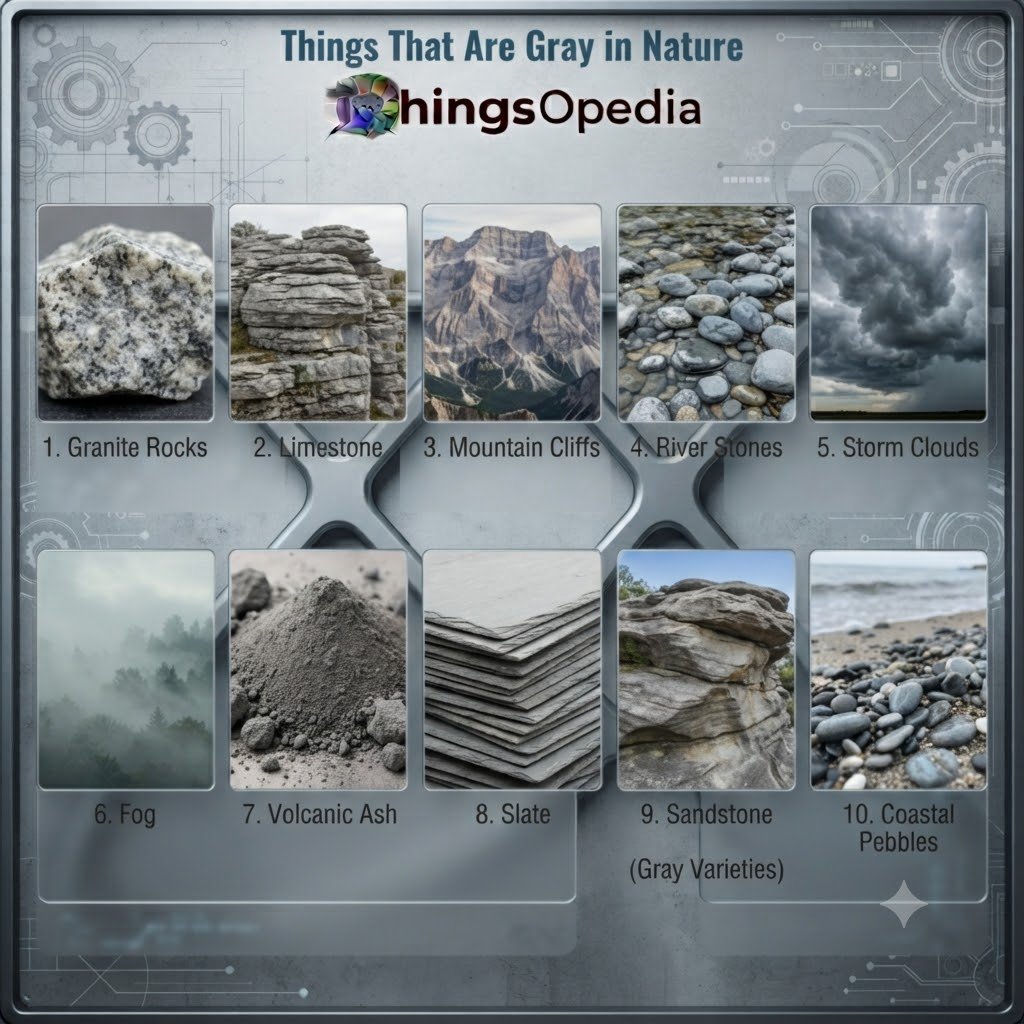
1. Granite Rocks
Granite is one of the world’s most abundant igneous rocks and is naturally gray due to quartz, feldspar, and mica minerals.
2. Limestone
Many limestone formations display light to medium gray coloring.
3. Mountain Cliffs
Weathered cliffs often develop gray surfaces over millions of years.
4. River Stones
Smooth stones found in rivers commonly appear gray after years of erosion.
5. Storm Clouds
Dense rain clouds scatter sunlight, creating their familiar gray appearance.
6. Fog
Tiny suspended water droplets make fog look pale gray.
7. Volcanic Ash
Fresh volcanic ash ranges from light to dark gray depending on mineral content.
8. Slate
Slate is a fine-grained metamorphic rock widely used for roofing.
9. Sandstone (Gray Varieties)
Some sandstone formations naturally develop gray hues.
10. Coastal Pebbles
Ocean waves polish many pebbles into beautiful gray stones.
Gray Animals
Many animals rely on gray coloration for camouflage or temperature regulation.
11. African Elephant
The African elephant is the largest land mammal and is famous for its gray skin.
12. Asian Elephant
Smaller than its African cousin but equally recognizable.
13. Gray Wolf
Gray wolves vary from silver-gray to nearly black depending on habitat.
14. Gray Whale
These massive marine mammals migrate thousands of miles annually.
15. Koala
Koalas have soft gray fur that helps regulate body temperature.
16. Gray Squirrel
One of the most common squirrels in North America.
17. Harbor Seal
Harbor seals often have gray coats with darker spots.
18. Great Gray Owl
One of the tallest owl species in the world.
19. Gray Heron
A large wading bird found across Europe, Asia, and Africa.
20. Donkey
Many domestic donkeys have gray coats.
21. Pigeon
City pigeons commonly display gray feathers.
22. Dolphin (Certain Species)
Several dolphin species have gray skin.
23. Shark (Many Species)
Great white sharks and reef sharks often have gray upper bodies.
24. Manatee
These gentle marine mammals are typically gray.
25. Rhino
Both black and white rhinoceroses actually have gray skin.
Gray Plants and Fungi
Although green dominates the plant kingdom, many species feature attractive gray foliage.
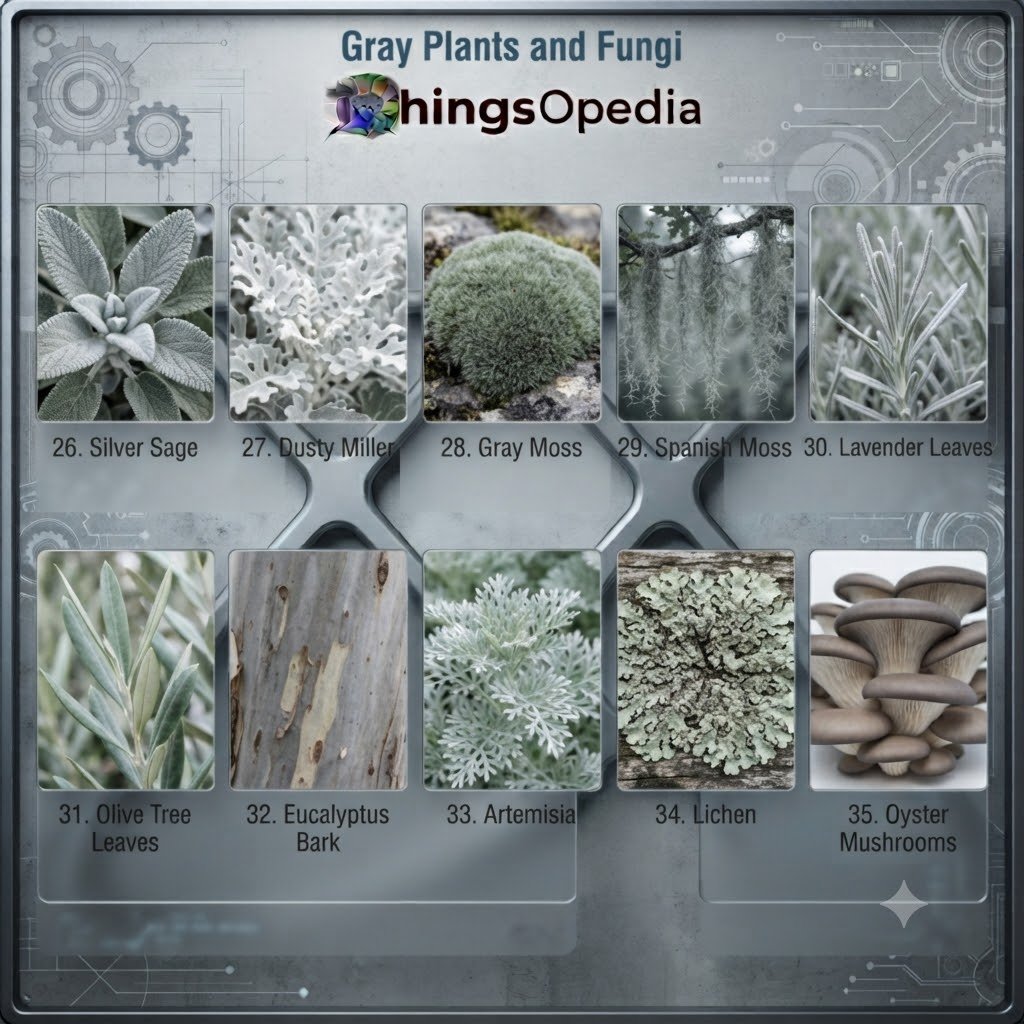
26. Silver Sage
27. Dusty Miller
28. Gray Moss
29. Spanish Moss
30. Lavender Leaves
31. Olive Tree Leaves
32. Eucalyptus Bark
33. Artemisia
34. Lichen
35. Oyster Mushrooms
Many of these plants have gray coloring because of tiny hairs or waxy coatings that reduce water loss.
Gray Foods
Some foods naturally appear gray or become gray after processing.
36. Gray Sea Salt
37. Black Sesame Paste
38. Chia Seed Pudding
39. Oyster Mushrooms
40. Gray Shrimp (Raw)
41. Buckwheat Noodles
42. Poppy Seed Paste
43. Gray Beans
44. Cooked Eggplant Skin
45. Certain Seaweeds
Gray Minerals and Materials
Gray is especially common among building materials.
46. Concrete
47. Cement
48. Steel
49. Iron
50. Graphite
51. Marble (Gray Varieties)
52. Basalt
53. Lead
54. Zinc
55. Asphalt
These materials are widely used in construction because of their durability and availability.
Gray Everyday Objects
Gray has become one of the most popular colors for consumer products.
56. Laptop Computers
57. Smartphones
58. Refrigerators
59. Washing Machines
60. Cars
61. Office Chairs
62. Keyboards
63. Headphones
64. Suitcases
65. Coffee Makers
Many manufacturers choose gray because fingerprints and scratches are less noticeable.
Gray Clothing and Fashion
Neutral colors remain timeless.

66. Business Suits
67. Hoodies
68. Sneakers
69. Scarves
70. Wool Sweaters
71. Baseball Caps
72. Winter Jackets
73. Gloves
74. Socks
75. Handbags
Gray pairs beautifully with nearly every color.
Gray Weather and Natural Phenomena
Nature frequently displays gray during changing weather.
76. Rain Clouds
77. Thunderstorms
78. Foggy Mornings
79. Smoke
80. Mist
81. Ash Clouds
82. Winter Skies
83. Hail Clouds
84. Ocean During Storms
85. Lunar Surface
Gray Transportation
Gray remains popular in transportation due to its practical appearance.
86. Passenger Trains
87. Commercial Airplanes
88. Cargo Ships
89. Motorcycles
90. Bicycles
Gray in Architecture
Modern architecture often embraces gray.
91. Concrete Buildings
92. Stone Bridges
93. Slate Roofs
94. Sidewalks
95. Parking Garages

Gray Technology
Technology companies frequently use gray to create sleek designs.
96. Computer Servers
97. Game Consoles
98. Smart Speakers
99. Desktop Computers
100. Wireless Routers
Why Many Animals Are Gray
Gray coloration provides important survival advantages:
- Excellent camouflage
- Better heat regulation
- Protection from predators
- Adaptation to rocky environments
- Seasonal blending with surroundings
Marine mammals, elephants, wolves, and many birds all benefit from gray coloring in different ecosystems.
Interesting Facts About Gray
- Gray is considered an achromatic color because it has no dominant hue.
- Human hair naturally turns gray as melanin production declines with age.
- Granite is one of the most widely used gray building stones worldwide.
- The Moon appears gray because its rocky surface reflects sunlight without strong color.
- Gray wolves once inhabited much of the Northern Hemisphere.
- Modern minimalist interior design often features gray as its primary color.
- Storm clouds become darker gray as they contain more water droplets.
Historical Timeline of Gray Materials and Uses

Frequently Asked Questions
What are some common things that are gray?
Common gray objects include elephants, wolves, pigeons, concrete, granite, storm clouds, laptops, steel, sharks, sidewalks, and many modern vehicles.
Why do so many rocks appear gray?
Many rocks contain minerals such as quartz, feldspar, mica, basalt, or limestone, which naturally produce gray coloration.
Which animals are naturally gray?
Elephants, koalas, gray wolves, whales, dolphins, seals, pigeons, rhinos, donkeys, and many owl species naturally display gray coloring.
Is gray a common color in nature?
Yes. Gray is one of the most widespread natural colors because it appears in rocks, mountains, clouds, animals, minerals, and weather phenomena.
What does the color gray symbolize?
Gray commonly represents balance, neutrality, wisdom, maturity, professionalism, stability, elegance, and calmness.
Final Thoughts
Gray may seem subtle compared to vibrant colors, but it is one of the most important and versatile shades in the natural and human-made world. From towering granite mountains and majestic elephants to modern technology, architecture, transportation, and fashion, gray surrounds us in countless forms.
This collection of things that are gray demonstrates how a seemingly simple color connects geology, biology, engineering, design, and everyday life. Whether you’re exploring nature, teaching students, planning creative projects, or simply expanding your knowledge, these real-world examples reveal the remarkable diversity hidden within this timeless neutral shade.