Things That Are Orange: 65 Vibrant Examples in Nature & Life
Orange is one of the most energetic and cheerful colors in the visible spectrum. It symbolizes enthusiasm, creativity, warmth, confidence, and adventure. From glowing autumn leaves and juicy citrus fruits to colorful wildlife and eye-catching safety equipment, orange is a color that naturally attracts attention while creating feelings of optimism and excitement.
Scientifically, orange falls between red and yellow on the visible light spectrum, with wavelengths ranging from approximately 590 to 620 nanometers. Because it is highly visible in various lighting conditions, orange is widely used for road safety signs, life jackets, construction equipment, and emergency gear around the world.
In this comprehensive guide, we’ll explore things that are orange, uncover the science behind this vibrant color, and discover fascinating examples from nature, food, wildlife, science, and everyday life.
Why Orange Is Such a Unique Color
Orange combines the energy of red with the happiness of yellow, making it one of the most psychologically stimulating colors. Color psychology research suggests orange is often associated with enthusiasm, friendliness, creativity, and motivation.
Unlike cooler colors such as blue and green, orange naturally grabs attention without appearing as alarming as bright red. This balance makes it popular in advertising, sports branding, construction safety, and outdoor equipment.
Beautiful Things That Are Orange in Nature
Nature offers countless beautiful examples of orange, especially during autumn and harvest seasons.
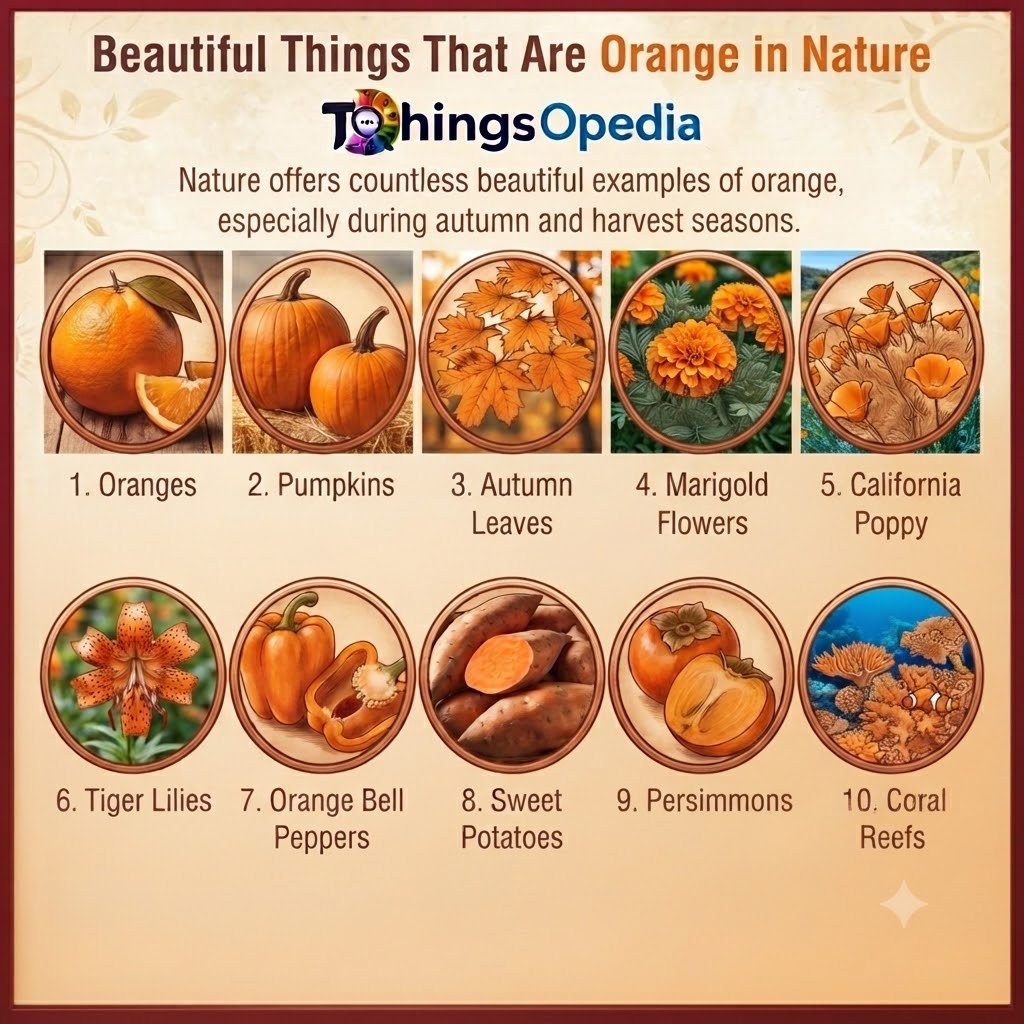
1. Oranges
The fruit that shares its name with the color is among the world’s most popular citrus fruits, valued for its vitamin C and refreshing taste.
2. Pumpkins
Pumpkins are rich in beta-carotene, a plant pigment that the body converts into vitamin A, supporting healthy vision and immunity.
3. Autumn Leaves
Many deciduous trees produce brilliant orange foliage during fall as chlorophyll breaks down and carotenoid pigments become more visible.
4. Marigold Flowers
Marigolds bloom in vibrant orange shades and are commonly planted in gardens because they attract pollinators and repel certain pests.
5. California Poppy
California’s state flower is admired for its bright orange petals that cover hillsides each spring.
6. Tiger Lilies
Tiger lilies display bold orange petals with dark spots, making them one of the most recognizable garden flowers.
7. Orange Bell Peppers
These sweet peppers are packed with vitamins A and C while adding bright color to meals.
8. Sweet Potatoes
Their orange flesh comes from beta-carotene, making them one of the healthiest root vegetables.
9. Persimmons
This seasonal fruit develops a rich orange color as it ripens and is widely enjoyed across Asia and the Mediterranean.
10. Coral Reefs
Many corals display brilliant orange shades due to pigments produced by their symbiotic algae and tissues.
Animals That Are Orange
Many animals display striking orange colors for camouflage, communication, or survival.
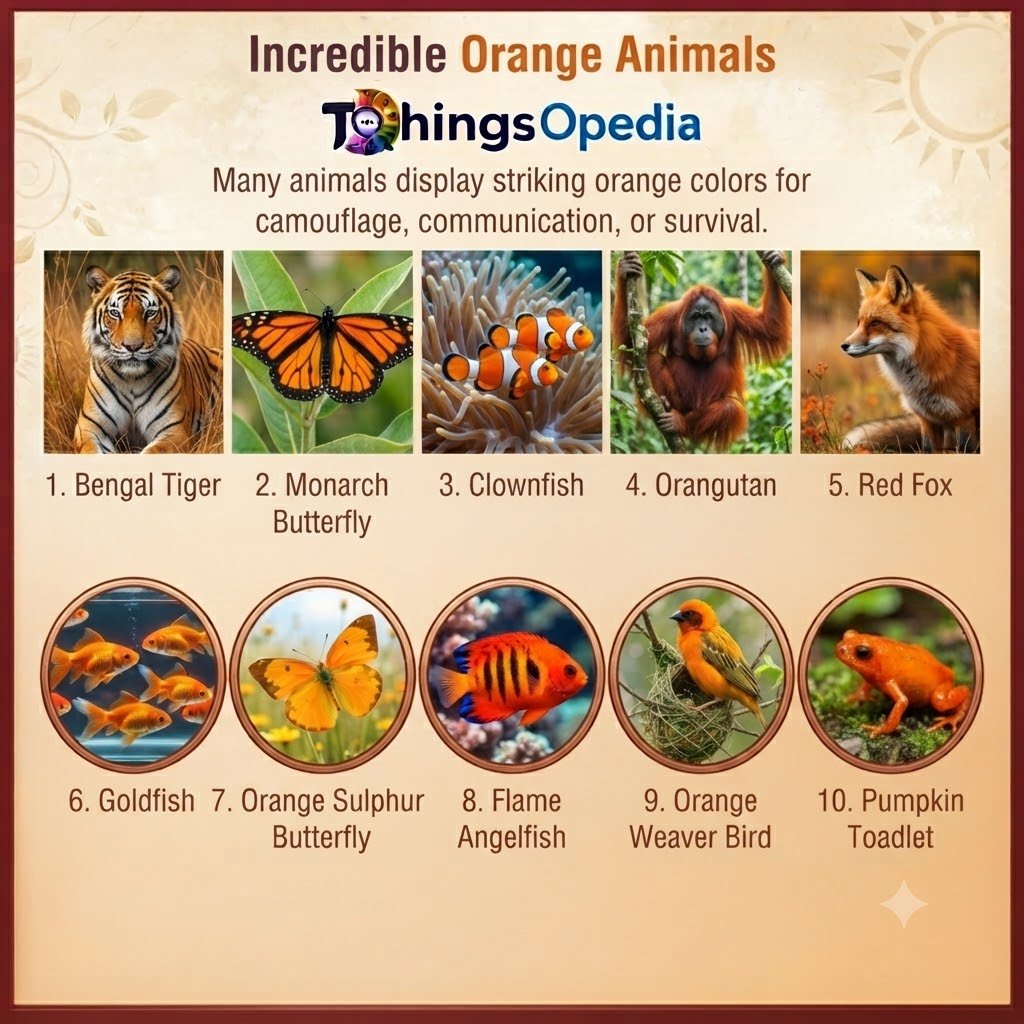
Bengal Tiger
The Bengal tiger’s orange coat, combined with black stripes, provides effective camouflage among tall grasses and forests.
Monarch Butterfly
Monarch butterflies are famous for their bright orange wings with black veins, warning predators of their toxicity.
Clownfish
Made famous by animated films, clownfish use their orange coloration alongside white stripes to blend within sea anemones.
Orangutan
Native to the rainforests of Borneo and Sumatra, orangutans have long orange hair that distinguishes them from other great apes.
Red Fox
Although often described as red, many red foxes have deep orange fur depending on the season and geographic region.
Goldfish
Many common goldfish varieties display brilliant orange scales due to selective breeding.
Orange Sulphur Butterfly
This widespread butterfly is easily recognized by its bright orange-yellow wings.
Flame Angelfish
One of the most colorful reef fish, the Flame Angelfish features vivid orange-red coloration with black vertical stripes.
Orange Weaver Bird
Male orange weaver birds develop brilliant orange plumage during breeding season to attract mates.
Pumpkin Toadlet
Native to Brazil, this tiny frog displays a vibrant orange body that warns predators of its toxicity.
Everyday Orange Objects
Orange is frequently used in products that need to be easily seen from a distance.
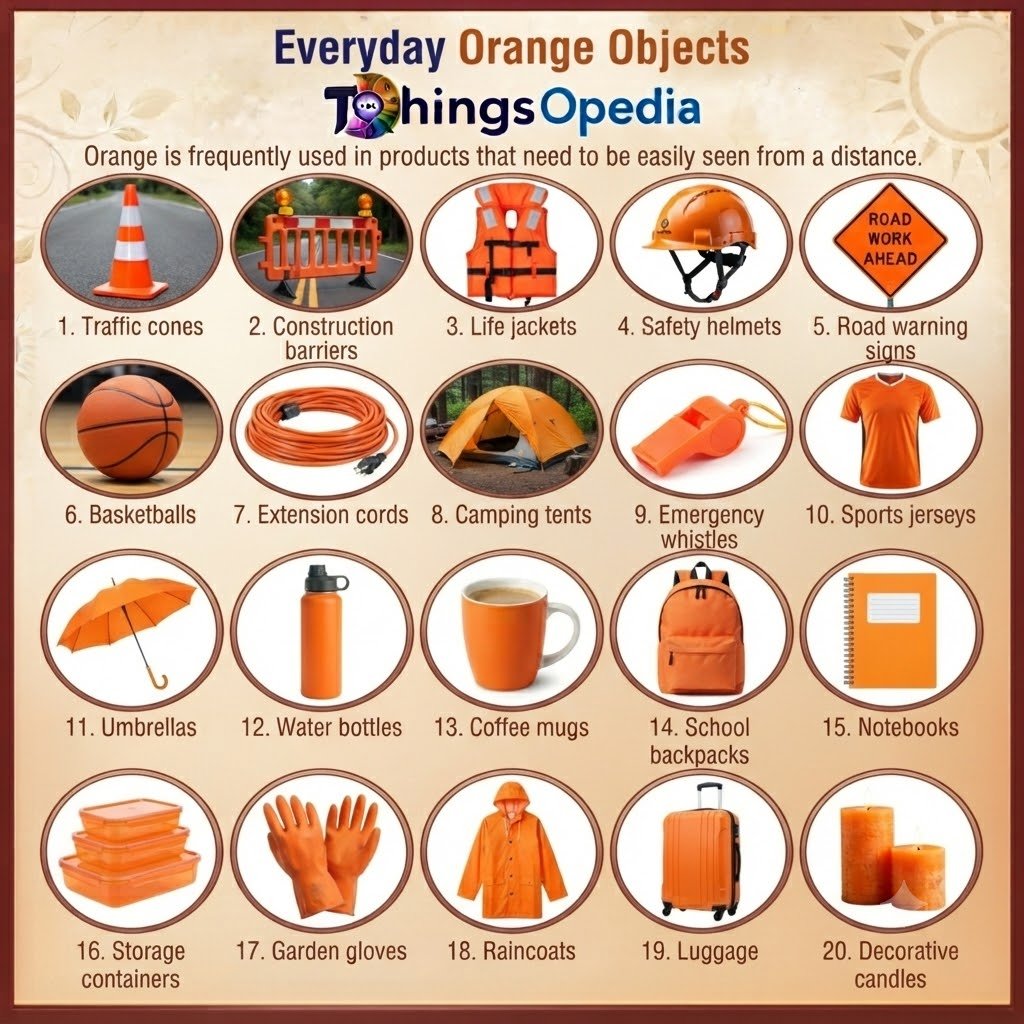
Examples include:
- Traffic cones
- Construction barriers
- Life jackets
- Safety helmets
- Road warning signs
- Basketballs
- Extension cords
- Camping tents
- Emergency whistles
- Sports jerseys
- Umbrellas
- Water bottles
- Coffee mugs
- School backpacks
- Notebooks
- Storage containers
- Garden gloves
- Raincoats
- Luggage
- Decorative candles
These everyday items demonstrate why orange is often chosen for both safety and style.
Things That Are Orange In Food
Many orange-colored foods are rich in vitamins, antioxidants, and dietary fiber.
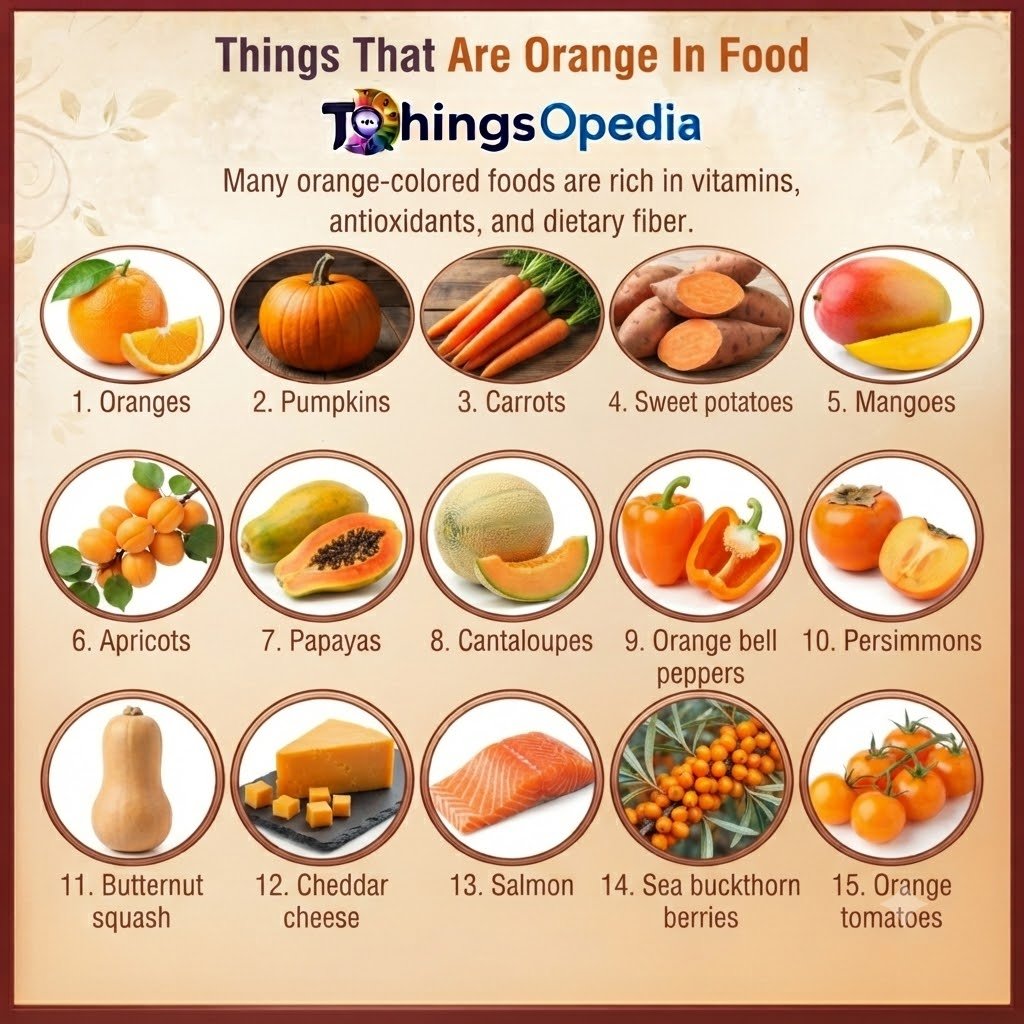
Some excellent examples include:
- Oranges
- Pumpkins
- Carrots
- Sweet potatoes
- Mangoes
- Apricots
- Papayas
- Cantaloupes
- Orange bell peppers
- Persimmons
- Butternut squash
- Cheddar cheese
- Salmon
- Sea buckthorn berries
- Orange tomatoes
Many of these foods contain beta-carotene, an antioxidant that helps maintain healthy eyesight, skin, and immune function.
Orange in Science and Technology
Orange plays an important role in several scientific and technological fields.
Astronomy
Some stars appear orange because of their surface temperatures, which are cooler than white stars but hotter than red stars.
Safety Engineering
Orange is internationally recognized as a high-visibility color used in construction zones, hazardous work areas, and emergency rescue equipment.
Environmental Monitoring
Survey markers, weather equipment, and emergency communication devices are frequently painted orange for maximum visibility.
Aviation and Marine Safety
Life rafts, rescue buoys, flotation devices, and emergency beacons commonly use fluorescent orange because it remains visible against water and natural landscapes.
Why Businesses Use Orange Branding
Orange is often associated with enthusiasm, friendliness, and innovation.
Marketing research suggests orange can communicate:
- Creativity
- Energy
- Confidence
- Affordability
- Excitement
- Optimism
- Adventure
Many companies in retail, technology, food service, fitness, and entertainment use orange branding to create an energetic and approachable identity.
Fascinating Facts About Orange
Here are some interesting facts about this vibrant color.
- Orange wavelengths range from approximately 590 to 620 nanometers in the visible spectrum.
- The fruit “orange” existed before the modern English name of the color became common.
- Carotenoids are responsible for the orange colors found in many fruits and vegetables.
- Monarch butterflies migrate thousands of kilometers each year across North America.
- Pumpkins are technically fruits because they develop from flowering plants and contain seeds.
- Carrots were originally cultivated in purple, white, and yellow varieties before orange carrots became widespread through selective breeding.
- Orange is widely recognized as one of the safest high-visibility colors for workers near roads and construction sites.
- Many tropical fish use bright orange colors for communication and species recognition.
- Orange sunsets occur when sunlight travels through more of Earth’s atmosphere, scattering shorter wavelengths and allowing orange and red light to dominate.
- Autumn forests become orange as chlorophyll breaks down and carotenoid pigments remain visible.
Educational Benefits of Learning Colors
Teaching children about colors improves vocabulary, observation skills, memory, and creativity.
Learning about naturally orange objects also introduces important concepts from biology, chemistry, environmental science, nutrition, and physics.
Color recognition activities help students connect classroom learning with everyday experiences while encouraging curiosity about the natural world.
You Might Also Like:
- Things That Are Red: 75 Amazing Examples in Nature, Science, and Everyday Life
- Things That Are Blue: 75 Fascinating Examples in Nature, Science, and Everyday Life
Frequently Asked Questions
Why are carrots orange?
Carrots are orange because they contain high levels of beta-carotene, a pigment that converts into vitamin A in the human body.
Why do autumn leaves turn orange?
As chlorophyll breaks down during autumn, carotenoid pigments become visible, creating beautiful orange and yellow leaves.
Which fruit is naturally orange?
Popular examples include oranges, apricots, persimmons, papayas, mangoes, cantaloupes, and certain tomato varieties.
Which animal is famous for its orange color?
The Bengal tiger, Monarch butterfly, clownfish, orangutan, and goldfish are among the best-known naturally orange animals.
Why are traffic cones orange?
Orange provides excellent visibility in daylight and low-light conditions, making it ideal for road safety and construction zones.
Which vitamin gives many foods their orange color?
Beta-carotene is the primary pigment responsible for the orange color in carrots, pumpkins, sweet potatoes, and other vegetables.
Final Thoughts
The world is filled with extraordinary things that are orange, from vibrant flowers and nutritious fruits to remarkable wildlife and highly visible safety equipment. Beyond its striking appearance, orange plays an important role in nature by attracting pollinators, signaling ripeness, and helping animals communicate or camouflage themselves.
In everyday life, orange represents warmth, creativity, enthusiasm, and adventure while serving practical purposes in transportation, emergency services, sports, education, and branding. Whether you’re enjoying a juicy orange, admiring colorful autumn leaves, spotting a Monarch butterfly, or seeing a traffic cone on the road, orange remains one of the most useful and inspiring colors around us.
Understanding the science, symbolism, and real-world examples behind this remarkable color helps us appreciate how orange influences both the natural world and modern society.