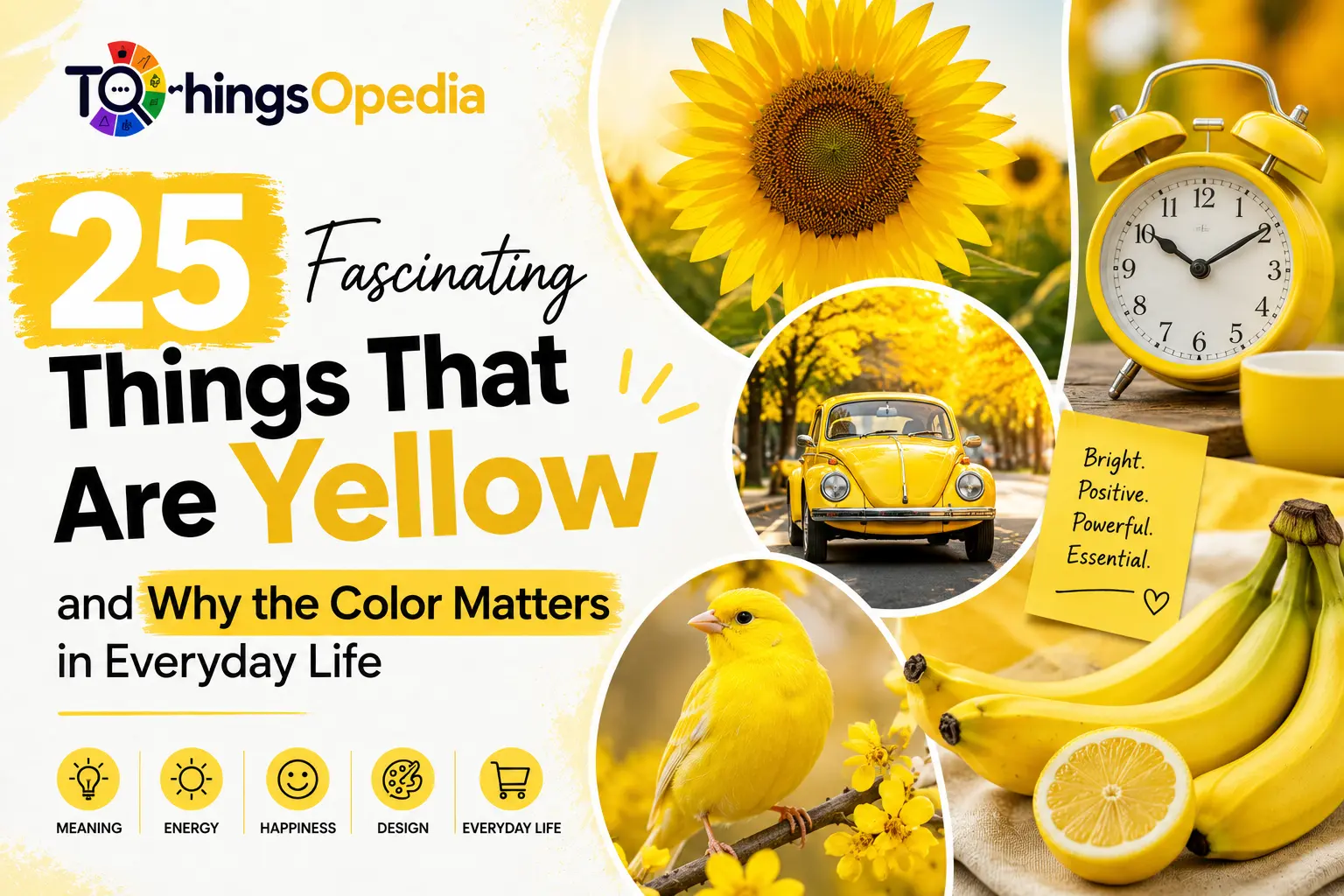
25 Fascinating Things That Are Yellow: Meaning, Examples, and Fun Facts
Yellow is one of the most recognizable colors in the world. It appears in nature, transportation, safety systems, food, branding, and even human psychology. Because the human eye detects yellow wavelengths very efficiently, the color is often used where visibility matters most. This is why many of the most familiar things that are yellow are associated with energy, caution, warmth, and attention.
Many things that are yellow are more than just colorful objects—they often have scientific, cultural, or functional significance. From ripe bananas to warning signs, yellow attracts attention faster than many other colors, making it ideal for situations where visibility matters.
In this guide, you’ll discover 25 common yellow objects, explore why they are yellow, and learn fascinating real-world facts backed by reliable information.
Why Is Yellow So Easy to Notice?
The human eye is highly sensitive to yellow light, making it one of the easiest colors to recognize during daylight. Scientists have found that bright yellow objects remain visible even from long distances, which explains why many warning signs and public transportation vehicles use this color.
Yellow is commonly associated with:
- Happiness and optimism
- Energy and warmth
- Attention and alertness
- Creativity and imagination
- Safety and caution
Because of these qualities, yellow appears everywhere—from natural landscapes to city streets.
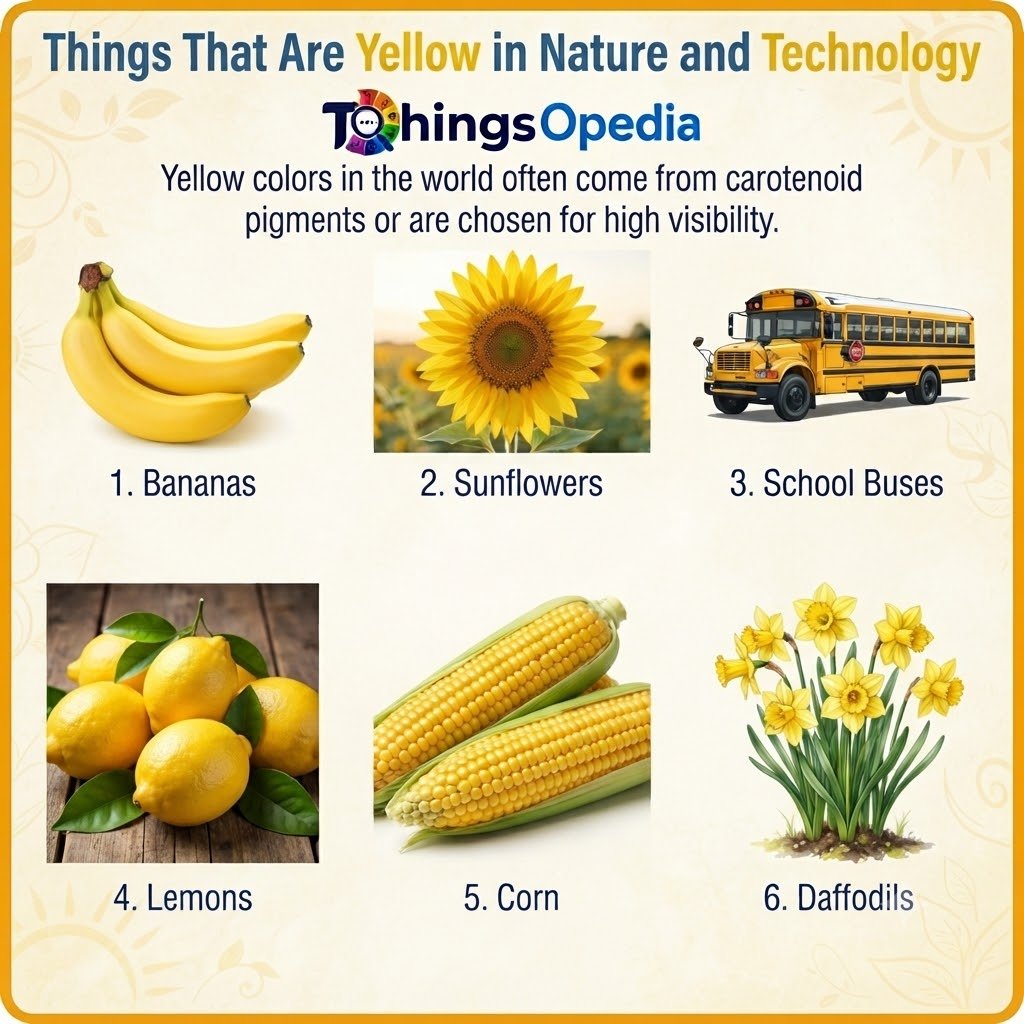
1. Bananas
Bananas are among the best-known things that are yellow around the world. During ripening, the green chlorophyll in the peel breaks down, revealing yellow pigments called carotenoids.
Real-World Fact
According to the Food and Agriculture Organization (FAO), the world produces approximately 140 million metric tons of bananas every year, making them one of the most consumed fruits globally.
Bananas are rich in:
- Potassium
- Vitamin B6
- Vitamin C
- Dietary fiber
2. Sunflowers
Sunflowers are famous for their large golden petals and impressive height. Their bright appearance comes from carotenoid pigments that develop naturally in the flower.
Besides their beauty, sunflowers are grown commercially for:
- Sunflower oil
- Birdseed
- Snacks
- Livestock feed
Countries such as Ukraine, Russia, Argentina, and Romania are among the world’s leading sunflower producers.
3. School Buses
One of the most recognizable yellow vehicles is the school bus.
In the United States, school buses are painted a specific shade known as National School Bus Glossy Yellow. This color was selected because it is easier to see during rain, fog, dawn, and dusk than many other colors.
Research in transportation safety has shown that yellow significantly improves visibility, helping protect children during boarding and drop-off.
4. Lemons
Lemons are another classic example of yellow objects found in nearly every kitchen.
Their vibrant color develops as chlorophyll fades during ripening, allowing yellow pigments to become visible.
Lemons are well known for containing high levels of vitamin C and antioxidants, making them popular in beverages, desserts, and cooking.
5. Corn
Yellow corn is one of the world’s most important agricultural crops.
It is used for:
- Human food
- Animal feed
- Corn oil
- Biofuel production
- Industrial starch
The United States, China, Brazil, and Argentina produce hundreds of millions of tons of corn each year.
6. Daffodils
Daffodils bloom during early spring and symbolize hope, renewal, and fresh beginnings.
Their bright yellow flowers are often associated with warmer weather after winter.
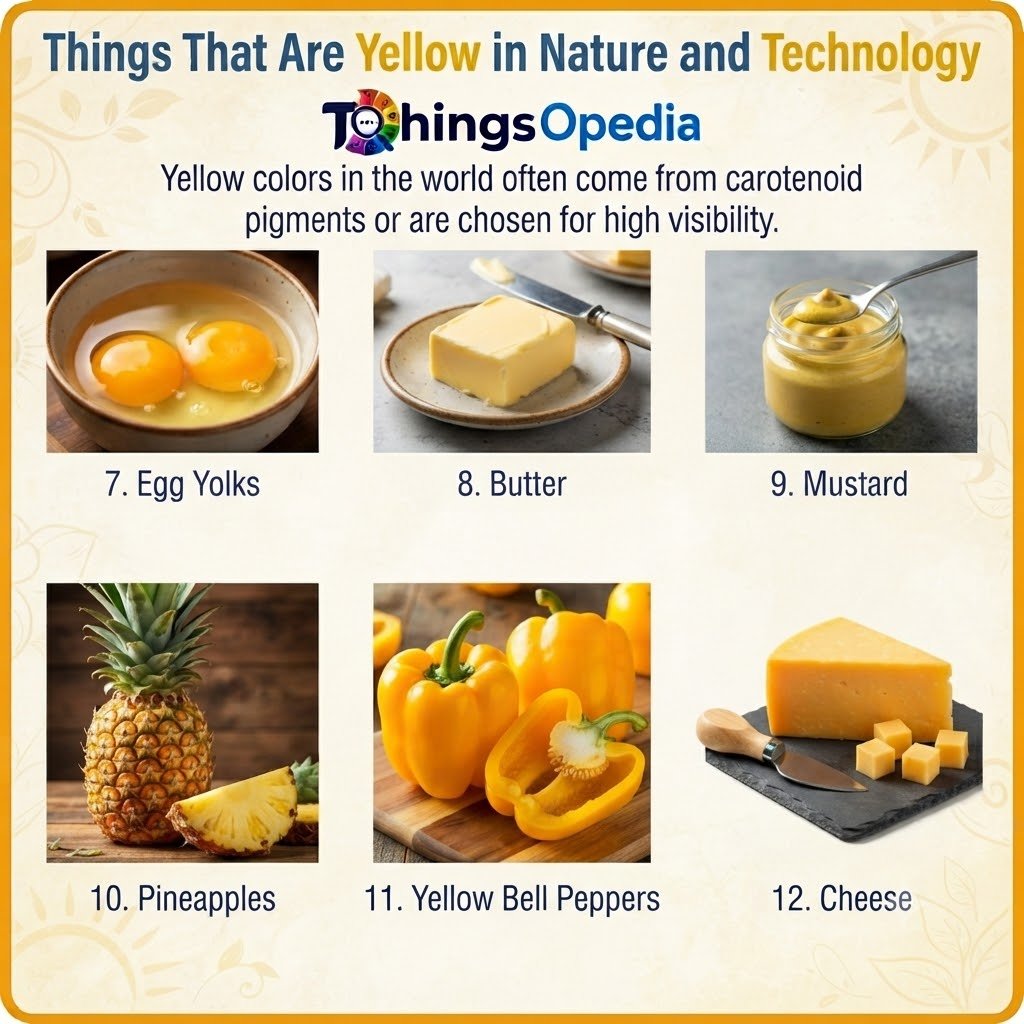
7. Egg Yolks
Egg yolks naturally range from pale yellow to deep orange.
Their color depends largely on the hen’s diet. Chickens fed foods rich in carotenoids produce darker, more golden yolks.
Contrary to popular belief, yolk color does not necessarily indicate better nutritional quality.
8. Butter
Butter has a creamy yellow appearance because of beta-carotene found naturally in cow’s milk.
Milk from grass-fed cows often produces butter with a richer golden color than milk from grain-fed cattle.
9. Mustard
Prepared yellow mustard gets its distinctive color from mustard seeds combined with turmeric.
It remains one of the world’s most popular condiments for sandwiches, burgers, and hot dogs.
10. Pineapples
When fully ripe, pineapples develop a golden-yellow skin and juicy yellow flesh.
They are an excellent source of:
- Vitamin C
- Manganese
- Bromelain, a natural digestive enzyme
11. Yellow Bell Peppers
Yellow bell peppers are sweeter than green peppers because they remain on the plant longer before harvesting.
They provide:
- Vitamin A
- Vitamin C
- Fiber
- Potassium
12. Cheese
Many cheeses appear yellow because of natural beta-carotene found in milk.
Some varieties, including cheddar, are also colored using annatto, a natural food coloring extracted from the seeds of the achiote tree.
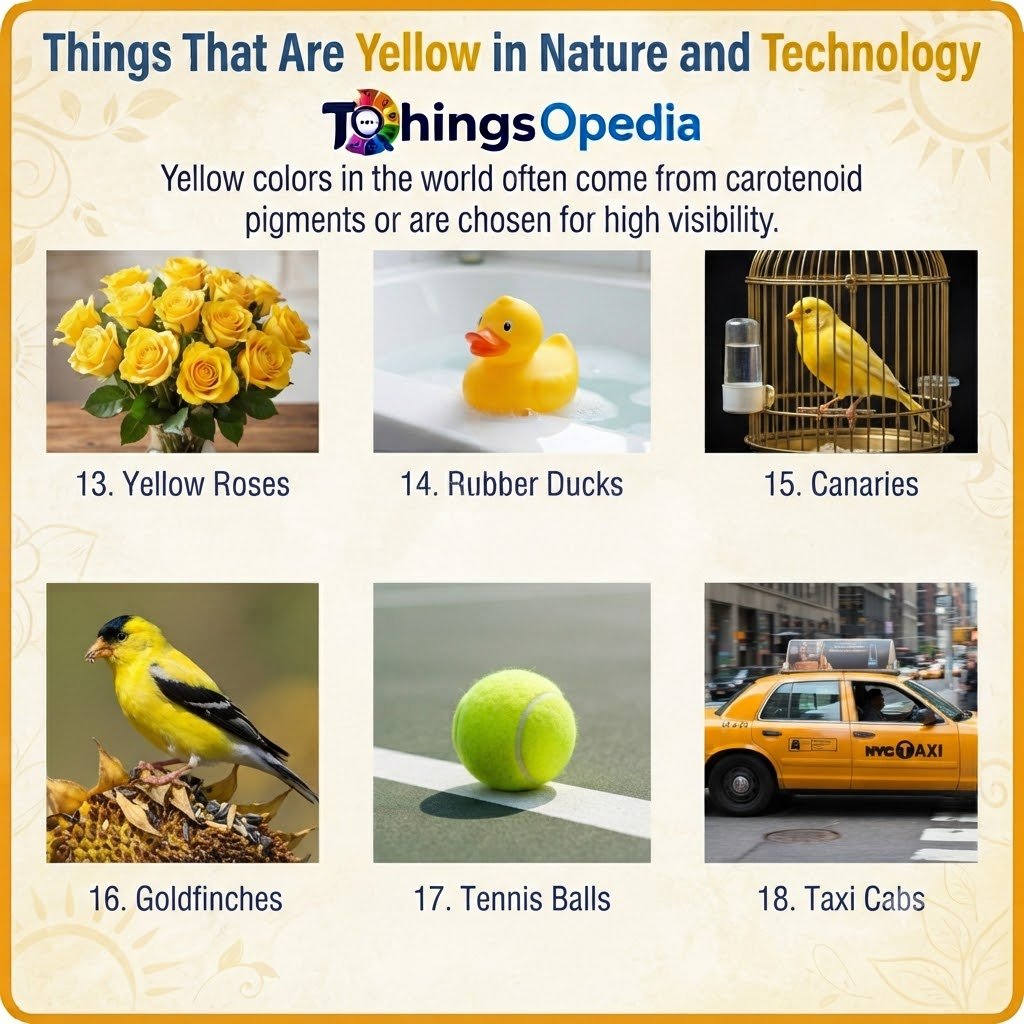
13. Yellow Roses
Yellow roses symbolize friendship, joy, appreciation, and good wishes.
Unlike red roses, they are commonly given to celebrate friendships and happy occasions.
14. Rubber Ducks
The classic yellow rubber duck has entertained children for generations.
Its cheerful appearance has made it one of the world’s most recognizable bath toys.
15. Canaries
Canaries are small songbirds admired for their bright yellow feathers and beautiful singing voices.
They became popular pets throughout Europe hundreds of years ago.
16. Goldfinches
Goldfinches display brilliant yellow feathers during the breeding season.
These colorful birds are commonly seen feeding on sunflower seeds and wildflowers.
17. Tennis Balls
Although commonly called yellow, modern tennis balls are technically a bright yellow-green.
Professional tennis organizations adopted this color in the 1970s because it was easier for television viewers to follow during matches.
18. Taxi Cabs
Many cities use yellow taxis because the color is highly visible in heavy traffic.
The famous yellow taxis of New York City have become an international symbol of urban transportation.
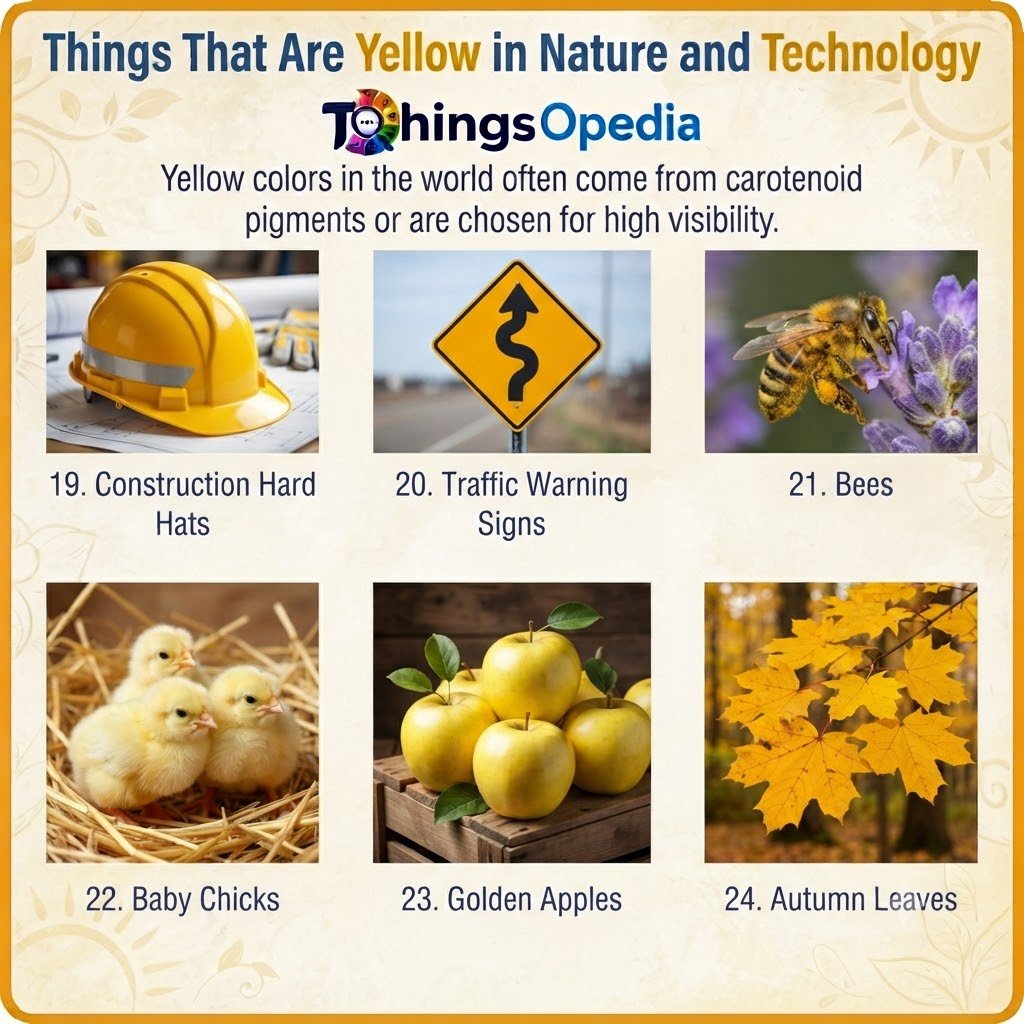
19. Construction Hard Hats
Yellow hard hats are commonly worn by construction workers to improve visibility on busy job sites.
Combined with reflective clothing, they help reduce workplace accidents.
20. Traffic Warning Signs
Road safety depends heavily on yellow warning signs.
Drivers instantly recognize yellow signs that indicate:
- Curves ahead
- School zones
- Pedestrian crossings
- Slippery roads
- Construction areas
Their high visibility makes them effective in both daylight and poor weather conditions.
21. Bees
Many bee species feature yellow and black stripes that warn predators to stay away.
These contrasting colors are an example of warning coloration found throughout nature.
22. Baby Chicks
Freshly hatched chicks often have soft yellow feathers before developing their adult plumage.
Their fluffy appearance makes them one of the most recognizable farm animals.
23. Golden Apples
Several apple varieties develop a yellow or golden skin as they ripen.
Golden Delicious apples are particularly popular because of their sweet flavor and crisp texture.
24. Autumn Leaves
Many tree leaves turn yellow during autumn as chlorophyll breaks down and carotenoid pigments become visible.
This seasonal transformation creates beautiful landscapes across temperate regions.
25. Yellow Tulips
Yellow tulips symbolize happiness, hope, and cheerful thoughts.
They are popular spring flowers in gardens, parks, and floral arrangements worldwide.
The Science Behind Yellow in Nature
Many natural yellow objects owe their color to carotenoids, a group of pigments found in plants and some animals.
Common carotenoids include:
| Pigment | Found In |
| Beta-carotene | Carrots, butter, egg yolks |
| Lutein | Corn, leafy vegetables |
| Zeaxanthin | Peppers, maize |
| Xanthophylls | Many yellow flowers |
Why Businesses Use Yellow
Marketing studies show that yellow can increase attention and improve brand recognition.
Companies often use yellow to communicate:
- Energy
- Affordability
- Happiness
- Speed
- Optimism
This is one reason fast-food chains, delivery services, and retail brands frequently incorporate yellow into their logos.
The Psychology of Yellow
Common psychological associations
Color psychology
Happiness
Creativity
Optimism
Alertness
Caution
Mental stimulation
Because yellow attracts attention so quickly, designers often use it sparingly for highlights, call-to-action buttons, and safety notices.
Interesting Real-World Facts
- The world produced approximately 139.6 million tonnes of bananas in 2023.
de.wikipedia.org - International banana trade exceeds 20 million tonnes annually.
Markets and Trade - Tennis balls switched to their current bright yellow-green color in the 1970s to improve television visibility.
- School buses in the United States use a standardized yellow paint specifically selected for safety.
- Sunflowers can grow more than 3 meters (10 feet) tall under favorable conditions.
How Yellow Influences Safety
Engineers and safety experts rely heavily on yellow because it remains visible under many lighting conditions.
Examples include:
- Airport ground vehicles
- Emergency equipment
- Railway warnings
- Hazard tape
- Pedestrian crossing signs
Studies in transportation safety consistently show that high-visibility colors such as yellow help reduce detection time for drivers and workers.
You Might Also Like:
- Things That Are Black and White: 45 Fascinating Examples
- 50+ Things That Are Purple: Beautiful Examples in Nature & Life
Final Thoughts
From food and flowers to transportation and safety systems, things that are yellow are far more important than they may first appear. Yellow is not only attractive; it is functional. It helps people notice hazards, identify vehicles, recognize ripe fruit, and even respond emotionally to products and brands.
The next time you see a banana, a sunflower field, a school bus, or a warning sign, remember that the color yellow has been shaped by both nature and human design. Its combination of visibility, warmth, and psychological impact makes it one of the most influential colors in everyday life.
Whether in agriculture, transportation, marketing, or biology, yellow continues to stand out as a color that captures attention and communicates meaning instantly.