120+ Things That Are Brown: from Nature, Food & Everyday Life
Brown is one of the most common colors on Earth, yet it’s often overlooked. It appears in forests, mountains, wildlife, food, soil, wood, and countless everyday objects. Unlike bright colors that immediately attract attention, brown symbolizes stability, warmth, reliability, and a close connection to nature.
From towering oak trees to a freshly brewed cup of coffee, brown surrounds us in nearly every environment. The color is created through natural pigments, minerals, organic materials, and even chemical reactions during cooking. Because it is associated with earth and wood, brown has become a favorite choice in architecture, interior design, fashion, and branding.
In this comprehensive guide, you’ll discover more than 120 examples categorized into nature, animals, food, plants, minerals, household objects, and science. Whether you’re researching for school, creating educational content, designing artwork, or simply curious, this collection provides real-world examples backed by scientific explanations and practical insights.
Why Are So Many Things Brown?
Brown isn’t a single wavelength of light like red or blue. Instead, it is a composite color created by combining red, yellow, and black or orange with darker shades. In nature, brown commonly appears because of pigments such as tannins, melanin, lignin, and decomposing organic matter.
Several natural processes create brown colors:
- Melanin pigments in animal fur and feathers
- Lignin in tree bark and wood
- Tannins found in leaves and nuts
- Soil minerals mixed with organic matter
- Oxidation of metals
- Caramelization and the Maillard reaction during cooking
These processes explain why brown dominates forests, deserts, farms, and even many foods we eat every day.
Things That Are Brown in Nature
Nature offers endless examples of brown objects that contribute to healthy ecosystems.
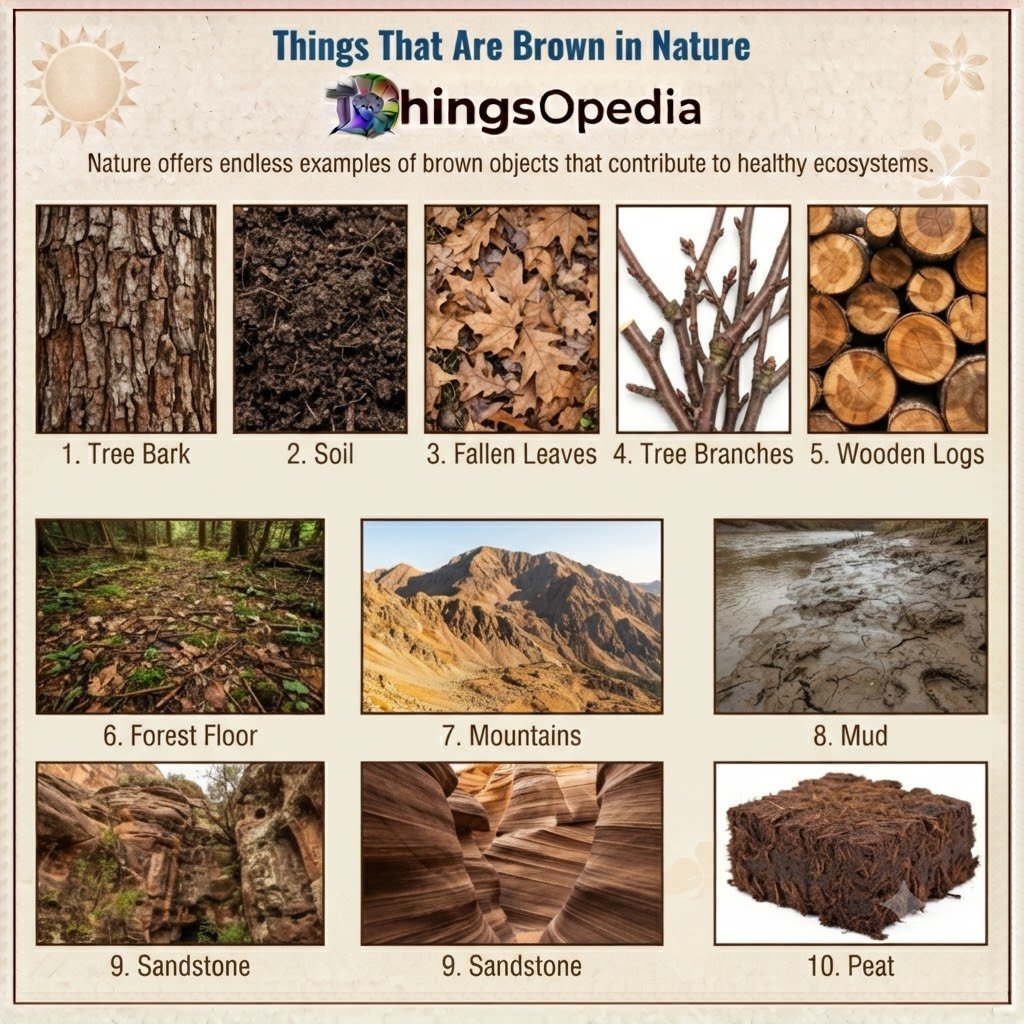
1. Tree Bark
Most trees develop brown bark due to lignin and protective outer tissues that shield them from insects and weather.
2. Soil
Healthy soil often appears brown because of decomposed organic matter known as humus.
3. Fallen Leaves
As chlorophyll breaks down during autumn, many leaves turn brown before decomposing.
4. Tree Branches
Woody branches contain lignin, giving them their familiar brown appearance.
5. Wooden Logs
Freshly cut and aged logs display different shades of brown depending on the tree species.
6. Forest Floor
Dead leaves, twigs, and decomposing plants create rich brown forest landscapes.
7. Mountains
Many rocky mountains appear brown due to exposed sedimentary rocks and dry vegetation.
8. Mud
Mud combines soil and water, producing various brown shades depending on mineral content.
9. Sandstone
This sedimentary rock commonly ranges from light tan to deep brown.
10. Peat
Peat forms from partially decomposed vegetation and is dark brown to nearly black.
Brown Animals
Many animals rely on brown coloration for camouflage and survival.
Mammals
- Brown Bear
- Deer
- Moose
- Bison
- Camel
- Horse
- Rabbit
- Beaver
- Squirrel
- Chipmunk
Birds
- Owl
- Eagle
- Sparrow
- Hawk
- Pheasant
- Quail
- Turkey
- Kiwi
- Woodcock
- Sandpiper
Reptiles and Amphibians
- Toad
- Brown Snake
- Gecko
- Lizard
- Box Turtle
Marine Animals
- Sea Otter
- Walrus
- Brown Crab
- Sea Cucumber
- Lobster (before cooking)
Brown camouflage helps these animals avoid predators and blend into forests, deserts, and rocky landscapes.
Brown Plants and Trees
Many plants naturally develop brown stems, bark, seeds, or dried leaves.
Examples include:
- Oak Tree
- Walnut Tree
- Chestnut Tree
- Cedar
- Redwood
- Pine Cones
- Acorns
- Coconut Shell
- Bamboo Stalks
- Dried Grass
Brown plant materials play important roles in nutrient recycling and habitat formation.
Brown Fruits
Several fruits naturally display brown skins or flesh during ripening.
- Kiwi
- Coconut
- Sapodilla
- Dates
- Tamarind
- Brown Pear
- Longan
- Medlar
- Dried Figs
- Raisins
Many dried fruits become brown because of oxidation and moisture loss.
Brown Vegetables
Some vegetables naturally contain brown pigments or develop brown surfaces during storage.
Examples include:
- Potatoes
- Mushrooms
- Brown Onions
- Taro Root
- Ginger Root
- Lotus Root Skin
- Jerusalem Artichoke
- Cassava
- Yam
- Turnip Roots
These vegetables are rich in fiber, vitamins, and minerals.
Brown Foods
One of the largest groups of brown-colored items comes from cooking.
Popular examples include:
- Bread
- Toast
- Chocolate
- Brown Rice
- Brown Sugar
- Coffee Beans
- Cocoa Powder
- Cookies
- Brownies
- Muffins
- Pancakes
- Waffles
- Cinnamon Rolls
- Pretzels
- Granola
- Peanut Butter
- Roasted Almonds
- Pecans
- Walnuts
- Hazelnuts
The delicious brown crust found on baked foods results from the Maillard reaction, where proteins and sugars react under heat to create new flavors and aromas.
Brown Drinks
Many popular beverages display rich brown colors.
- Coffee
- Hot Chocolate
- Black Tea
- Cola
- Root Beer
- Cocoa
- Chocolate Milk
- Malt Drinks
- Espresso
- Mocha
Coffee alone is consumed by more than two billion people worldwide every day, making it one of the most recognizable brown beverages.
Brown Minerals and Natural Materials
Earth contains many naturally brown minerals.
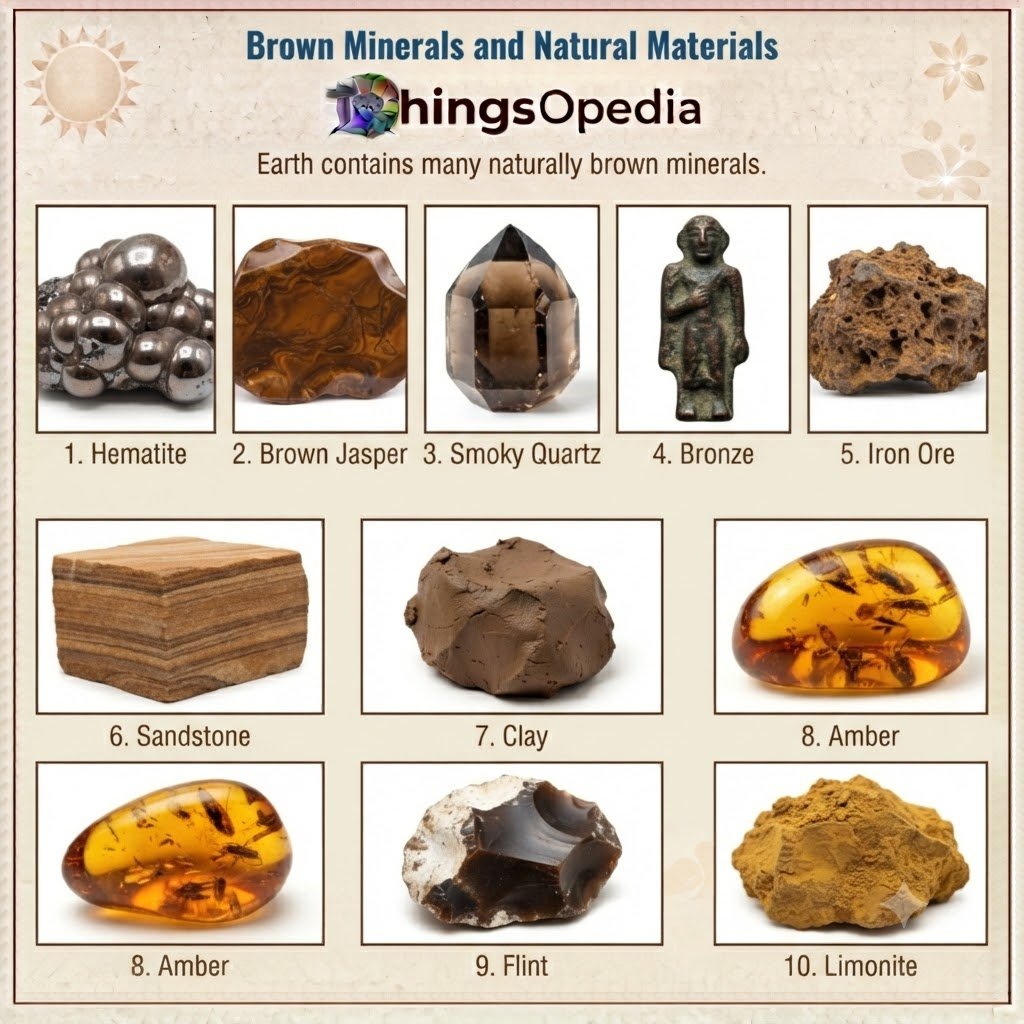
Examples include:
- Hematite
- Brown Jasper
- Smoky Quartz
- Bronze
- Iron Ore
- Sandstone
- Clay
- Amber
- Flint
- Limonite
These materials are widely used in construction, jewelry, and manufacturing.
Brown Objects Around the Home
Many household items feature natural brown finishes because they are made from wood, leather, or ceramic materials.
Examples include:
- Wooden Tables
- Chairs
- Cabinets
- Doors
- Bookshelves
- Picture Frames
- Leather Sofas
- Wallets
- Belts
- Shoes
- Cardboard Boxes
- Paper Bags
- Clay Pots
- Baskets
- Wooden Flooring
Natural brown finishes remain popular because they create warm and comfortable living spaces.
Brown Clothing and Fashion
Brown continues to be a timeless color in fashion.
Common examples include:
- Leather Jackets
- Boots
- Belts
- Handbags
- Wool Coats
- Hats
- Scarves
- Watches
- Sunglasses Frames
- Dress Shoes
Fashion designers often pair brown with cream, beige, olive, white, or navy for classic styles.
Brown Objects in Science
Brown appears frequently in scientific materials and industrial products.
Examples include:
- Rust
- Wooden Laboratory Tools
- Compost
- Activated Carbon
- Leather Samples
- Cork
- Natural Rubber
- Fossils
- Dried Plant Specimens
- Soil Samples
Scientists study these materials to better understand ecosystems, chemistry, and Earth’s history.
Brown Wildlife Habitats
Brown dominates many natural environments across the globe.
These include:
- Forest Floors
- Desert Landscapes
- Mountain Slopes
- Savannah Grasslands
- Wetlands During Dry Seasons
- Agricultural Fields
- Riverbanks
- Caves
- Mud Flats
- Woodland Trails
These habitats provide shelter for thousands of animal species.
Brown in Art, Design, and Architecture
Brown has long symbolized strength, tradition, and authenticity.
Architects frequently use wood, brick, and stone to create warm, inviting buildings. Interior designers combine brown furniture with neutral colors to create cozy living spaces. Brands also use brown in logos and packaging to represent reliability, craftsmanship, and natural products.
Luxury chocolate companies, coffee brands, and outdoor equipment manufacturers commonly use brown because it evokes comfort and trust.
Fun Facts About Brown Objects
- Healthy soil gets its dark brown color from decomposed organic matter called humus.
- Brown bears can weigh over 700 kilograms (1,500 pounds), depending on the species.
- Coffee beans are initially green before roasting turns them brown.
- Tree bark protects plants from insects, fungi, fire, and harsh weather.
- Chocolate becomes brown during the roasting and processing of cocoa beans.
- Most wooden furniture keeps its natural brown appearance because consumers prefer authentic wood grain.
- Autumn leaves turn brown after chlorophyll disappears and other pigments break down.
- Brown eggs and white eggs have nearly identical nutritional value—the shell color depends on the breed of the hen.
Why Brown Is One of the World’s Most Important Colors
Although vibrant colors often receive more attention, brown plays an essential role in both nature and everyday life. It represents fertile soil for agriculture, sturdy trees for forests, nutritious foods, dependable building materials, and countless animal species that rely on camouflage for survival.
Brown also evokes feelings of warmth, security, resilience, and simplicity. Whether found in a rustic cabin, a cup of freshly brewed coffee, or a peaceful woodland trail, it reminds us of our connection to the natural world.
You Might Also Like:
- Things to Draw That Are Cute: 75 Easy Ideas for Every Artist
- 50+ Things That Are Purple: Beautiful Examples in Nature & Life
Conclusion
From fertile earth and towering forests to delicious baked goods and dependable household materials, things that are brown are everywhere. This versatile color is deeply woven into nature, science, food, wildlife, architecture, and everyday living. Its widespread presence reflects both practicality and beauty, making it one of the most significant colors humans encounter.
Whether you’re searching for educational examples, creative inspiration, or simply exploring the fascinating world of colors, this guide offers a comprehensive collection backed by real-world observations and scientific explanations. The next time you look around, you’ll notice that things that are brown are not only common—they’re essential to life itself.