Things That Are Dark Purple: 85 Stunning Examples from Nature, Food & Gemstones
Dark purple is one of the most captivating colors found in nature and human culture. Often associated with luxury, mystery, creativity, wisdom, and royalty, this rich shade appears in everything from flowers and fruits to gemstones, animals, fashion, and even outer space. While lighter shades like lavender and lilac evoke calmness, darker purple tones create a bold, elegant, and dramatic impression.
Many naturally occurring objects display deep purple pigments because of compounds called anthocyanins, which protect plants from sunlight and environmental stress. In animals, dark purple colors often result from structural coloration or specialized pigments. Meanwhile, humans have embraced dark purple in art, architecture, branding, and interior design for centuries.
In this guide, you’ll discover 85 real-world examples of things that are dark purple, along with fascinating facts about each one.
Why Is Dark Purple So Special?
Dark purple has long symbolized wealth and prestige. In ancient civilizations such as Rome and Phoenicia, purple dye was extremely expensive because it came from rare sea snails. Only emperors, nobles, and religious leaders could afford garments dyed with true purple.
Today, dark purple is commonly associated with:
- Luxury and elegance
- Creativity and imagination
- Spirituality
- Mystery
- Royal heritage
- Wisdom
- Sophistication
Because it naturally occurs less frequently than colors like green or brown, deep purple often attracts attention immediately.
Things That Are Dark Purple in Nature
Nature offers some of the richest dark purple shades imaginable.
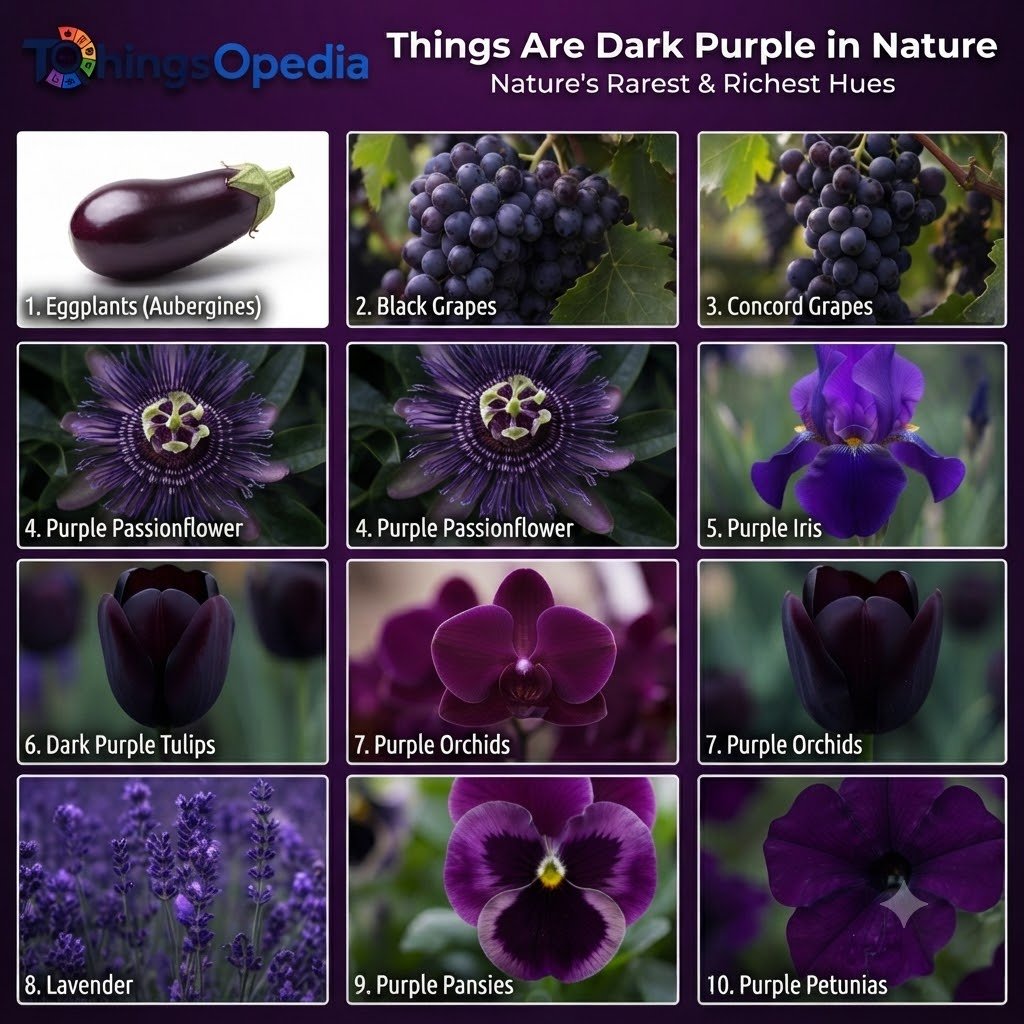
1. Eggplants (Aubergines)
Eggplants are perhaps the most recognizable dark purple vegetable. Their glossy skin appears almost black under certain lighting.
2. Black Grapes
Many grape varieties have deep purple skins rich in antioxidants known as anthocyanins.
3. Concord Grapes
These famous grapes possess a nearly black-purple appearance and are widely used for juices and jams.
4. Purple Passionflower
Its striking petals combine dark purple with white filaments, making it one of nature’s most beautiful flowers.
5. Purple Iris
Certain iris varieties bloom in rich royal-purple shades.
6. Dark Purple Tulips
Cultivars like “Queen of Night” are famous for petals that appear nearly black.
7. Purple Orchids
Some orchid species naturally produce velvety dark purple blooms.
8. Lavender (Certain Varieties)
While many lavenders are pale, several species bloom in deep violet-purple.
9. Purple Pansies
Their petals often display dark purple centers surrounded by lighter edges.
10. Purple Petunias
Popular garden flowers available in dramatic deep-purple colors.
Dark Purple Fruits
Many nutritious fruits naturally display deep purple pigmentation.
11. Blackberries
Though called blackberries, they are actually a very dark purple.
12. Elderberries
These tiny berries have rich purple skins packed with antioxidants.
13. Acai Berries
Native to the Amazon rainforest, acai berries appear almost black-purple.
14. Purple Plums
Many plum varieties feature dark purple skin with juicy interiors.
15. Black Cherries
Certain cherries have deep purple-red skins.
16. Purple Figs
Fresh figs often develop dark purple outer skin.
17. Mulberries
Ripe mulberries become nearly black-purple.
18. Jabuticaba
This Brazilian fruit grows directly on tree trunks and develops shiny dark-purple skin.
19. Purple Passion Fruit
Several passion fruit varieties mature into dark purple.
20. Damson Plums
These small plums have a beautiful deep-purple color.
Dark Purple Vegetables
Vegetables can also develop impressive purple hues.
21. Purple Cabbage
Rich in anthocyanins, this cabbage changes color depending on soil acidity and cooking.
22. Purple Carrots
Ancient carrot varieties were naturally purple before orange became dominant.
23. Purple Sweet Potatoes
Known for vibrant flesh and high antioxidant content.
24. Purple Cauliflower
A colorful alternative to white cauliflower.
25. Purple Kale
Many kale cultivars feature dark purple leaves.
26. Purple Asparagus
Sweeter than green asparagus due to higher sugar content.
27. Purple Beans
Several bean varieties display dark purple pods.
28. Purple Bell Peppers
These peppers begin green and mature into deep purple.
29. Purple Corn
Native to South America, purple corn is rich in antioxidants.
30. Purple Basil
This aromatic herb has striking dark-purple leaves.
Dark Purple Flowers
Flowers showcase some of the richest purple shades in nature.
31. Queen of Night Tulip
32. Purple Dahlia
33. Sweet Pea
34. Clematis
35. Foxglove
36. Hyacinth
37. Anemone
38. Hellebore
39. Salvia
40. Morning Glory
Each of these flowers features varieties that bloom in luxurious dark-purple tones.
Dark Purple Gemstones and Minerals
Purple gemstones have fascinated civilizations for thousands of years.
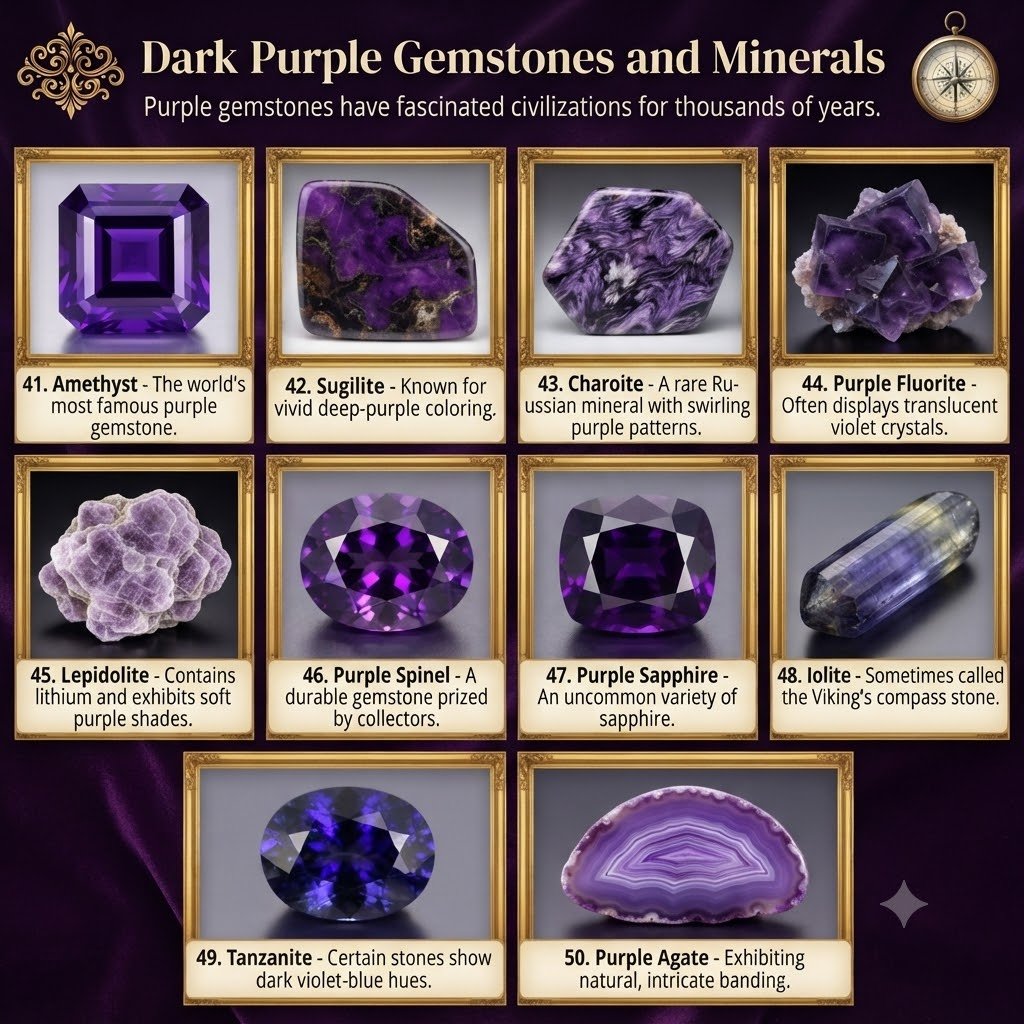
41. Amethyst
The world’s most famous purple gemstone.
42. Sugilite
Known for vivid deep-purple coloring.
43. Charoite
A rare Russian mineral with swirling purple patterns.
44. Purple Fluorite
Often displays translucent violet crystals.
45. Lepidolite
Contains lithium and exhibits soft purple shades.
46. Purple Spinel
A durable gemstone prized by collectors.
47. Purple Sapphire
An uncommon variety of sapphire.
48. Iolite
Sometimes called the Viking’s compass stone.
49. Tanzanite
Certain stones show dark violet-blue hues.
50. Purple Agate
Popular in decorative jewelry.
Dark Purple Animals
Nature surprises us with animals displaying remarkable purple shades.
51. Purple Sea Urchin
Found along rocky coastlines.
52. Purple Emperor Butterfly
Its wings shimmer with iridescent dark purple.
53. Violet-Backed Starling
A bird with glossy purple feathers.
54. Purple Gallinule
A colorful wetland bird.
55. Purple Honeycreeper
Native to tropical forests.
56. Purple Crab
Several crab species develop purple shells.
57. Purple Sea Star
Common in tidal pools.
58. Purple Nudibranch
Sea slugs with brilliant purple bodies.
59. Purple Coral
Found in tropical oceans.
60. Purple Jellyfish
Some jellyfish species glow with purple coloration.
Dark Purple Foods and Drinks
Purple foods are both attractive and nutritious.
61. Red Wine
Many red wines appear deep purple when freshly made.
62. Blueberry Jam
63. Grape Juice
64. Blackberry Smoothies
65. Acai Bowls
66. Plum Jam
67. Purple Rice
68. Purple Macarons
69. Purple Velvet Cake
70. Purple Ice Cream
These foods owe their color largely to natural anthocyanin pigments.
Dark Purple Fashion and Everyday Objects
Purple remains a timeless favorite in design.
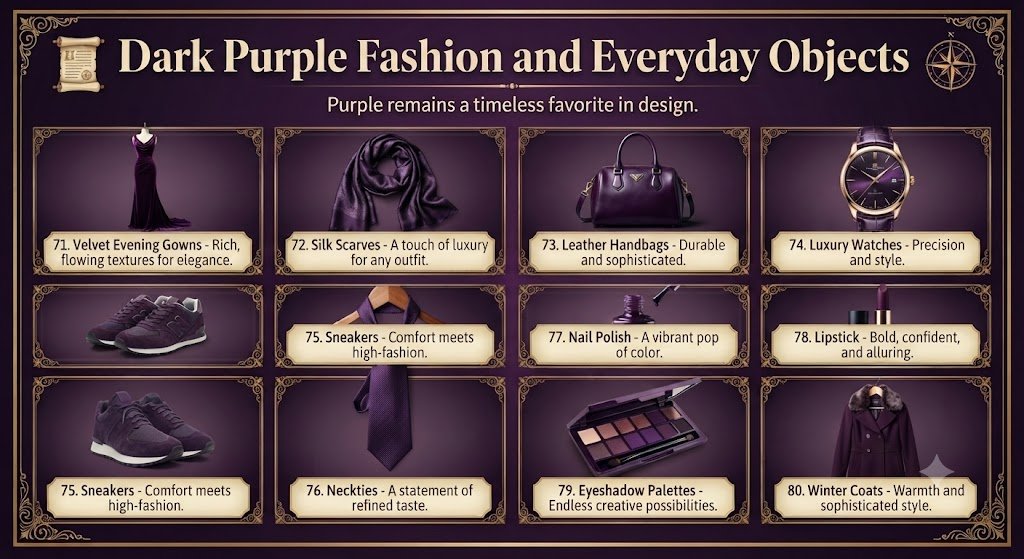
71. Velvet Evening Gowns
72. Silk Scarves
73. Leather Handbags
74. Luxury Watches
75. Sneakers
76. Neckties
77. Nail Polish
78. Lipstick
79. Eyeshadow Palettes
80. Winter Coats
Designers frequently use dark purple because it conveys sophistication without appearing as formal as black.
Dark Purple in Space and Science
Purple also appears beyond Earth.
81. Emission Nebulae
Certain nebula photographs reveal dark purple hydrogen clouds.
82. Aurora Displays
Under specific atmospheric conditions, auroras can display violet-purple edges.
83. Ultraviolet Astronomy Images
Scientists often assign purple colors when processing telescope data.
84. Deep Ocean Organisms
Many deep-sea creatures display dark purple coloration to camouflage under low light.
85. Laboratory Chemical Indicators
Several pH indicators turn dark purple during chemical reactions.
Why So Many Plants Are Dark Purple
The primary reason many plants appear purple is the presence of anthocyanins. These natural pigments serve several purposes:
- Protect leaves from intense sunlight
- Reduce damage caused by ultraviolet radiation
- Help plants tolerate cold temperatures
- Attract pollinators
- Defend against insects and disease
Research has shown that anthocyanin-rich fruits and vegetables are also valuable sources of dietary antioxidants.
Fun Facts About Dark Purple
- Purple is one of the least common natural colors among mammals.
- Ancient purple dye was once worth more than gold by weight.
- Eggplants belong to the nightshade family.
- Purple carrots existed centuries before orange carrots became popular.
- Amethyst was once considered as valuable as diamonds.
- Concord grapes are native to North America.
- Many butterflies produce purple colors through microscopic wing structures rather than pigments.
Frequently Asked Questions
What fruit is naturally dark purple?
Black grapes, elderberries, plums, blackberries, figs, mulberries, acai berries, jabuticaba, and Concord grapes all naturally develop dark purple skins.
Why do plants become dark purple?
Plants produce anthocyanins, pigments that help protect them from sunlight, cold temperatures, pests, and environmental stress while also attracting pollinators.
Which gemstone is the most famous dark purple stone?
Amethyst is the world’s best-known dark purple gemstone and has been prized in jewelry for thousands of years.
Is dark purple a rare color in nature?
Compared with green, brown, and blue, dark purple is relatively uncommon, making naturally purple plants, flowers, animals, and minerals especially eye-catching.
What does dark purple symbolize?
Dark purple commonly represents royalty, luxury, ambition, wisdom, spirituality, creativity, mystery, and elegance.
You Might Also Like:
- Things That Are Pink: 75 Beautiful Examples in Nature & Life
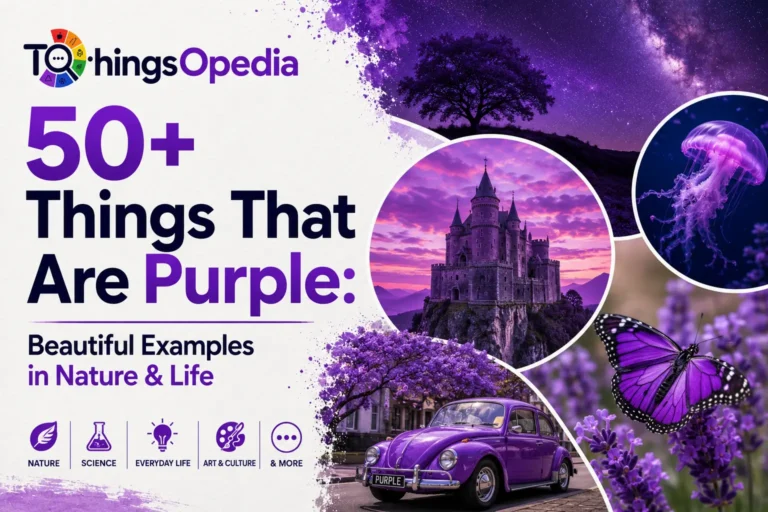
- 50+ Things That Are Purple: Beautiful Examples in Nature & Life
Final Thoughts
From glossy eggplants and juicy Concord grapes to elegant orchids, rare gemstones, colorful birds, and breathtaking nebulae, the world is filled with remarkable examples of deep purple beauty. Whether found in nature, food, fashion, or science, these objects demonstrate why this rich color has fascinated humanity for thousands of years.
This collection of things that are dark purple highlights not only the incredible diversity of the natural world but also the cultural significance of one of history’s most admired colors. The next time you notice a rich purple flower, fruit, gemstone, or evening sky, you’ll recognize the fascinating science and history behind its unforgettable appearance.