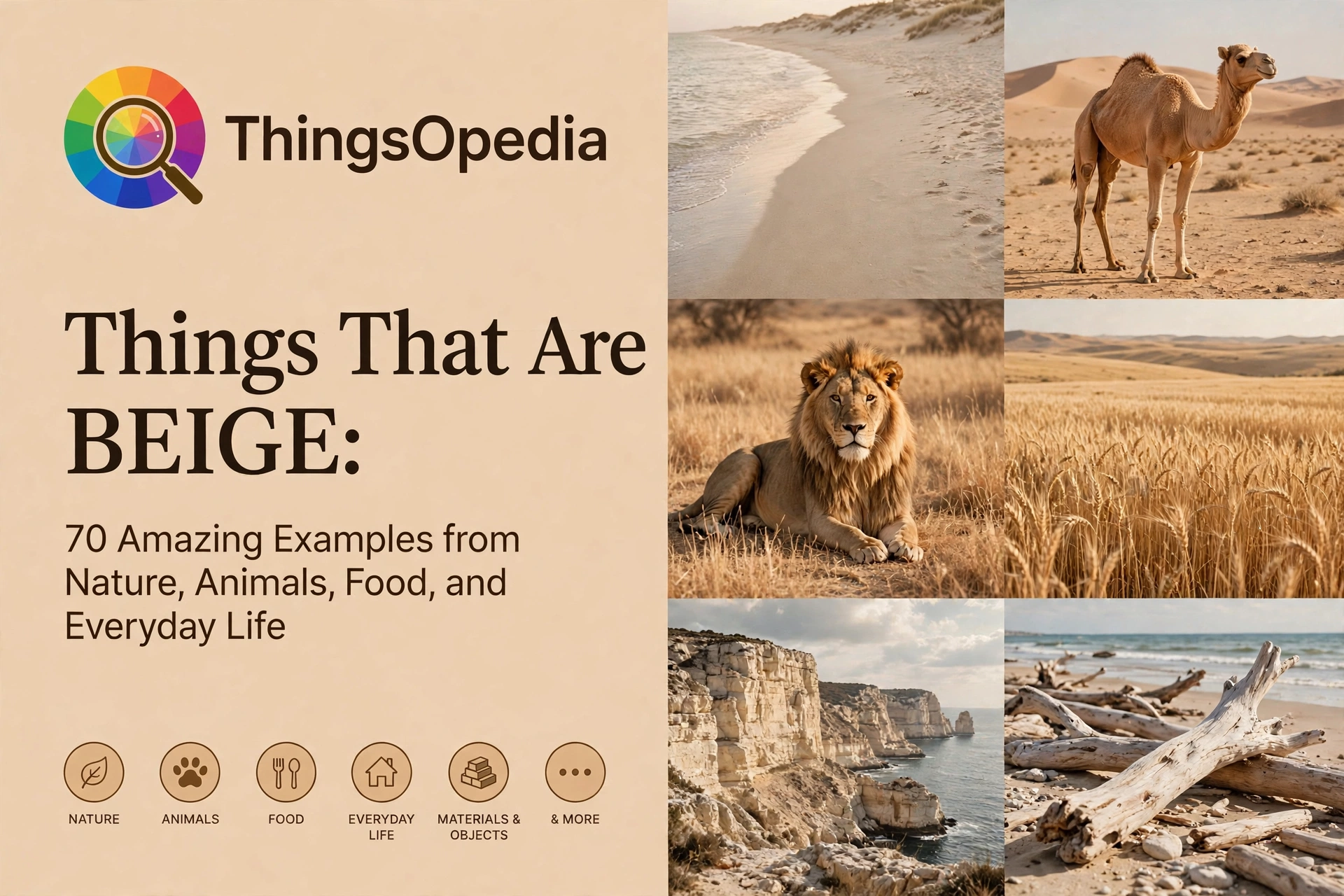
Things That Are Beige: Simple Examples in Nature and Daily Life
Beige is a soft pale tan with hex code #F5F5DC, warm yet quiet. Warm sand shows it, undyed wool shows it, and pale stone shows it too. Fields, kitchens, and living rooms all hold things that are beige, from wild coats to plain bread. Sun dries green out of grass and leaves, and pale tan stays behind. Stone keeps its tone with no dye at all, while cloth keeps its tone with no bleach. Keep the shade in mind as the list moves from shore to field to home. Each pick notes where it sits and why it looks beige. Names stay plain and facts stay short. Wool, stone, and sand share the tone, yet each tells its own tale.
Why Beige Looks Soft and Warm
Pale bits and pale fibres give beige its soft tone. Quartz, shell, lime, and wool all hold faint yellow-brown tints. Mixed bits keep the shade soft, never strong. Hot sun fades green from leaves and grass, and pale tan stays behind. Dry heat does the same work on soil and straw. Undyed wool, linen, and pale wood all show things that are beige straight from nature.
Faint yellow and faint brown meet in beige, with white close by. Light scatters off pale grains and fibres, so the eye reads a calm tan. Strong dyes would push the shade toward gold or brown, yet beige stays pale. Warmth comes from yellow-brown tones, while softness comes from low depth of shade. Rooms, coats, and shops all use the same quiet tone.
Things Found in Nature
Sand, stone, soil, and dry plants lead this list, all in plain pale tan.
1. Beach Sand
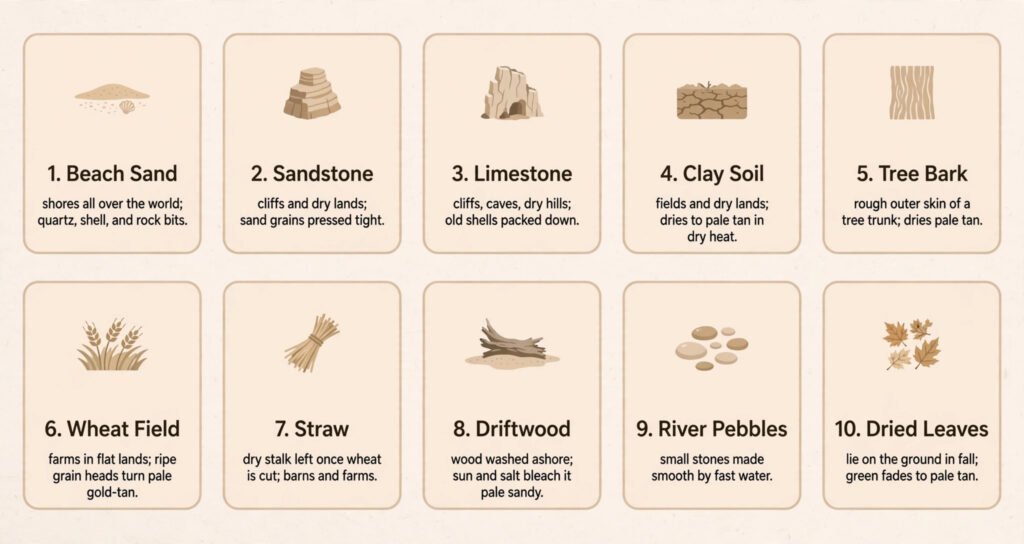
Shores round the world wear a pale tan coat of sand. Shell, rock, and quartz bits mix in each grain. Warm sun dries the grains, and the shore glows soft beige.
2. Sandstone
Cliffs and dry lands hold sandstone in pale tan bands. Sand grains press tight through long ages, and the rock keeps the shade. Builders shape it for walls and homes, since it cuts well and lasts long.
3. Limestone
Old shells and sea bits pack down into limestone. Cliffs, caves, and dry hills hold the pale rock. Rain wears it down, and caves form in it through time.
4. Clay Soil
Fine bits of rock make clay soil soft to the touch. Fields and dry lands hold it in wide beds. Dry heat bakes it to a pale tan shade. Potters shape it into pots and jars.
5. Tree Bark
Rough bark shields a tree trunk from heat and pests. Dead cells lose green with age, and tan tones stay. Bark on some trees dries to a pale tan shade.
6. Wheat Field
Wide farms hold ripe wheat in flat lands. Grain heads turn pale gold-tan as they dry in the sun. Ripe heads hold grain for flour, and the whole field glows beige.
7. Straw
Barns and farms hold straw once wheat is cut. Sun and wind bleach the dry stalks to pale tan. Farmers spread it as soft beds for farm beasts.
8. Driftwood
Wood floats at sea, then washes ashore as driftwood. Salt and sun bleach it to a pale, sandy shade. Shores hold it after storms, far from the woods where it grew.
9. River Pebbles
Fast water makes river pebbles smooth and round. Streams and banks hold them in pale beds. Quartz and lime in the rock leave them pale tan.
10. Dried Leaves
Leaves lie on the ground once fall sun dries them. Green sap fades out, and pale tan stays. Fallen leaves break down and feed the soil.
Beige Animals
Sandy coats hide wild beasts in plain sight, matched to sand, rock, and dry grass.
11. Camel
Desert camels cross North Africa and Asia with one or two humps. Thick, sandy beige coats blend with desert sand. Fat in the humps feeds the beast on long trips, not water.
12. Lion
Grass plains of Africa hold lions in strong prides. Short, pale tan coats hide them in dry grass. Little dark tint lets the coat fade into the land.
13. Fennec Fox
Sahara sands hold the small fennec fox, known for huge ears. Sandy coats match the sand, and big ears shed heat. Sharp ears hear prey that moves under the sand.
14. Meerkat
South Africa holds meerkats in dry, open lands. Tan fur blends with dry sand and rock. Each one takes a turn to stand guard while the group feeds.
15. Coyote
North America holds coyotes, wild dogs of dry lands. Grey-tan coats lean grey in some light. Mixed hairs hide it in brush and dry grass, where it hunts at dawn and dusk.
16. Oryx
Desert antelopes with long, straight horns are known as oryx. Africa and Arabia hold them in dry lands. Sunlight bounces off pale tan coats, and they fade into desert sand.
17. Puma
Hills and woods of the Americas hold pumas, big wild cats. Plain tan coats keep them out of sight in dry grass and rock. Pumas leap high and climb trees with ease.
18. Sheep
Farms all round the world keep sheep for wool and meat. Thick fleece stays beige when it has not been dyed. Sheep have been kept for wool for a very long time.
19. Rabbit
Meadows and burrows give rabbits safe homes. Some rabbits hold a pale beige coat that hides them in dry grass. Big ears hear foes from far off.
20. Alpaca
High lands of South America hold alpacas, farm beasts with soft fleece. Fleece grows in a beige shade with no dye at all. Soft, warm fleece suits clothes for cold days.
Flowers and Plants
Blooms in beige stay soft, since few flowers grow in this pale shade.
- Beige Rose — garden beds and flower shops; a few types open in a pale tan shade.
- Pampas Grass — dry fields and yards; sun dries the tall plumes to soft beige.
- Bamboo — warm woods and yards; cut canes turn pale tan as they dry.
- Beige Dahlia — mild garden beds; some types bloom in a soft beige tone.
- Beige Carnation — flower shops and beds; some types bloom in a pale beige shade.
Fruits and Vegetables
Few foods wear true beige, and pale foods get their tint from sun or soil.
- Bosc Pear — orchards and fruit shops; ripe skin holds a tan shade, with a gold lean in some light.
- Cauliflower — veg plots and food shops; leaves shade the pale head as it grows.
- Parsnip — cool soil and food shops; the root stays pale underground, far from green light.
- Coconut — palm trees in warm lands; sun-dried flesh turns pale tan.
- Jicama — warm fields and food shops; tan skin hides crisp white flesh.
- Dried Fig — fruit shops and kitchens; dried fruit turns soft beige-brown.
Foods
Smart yet soft, beige works well for plain foods from grain, nuts, and seeds.
- White Bread — home kitchens and shops; the soft crumb bakes pale gold-tan.
- Oatmeal — kitchens and bowls; cooked oats turn soft beige.
- Hummus — home bowls and food shops; mashed chickpeas lend a soft beige shade.
- Peanut Butter — jars in food shops; ground nuts lend a pale tan shade.
- Tahini — jars in food shops; ground sesame seeds form a pale beige paste.
- Dried Pasta — kitchens and food shops; dry shapes hold a pale beige tone.
- Pita Bread — kitchens and food shops; flat bread bakes to a soft beige shade.
Household Items
Across the home, beige turns up on floors, beds, and shelves.
- Carpet — floors in homes; wool and plant fibres hold a beige tone with no dye.
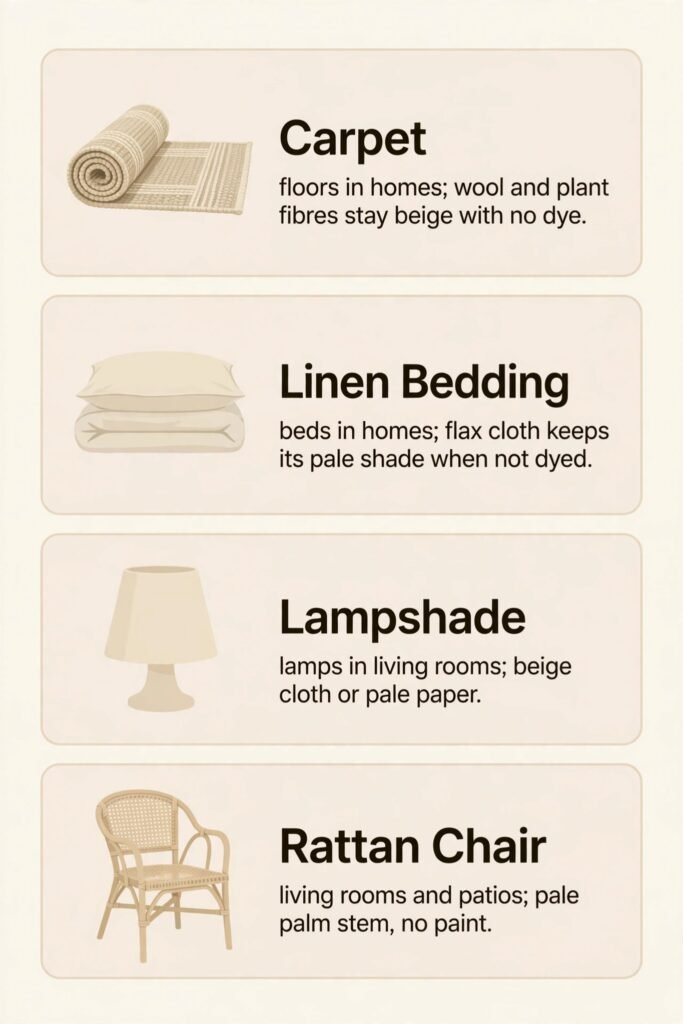
- Linen Bedding — beds in homes; flax cloth holds its pale shade undyed.
- Lampshade — lamps in living rooms; beige cloth or pale paper forms the shade.
- Rattan Chair — living rooms and patios; pale palm stem holds its tan shade unpainted.
- Beige Curtains — windows in living rooms; dyed cloth hangs in a soft beige shade.
- Beige Sofa — living rooms; cloth or leather holds a soft beige tone.
- Wicker Basket — homes and patios; woven palm or willow dries to pale tan.
Clothing and Fashion
Soft yet smart, beige works well for clothes.
- Trench Coat — shops and rainy streets; cotton twill takes a soft beige dye.
- Linen Jacket — shops and warm rooms; undyed flax cloth stays pale.
- Chinos — shops and work rooms; cotton twill often stays pale tan.
- Beige Shawl — shops and over shoulders; woven wool stays soft beige undyed.
- Beige Sweater — shops and cold days; wool yarn holds a soft beige shade.
- Beige Scarf — shops and cold days; wool or silk holds a soft beige shade.
Technology and Office Items
Old tech shows beige too, on desks and in rooms.
- Rotary Telephone — old homes and shops; makers cast old phones in beige plastic.
- Beige Floor Lamp — living rooms by a chair; cloth shade and wood base wear beige tones.
- Manila Envelope — desks and post rooms; unbleached wood pulp lends a tan shade.
- Parchment Paper — kitchens and bakers’ shops; plant fibre paper stays pale tan unbleached.
- Cork Board — walls in rooms and schools; cork bark runs pale tan by nature.
- Beige Keyboard — desks and offices; old keys were cast in beige plastic.
- Beige Notebook — desks and bags; plain kraft paper holds a soft beige tone.
Science and Chemistry Examples
Mineral bits tint these stones beige, with quartz first.
- Quartz — sand, rock, and shores; pale quartz bits lend sand its beige tone.
- Feldspar — rock and sand on land; its pale grains lift the beige tone of sand.
- Calcite — caves and rock beds; pale beige forms of calcite coat stone.
- Gypsum — dry rock beds and deserts; pale gypsum runs beige-white.
Transportation
Roads and old towns show beige paint and cloth.
- Beige Carriage — old towns and film sets; painted wood wears a beige coat.
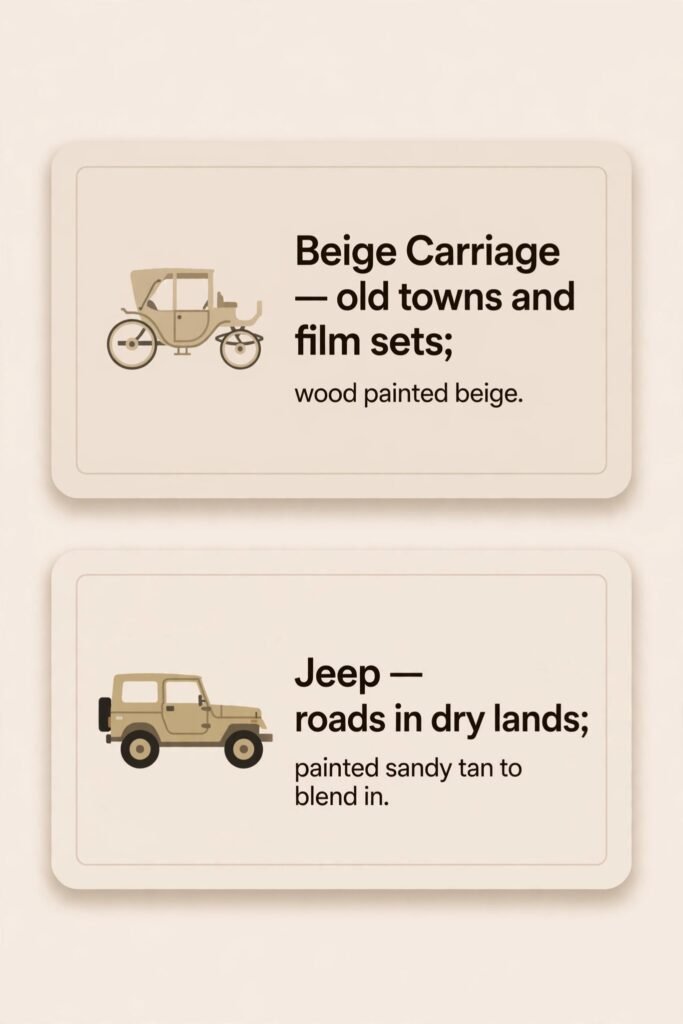
- Jeep — roads in dry lands; some wear sandy tan paint to blend in.
- Beige Bus — town streets and country roads; painted sides wear a beige coat.
- Beige Van — roads and work sites; painted panels wear a soft beige shade.
Natural Phenomena
Dust and light give the best beige sights, and none of them is a solid thing.
- Dust Storm — dry lands and deserts; blown soil turns the sky beige.
- Beige Haze — dry skies at dusk; fine dust tints the air pale beige.
- Dust Devil — dry fields and deserts; a small dust whirl spins pale tan.
- Harvest Moon — autumn skies; thin haze can soften the full moon to pale beige-gold.
Beige in Science and Design
Light does much of the work here. Fine grains in sand, stone, and wool scatter light, and the eye reads the bent light as beige. No strong dye sits in those grains at all — light and pale matter make the shade.
Many beige stones get their tone from pale quartz and feldspar. Faint iron tints in the rock add warm tones. Dye does the same work in cloth, food, and paint, and beige colour is added by hand.
Designers pick things that are beige for calm, warmth, and ease. Brands use it for quiet warmth, and rooms use it for calm light. Pale yet warm, it suits both work wear and home goods.
- Beige — #F5F5DC; palest of the three, with a soft yellow-brown feel.
- Cream — #FFFDD0; lighter and more yellow than beige, close to white.
- Tan — #D2B48C; darker and warmer than beige, close to brown.
Fun Facts About Beige
- French gave us the word beige, which once meant the shade of wool that no one had dyed.
- Shore sand looks beige since it mixes quartz bits and shell bits.
- Undyed wool and linen keep their beige shade with no dye at all.
- Camels and lions blend with dry sand and grass, since their coats are beige.
- Painted beige, a wall can make a room feel calm and light.
- Makers cast old phones and office tools in beige plastic.
- White, brown, and soft green all pair well with beige.
- Cosmic latte is the average shade of the universe, a soft beige.
- Sun-dried grass turns beige once the green leaves it.
Final Thoughts
Beige links sand, wool, deserts, and home goods in one soft tone. From a camel crossing dry land to bread cooling in a kitchen, these things that are beige show how far the shade reaches. Grains, undyed fleece, and sun-dried grass all give it a plain cause. Watch for it in parks, shops, and rooms near you. Once the cause is clear, the shade seems to sit all round, calm and warm. Match it with white, brown, or soft green, and it repays the care. Hang it near windows and pale wood, where soft light keeps each small room calm.
Frequently Asked Questions
Why are so many natural things beige?
Shared pale bits link sand, stone, and dry plants, while sun and dry air take strong shades out of them. Once strong shades are gone, pale tones stay. Lands with little rain show the effect best.
Is beige the same as tan?
No, soft and pale tones mark beige, while tan runs a bit dark and warm. Cream sits near beige, and tan sits near brown.
What makes wool beige?
Wool grows beige on the sheep, with no dye in the fleece. Fleece keeps that shade till dye is added.
Why do deserts look beige?
Deserts hold sand and dry rock in wide beds. Both run pale tan, and the whole land looks beige from far off.
Is beige a warm or cool shade?
Warmth marks this shade, since yellow-brown tones give it a soft, calm feel. Cool shades lean blue, while beige leans warm.
Where does the name beige come from?
French gave us the word beige, which once meant the shade of wool that no one had dyed. Weavers used the word for raw cloth, and the name stuck.