Things That Are Lavender: Soft Examples in Nature, Animals, Food, and Everyday Life
Lavender is a soft, pale purple with a cool blue base, and its hex code is #E6E6FA. Near-white yet clearly purple, this soft tint feels calm. Yards, homes, and open skies hold it well. Across hills, seas, and shelves, things that are lavender turn up in quiet places. Real places hold them all, from wild moors to warm seas. Below, each entry shows where it lives and why it wears the shade. After those close looks, plain lists group the rest by type. Gardeners will spot it in beds and pots. Cooks meet it in teas and sweets. Read on to meet blooms, birds, and gems in a calm shade. Calm light suits it well, from dawn to quiet rooms.
What Gives Lavender Its Soft Purple Colour
Three sources join to make lavender: plant dye, genes, and light. One plain dye can not explain it. Shades differ because sources differ. Petals, feathers, and stone all hold things that are lavender.
Petals hold a plant dye. Pale, mixed with light, it reads as lavender. In bred birds and snakes, a gene cuts dark dye. Black fades to pale grey-purple. In wings and scales, tiny parts bend light. Shifting light changes the shade as they move.
Things Found in Nature
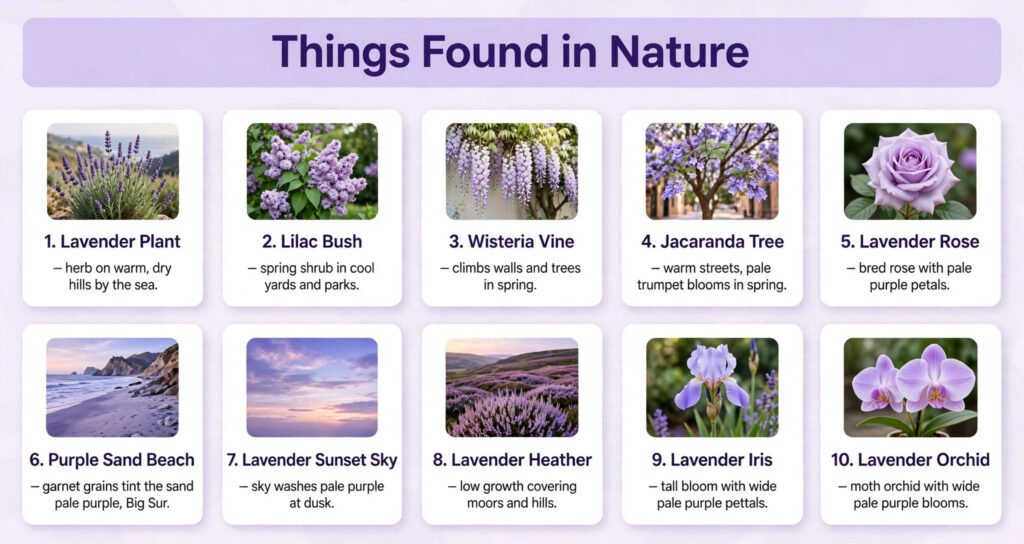
Nature holds the clearest lavender sights, from blooms and trees to sand and sky.
1. Lavender Plant
Warm, dry hills by the sea suit this herb best. Pale dye in its small buds turns them soft purple. Bees love the sweet scent of the blooms.
2. Lilac Bush
Cool yards and parks fill with this spring shrub. Sweet blooms form soft pale bunches. Fragrant bunches fill cool spring air.
3. Wisteria Vine
Long chains of pale blooms hang down low in spring, over fences and walls. Dye lends the soft tint to each chain. Old vines can grow thick as a tree trunk.
4. Jacaranda Tree
City streets gain shade from this warm-climate tree. Spring fills its crown with pale trumpet blooms. Fallen blooms paint the street purple.
5. Lavender Rose
Breeders shaped this rose for pale purple petals. Year by year, they picked the softest tints. Dye in the petals keeps the tint soft, and cut stems last well in cool water.
6. Purple Sand Beach
Garnet grains wash down from the cliffs to tint the sand pale purple. Wet sand shows the tint best. Big Sur holds one such beach on the west coast.
7. Lavender Sunset Sky
Low sun shines through dust and haze at dusk. Near the ground, low light bends, and the sky washes pale purple for a short time. Clouds can catch the tint and hold it longer.
8. Lavender Heather
Late summer opens its small bell blooms on moors and hills. Low growth covers the ground, and whole hills turn pale purple. Dark honey comes from the blooms, made by bees.
9. Lavender Iris
Thick roots send up this tall bloom. Wide petals hold a pale purple dye. Some types bloom deep purple or white.
10. Lavender Orchid
Warm rooms suit this moth orchid well. Wide blooms open pale purple. One stem can bloom for weeks.
Lavender Animals
Breed or birth puts lavender on them. Some wear it for show, some to blend in.
11. Lavender Waxbill
Dry grass lands in Africa hold this small finch. Grey marks show soft and pale, and bright light shows them pale purple. Small flocks feed on grass seed.
12. Lavender Orpington Chicken
Farmers breed this hen for soft, pale feathers. Bred genes cut the dark dye, so black fades to pale grey. Light brown eggs come from hens.
13. Lavender Budgerigar
Gentle shades mark this small pet bird. Breeders pick the palest birds each year. Light grey shows on the birds, and pet birds can learn to copy words.
14. Lavender Pigeon
Town fans breed this bird for pale grey-purple. Dark dye thins in each bred bird. Wild kin nest on cliffs by the sea.
15. Lavender Corn Snake
Calm by nature, this pet snake wears soft shades. Grey covers the snake, and bred genes thin the dark dye. Field mice form its food in wild lands.
16. Lavender Albino Ball Python
No dark dye colours this pet snake at all. Skin glows pale purple. Pink eyes mark it albino, and it curls in a ball when scared.
17. Lavender Tang
Coral beds in warm seas hold this reef fish. Plain coats show pale grey, and shifting light changes the tint as the fish turns. Green growth on the reef forms its food.
18. Moon Jellyfish
Cool seas near the shore carry this soft jelly. Clear bells can show pale purple rings through the soft flesh. No brain, heart, or bones hide inside.
19. Lavender Axolotl
Still pools and cool tanks suit this water pet. Soft grey skin covers its body. Feathery gills wave as it swims, and lost limbs can regrow.
20. Lavender Betta Fish
Home tanks hold this pet fish. Lines bred for soft shades gave it pale fins. Males flare wide fins to guard space.
Flowers and Plants
Garden beds hold the most lavender blooms, from spring bulbs to late summer spikes.
- Catmint — Sunny garden beds; petal dye gives the soft tint.
- Russian Sage — Dry, sunny beds; tiny blooms hold a pale dye.
- Lavender Crocus — Spring lawns and beds; pale dye tints the blooms.
- Lavender Allium — Sunny beds in late spring; ball heads hold a pale dye.
- Lavender Verbena — Sunny beds and pots; pale dye tints the small blooms.
- Lavender Aster — Late beds in cool lands; pale dye tints the blooms.
- Lavender Sweet Pea — Cool spring beds and pots; bred types hold a pale dye.
- Lavender Tulip — Spring beds in cool lands; bred for pale, soft petals.
- Lavender Hyacinth — Spring pots and beds; sweet blooms hold a pale dye.
Fruits and Vegetables
Few foods wear true lavender, and most pale purple foods get their tint from a waxy bloom on the skin.
- Purple Grapes — Vines in warm lands; a waxy bloom looks dusty lavender in some light.
- Sloe Berry — Hedges in cool lands; its pale bloom looks dusty lavender.
- Lavender Cauliflower — Cool farms; some types grow pale purple curds.
- Lavender Eggplant — Warm farms; some types grow pale purple skin.
- Lavender Carrot — Cool farms; some types grow pale purple roots.
Foods
Buds and dye colour these foods lavender, from teas to sweets.
- Lavender Ice Cream — Cafés and home freezers; buds or dye tint it.
- Lavender Tea — Tea shops and home cups; dry buds brew it pale grey.
- Lavender Lemonade — Cafés and home jugs; syrup tints it.
- Lavender Macarons — Bake shops and tea rooms; buds or dye tint them.
- Lavender Sugar — Home jars and bake shops; dry buds tint it.
Household Items
Across the home, lavender turns up on beds, walls, and shelves.
- Lavender Bed Sheets — Beds and calm rooms; dyed cloth in this soft tint.
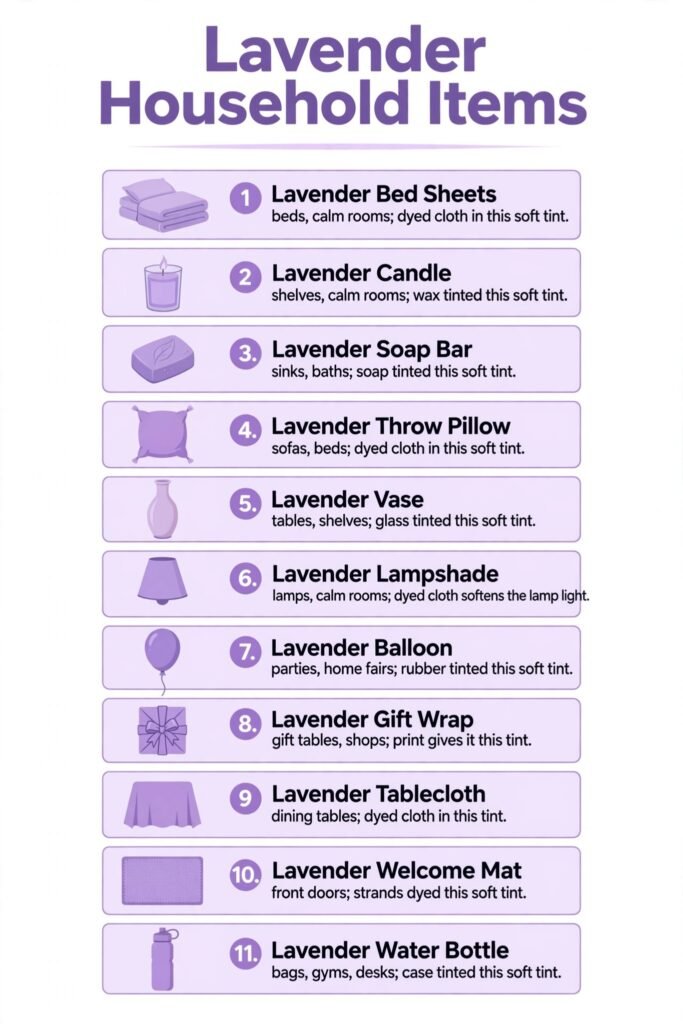
- Lavender Candle — Shelves and calm rooms; tinted wax in this soft tint.
- Lavender Soap Bar — Sinks and baths; tinted soap in this soft tint.
- Lavender Throw Pillow — Sofas and beds; dyed cloth in this soft tint.
- Lavender Vase — Tables and shelves; tinted glass in this soft tint.
- Lavender Lampshade — Lamps in calm rooms; dyed cloth softens the lamp light.
- Lavender Balloon — Parties and home fairs; tinted rubber in this soft tint.
- Lavender Gift Wrap — Gift tables and shops; print gives it this tint.
- Lavender Tablecloth — Dining tables; dyed cloth in this tint.
- Lavender Welcome Mat — Front doors; dyed strands in this soft tint.
- Lavender Water Bottle — Bags, gyms, and desks; tinted case in this soft tint.
Clothing and Fashion
Soft yet clear, lavender works well for clothes.
- Lavender Sweater — Shops and cool days; dyed wool in this soft tint.
- Lavender Blouse — Shops and cool days; dyed cloth in this soft tint.
- Lavender Skirt — Shops and homes; dyed cloth in a soft tint.
- Lavender Scarf — Shops and cold days; dyed wool in this soft tint.
- Lavender Tote Bag — Shops and town trips; dyed cloth in this tint.
- Lavender Sunglasses — Shops and bright days; tinted frames in this soft tint.
Technology and Office Items
Tech shows lavender too, on desks and in bags.
- Lavender Smartphone — Shops and pockets; tinted case in this soft tint.
- Lavender Laptop — Shops and desks; paint gives it this tint.
- Lavender Speaker — Shelves and desks; paint gives it this tint.
- Lavender Pen — Desks and school bags; tinted case in this soft tint.
- Lavender Sticky Notes — Desks and school bags; dyed paper in this soft tint.
- Lavender Chalk — Class rooms and boards; tinted chalk in this soft tint.
- Lavender Crayon — School bags and art kits; tinted wax in this soft tint.
Science and Chemistry Examples
Trace metals tint these stones lavender.
- Pale Amethyst — Old mines and rock shops; iron tints it pale purple.
- Lavender Jade — Rock shops and gem fairs; manganese tints it pale purple.
- Lavender Sapphire — Mines in warm lands; trace metals tint it pale purple.
- Lepidolite — Rock shops and stone fairs; manganese tints it pale purple.
- Lavender Spinel — Old mines in Asia; iron tints it pale purple.
Transportation
Roads, water, and sky all show lavender paint.
- Lavender City Bicycle — Town streets and parks; paint gives it this tint.
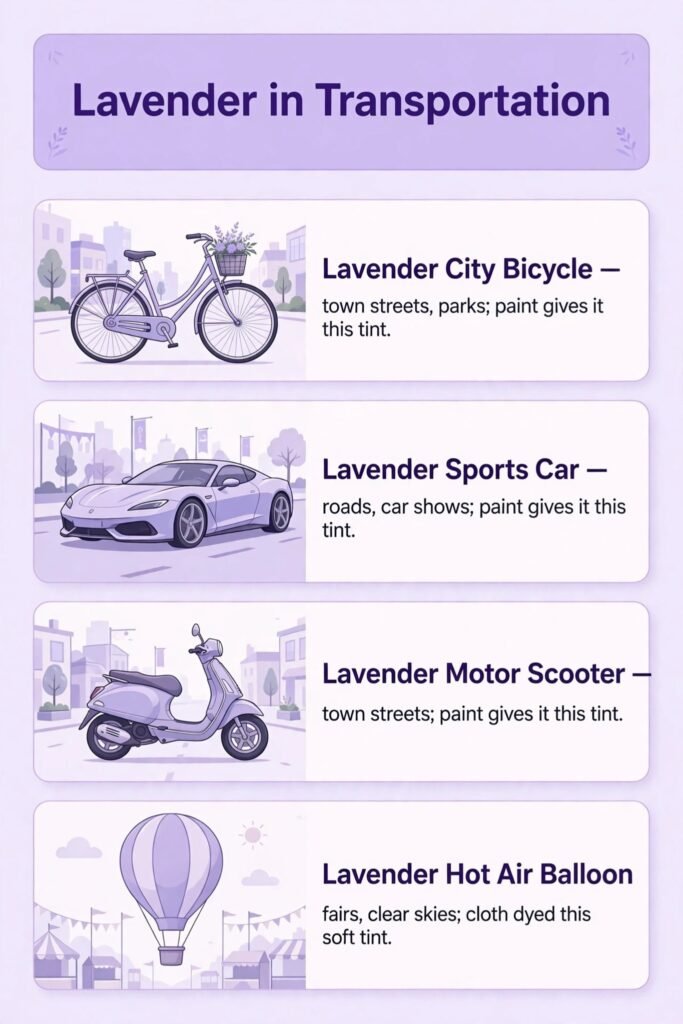
- Lavender Sports Car — Roads and car shows; paint gives it this tint.
- Lavender Motor Scooter — Town streets; paint gives it this tint.
- Lavender Hot Air Balloon — Fairs and clear skies; dyed cloth in this soft tint.
Natural Phenomena
Sky and space give the rarest lavender sights, and none of them is a solid thing.
- Lavender Nebula — Deep space and far stars; star light makes it glow pale purple.
- Lavender Aurora — Far north skies on rare nights; high bands can glow pale purple.
- Lavender Lightning — Storm skies; hot bolts can flash pale purple.
Lavender in Science and Design
Much of the work comes from light. Fine parts in wings, scales, and shells bend light, and the eye reads the bent light as lavender. Blue dye sits in none of those parts at all — light alone makes the shade.
Many lavender stones get their pale half from trace metals. Iron and manganese tint them pale purple. Makers add the same tint by hand in cloth, food, and paint.
Designers pick things that are lavender for calm, trust, and depth. Brands use it for quiet trust, and rooms use it for calm depth. Quiet yet clear, it suits both work wear and home goods.
- Lavender — #E6E6FA; palest of the three, with a cool blue base.
- Lilac — #C8A2C8; deeper and warm, with a pink base.
- Purple — #800080; deep and strong, far darker than the rest.
Fun Facts About Lavender
- Latin lavare gives lavender a name that means to wash.
- Romans once put the plant in their baths.
- Oil comes from the buds, and sweet, soft scent fills each drop.
- Blooms draw bees in, since sweet food in the spikes feeds them well.
- Dry buds keep their scent for a long time.
- Full bloom in a field smells sweet from far off.
- Tea is made from dry buds, and brews fill the cup pale, light, and grey.
- Iron gives pale amethyst its soft tint.
- Red and blue light blend in it, with more blue than red.
Final Thoughts
More spots hold this shade than a first guess might hold. Blooms, bird wings, gems, and home goods glow with the soft tint. Lists of things that are lavender run through land, sea, and shelf. Each bloom, bird, and gem shows how dye, genes, and light build the colour. Look for the pale tint near you today. Gentle purple shows all around. Quiet purple rewards a careful, patient, close look each day. Keep an eye out on walks, in shops, and down by the sea. Plain sight holds it, calm and pale. Look once, and the shade stays with you.
Frequently Asked Questions
Why are some flowers lavender?
Flower dye sits in the petals. Pink or blue leanings show in the dye. When pale, it reads as lavender.
What makes a bird look lavender?
Genes bred for pale shades thin dark dye in the feathers. Wing parts bend light, and the shade shifts as the bird moves.
Is lavender the same as purple?
Lavender stays pale and soft, while purple runs deep and strong.
What is the difference between lavender and lilac?
Blue leanings mark this shade, named for the herb. Lilac, in contrast, leans to pink and is named for the shrub bloom.
Why is lavender linked with calm?
Sweet scent rises softly. Buds give off the scent. Rest and quiet days come to mind.
Where does real lavender grow?
Sunny hills near the sea hold wild lavender. Garden types grow in sunny beds. Mild lands suit them as well.